
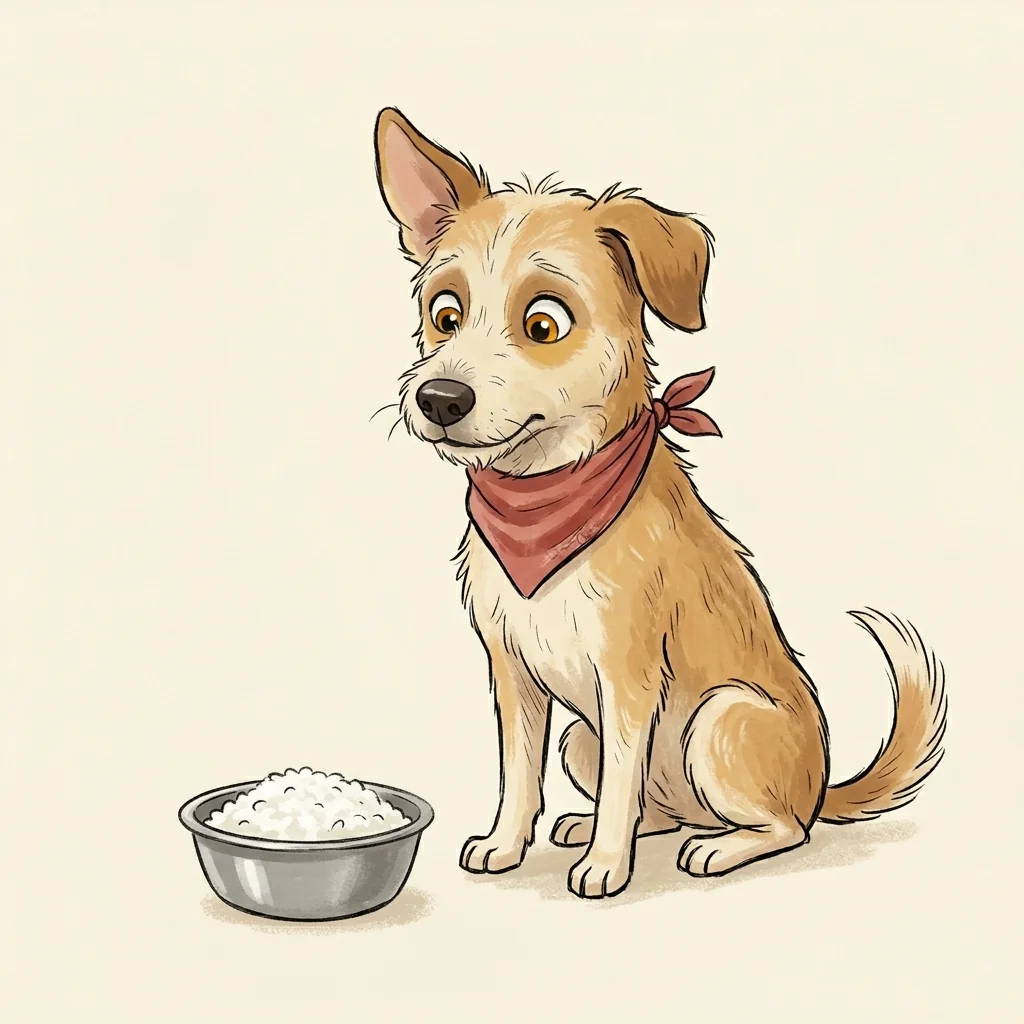

The mustard seeds are fine. The curry leaves are fine. It is the two spoons of chopped onion that go in after them that put dogs in a veterinary hospital.
Curd rice is probably the single most-shared food between Indian households and their dogs, and mostly that is fine. The trouble is that almost nobody shares the version they made for the dog. They share the version they made for themselves, salted and tempered, from the same bowl.
Is curd rice safe for dogs?
The base is. Plain cooked white rice is one of the most digestible carbohydrates you can put in front of a dog, and plain unsweetened curd is safe for most dogs in small amounts. Mixed together with nothing else, curd rice is a mild, low-fat, easy food.
Everything added afterwards is where the risk lives. Onion and garlic contain organosulphur compounds that damage canine red blood cells and cause haemolytic anaemia. The commonly cited threshold is roughly 15 to 30 grams of onion per kilogram of body weight in a single dose, which sounds like a lot until you remember that repeated smaller doses accumulate, and that a 5 kg dog reaches 15 g/kg with about three quarters of a medium onion. Garlic is several times more potent by weight.
Salt is the quieter problem. A bowl of curd rice made for a human is salted to a human palate. Dogs need a fraction of the sodium we do, and for any dog with heart or kidney disease that habitual salt load is a genuine clinical issue rather than a rounding error.
Green chilli and black pepper are not toxic, but capsaicin irritates a dog’s mouth and gut, and there is no version of this where the dog enjoys it.
How much curd rice can your dog have?
Treats of every kind should stay under 10% of a dog’s daily calories. One tablespoon below means about 15 g of plain curd rice made at roughly two parts rice to one part curd, which works out to about 16 calories.
| Your dog | Daily calories | 10% treat ceiling | Sensible curd rice portion |
|---|---|---|---|
| 5 kg (Shih Tzu, Pom) | ~375 kcal | 37 kcal | 1 tbsp (15 g, 16 kcal) |
| 10 kg (Beagle, small Indie) | ~630 kcal | 63 kcal | 2 tbsp (30 g, 32 kcal) |
| 20 kg (Indie, Cocker) | ~1,060 kcal | 106 kcal | 3 tbsp (45 g, 47 kcal) |
| 30 kg (Labrador) | ~1,435 kcal | 144 kcal | 5 tbsp (75 g, 79 kcal) |
| 40 kg (GSD, Rottweiler) | ~1,780 kcal | 178 kcal | 6 tbsp, about a small katori (90 g, 95 kcal) |
Daily calories assume a neutered adult dog at a healthy weight, calculated as 1.6 × 70 × (weight in kg)0.75. Portions are set at roughly half the treat ceiling, because curd rice is almost never the only treat a dog gets in a day.
These portions look stingy next to the fruit tables on this site, and that is the point. Watermelon costs a 5 kg dog 7 calories a cube. Curd rice costs it 16 calories a spoon. This is the only food in the series that is really a meal wearing a treat’s clothes, and the honest way to feed it is to take the equivalent weight out of the dog’s dinner rather than adding it on top.
The bland-diet claim, and what actually settles a dog’s stomach
Curd rice is handed to sick dogs across India on the reasoning that it is the local version of the boiled-chicken-and-rice bland diet. Half of that is right.
The rice half holds up. Plain white rice is low in fat, low in fibre and highly digestible, which is exactly what a recovering gut wants. Vets recommend it for the same reason.
The curd half works against you. A dog with gastroenteritis has reduced enzyme activity across an inflamed intestinal lining, including lactase. Adding a lactose-containing food to that gut is the wrong direction, and the most common outcome is that the diarrhoea you were trying to fix gets louder. If someone has told you the curd will replace the good bacteria, see our guide to curd for dogs: the strains that set dahi are dairy fermenters, and the dose in a home-set pot is uncountable.
If your dog has an upset stomach, plain boiled rice with plain boiled chicken, no salt and no oil, is the version with evidence behind it. And if the diarrhoea has run past 24 hours, or there is blood, or the dog is lethargic or vomiting as well, that is a vet visit rather than a recipe.
One genuinely useful thing about traditional curd rice, though: it is made with rice that has been cooked and then cooled. Cooling cooked rice causes some of the starch to retrograde into resistant starch, which behaves less like a sugar and more like a fermentable fibre. It is a small effect, not a health claim, but it does mean day-old curd rice is a gentler carbohydrate than a fresh hot bowl.
The tadka, and the dogs who should skip curd rice
Onion, garlic, shallot and spring onion. Non-negotiable. If any of these went into the pot, the dog does not get that pot. Signs of onion toxicity are delayed by days: pale gums, weakness, dark or reddish urine, breathlessness. Call a vet rather than waiting it out.
Hing. Asafoetida is not toxic to dogs, but the compounded hing sold in Indian shops is mostly wheat or rice flour with gum, so it is a filler and, for a wheat-sensitive dog, a gluten source. It contributes nothing your dog wants.
Salt. Skip it entirely for the dog’s portion. There is no threshold below which added salt improves anything for a dog.
Diabetic dogs. White rice is a fast carbohydrate with a high glycaemic index and there is no fibre in curd rice to slow it down. Ask your vet before it goes anywhere near the bowl.
Overweight dogs. At roughly 105 calories per 100 grams, this is the densest food in our fruit-and-staple series. A dog on a weight plan is better served by cucumber or watermelon.
Lactose-intolerant dogs. Gas, bloating or loose stools within a few hours of dairy means curd rice is not for them. Plain rice on its own still is.
How to serve curd rice
Make the dog’s portion first. Take the plain rice and plain curd out before you salt or temper anything. This one habit removes almost every risk on this page.
Cool it fully. Hot food is a burn risk for a dog that inhales rather than chews, and cooled rice is the gentler carbohydrate anyway.
Thin it slightly with water, not milk. Milk adds lactose you have just spent the whole article trying to limit.
Use it as a pill vehicle. A spoon of plain curd rice hides a tablet better than most things and is less calorific than cheese or peanut butter.
Not from your plate. By the time it reaches your plate it has salt, tadka and usually pickle on the side. Serve the dog’s version from the pot, before it becomes yours.
Questions people still ask
Can I give curd rice to a dog with diarrhoea?
Plain rice yes, curd probably not. A gut that is already inflamed has reduced lactase activity, so the dairy component tends to make loose stools worse rather than better. Boiled white rice with plain boiled chicken, unsalted, is the bland diet with actual veterinary support behind it. If the diarrhoea lasts more than a day, contains blood, or comes with vomiting or lethargy, stop experimenting with food and call your vet.
Is brown rice better than white rice for curd rice?
Not for this purpose. Brown rice carries more fibre and minerals, which is useful in a balanced everyday diet but counterproductive in a food you are feeding for gentleness. It is also harder for dogs to digest and needs to be cooked thoroughly and softly to be worth anything. For a treat portion or a recovery meal, plain white rice is the better choice.
Can puppies eat curd rice?
A teaspoon of the plain version, occasionally, once they are weaned and settled on solid food. Puppies handle lactose better than adult dogs do, so the dairy is rarely the issue. The issue is displacement: a growing puppy’s calories need to come from a complete growth food, and curd rice is filling, calorie-dense and nutritionally incomplete. It should never replace a meal.
Related guides
Part of our human food for dogs guide. See also: can dogs eat curd, can dogs eat rice, can dogs eat paneer and can dogs eat roti. For the bigger picture, see our dog nutrition guide.
When in doubt about your dog and a new food, ask your vet. It is the cheapest insurance there is.
Sources: USDA FoodData Central, rice white cooked and yogurt plain whole milk, Merck Veterinary Manual, nutritional requirements of small animals, ASPCA people foods to avoid.
Wondering about a different food?
🦴 Can my dog eat this?
Type a food to see if it is safe, needs caution, or is a hard no.
Get more dog stories in your inbox. Join Woofs & Words on LinkedIn.
Subscribe on LinkedIn