
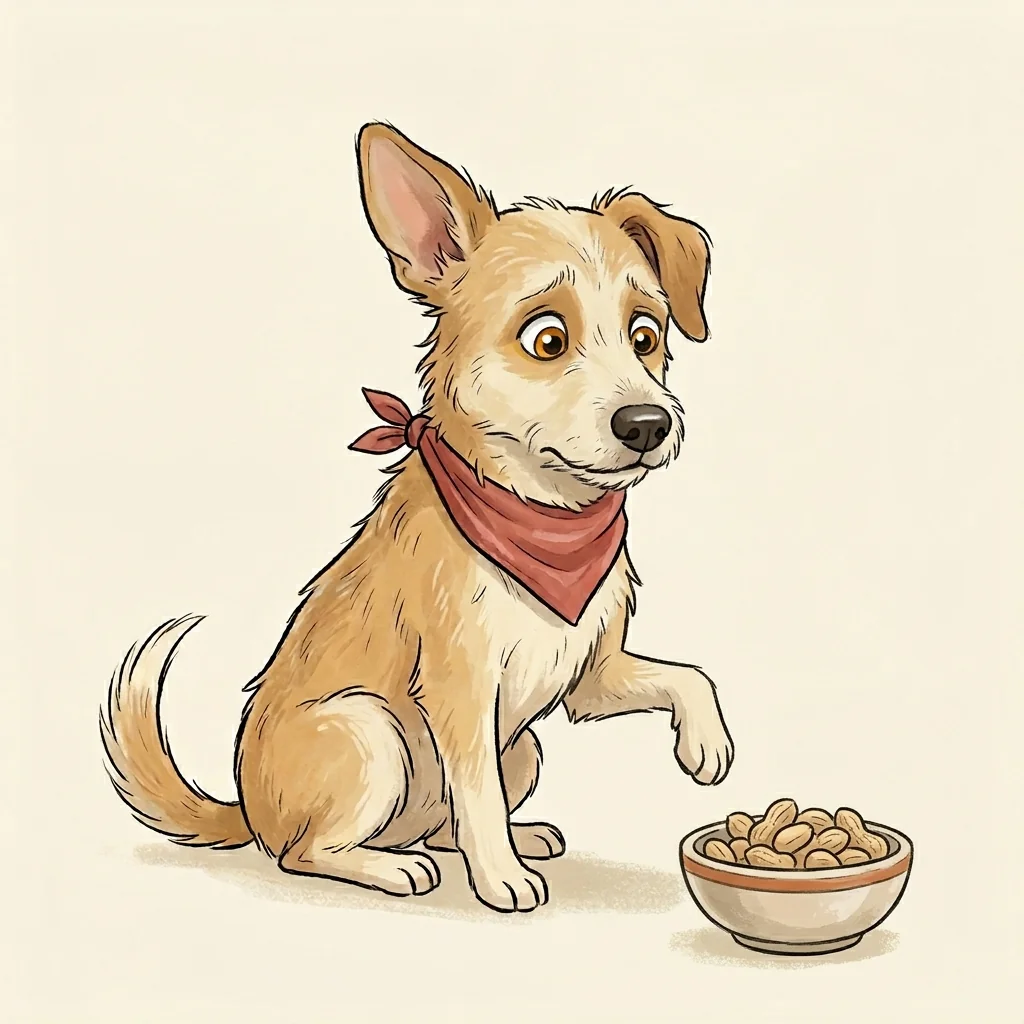

Somebody in the family is eating moongphali on a winter afternoon and the dog gets one. Then another. Nobody is counting, because they are peanuts, and peanuts are just peanuts.
The thing worth knowing is that a peanut is closer to a spoon of oil than to a biscuit. Half of it, by weight, is fat.
Are peanuts safe for dogs?
Plain peanuts are not toxic to dogs. There is no compound in a peanut kernel that will poison your dog the way chocolate, xylitol or onion will. Dogs eat them, enjoy them, and digest them fine.
The fat is the whole story. At roughly 49 g of fat per 100 g, peanuts are one of the richest things a dog is likely to be handed casually. A big single dose of fat is a recognised trigger for pancreatitis, and the dogs most at risk are the ones most likely to be given a handful: Schnauzers, small terriers, overweight dogs and older dogs.
Salt, chilli and masala rule out most of what is in an Indian kitchen. Salted moongphali, masala peanuts, peanut chikki, chatpata mixture. All of it is off the list, and chikki adds jaggery on top of the fat.
Shells are a physical hazard, not a chemical one. Peanut shells are fibrous, indigestible and can lodge in the throat or gut, particularly in small dogs. Shell them yourself.
Peanut allergy in dogs is rare. This surprises people, because human peanut allergy is so prominent. Food allergy in dogs is far more commonly to beef, dairy or chicken. If your dog reacts badly to peanuts, the far likelier explanation is the fat load, not an immune response.
How many peanuts can your dog have?
One shelled peanut kernel weighs about 1 g and carries roughly 5.7 calories and half a gram of fat. The last column is the one to read, because fat is what actually constrains this treat.
| Dog’s weight | Daily calories | Treat ceiling (10%) | Plain peanuts (fat load) |
|---|---|---|---|
| 5 kg (Pug, Shih Tzu) | ~375 kcal | 37 kcal | 3 peanuts (1.5 g fat) |
| 10 kg (Indie pup, Beagle) | ~630 kcal | 63 kcal | 5 peanuts (2.5 g fat) |
| 20 kg (Indie, Cocker) | ~1,060 kcal | 106 kcal | 9 peanuts (4.5 g fat) |
| 30 kg (Labrador) | ~1,435 kcal | 144 kcal | 12 peanuts (6 g fat) |
| 40 kg (GSD, Rottweiler) | ~1,780 kcal | 178 kcal | 15 peanuts (7.5 g fat) |
Daily calories assume a neutered adult dog at a healthy weight, calculated as 1.6 × 70 × (weight in kg)0.75. Portions are set at roughly half the treat ceiling, because peanuts are almost never the only treat a dog gets in a day. Kernel weight varies; larger bold peanuts run heavier.
A cupped handful of peanuts is about 30 kernels. That is twice a Labrador’s daily treat budget, handed over in under a minute while nobody was thinking about it.
The peanut butter question, and the one word to look for
Peanut butter is the single most recommended dog treat on the internet, and the recommendation is mostly sound. Dogs love it, it hides tablets, it stuffs a Kong and buys you twenty minutes.
One ingredient makes it lethal: xylitol. Sold as birch sugar, xylitol or E967, it is a sugar alcohol used in sugar-free products, and in dogs it triggers a rapid insulin release, collapse-level hypoglycaemia and, at higher doses, acute liver failure. Doses in the region of 0.1 g per kg of body weight can cause hypoglycaemia. A few grams can kill a small dog.
Most Indian peanut butter is not sugar-free and does not contain it. But “no added sugar,” “keto” and imported diet spreads are exactly where it shows up. Read the label every time you buy a new jar, not once.
The rest of the label matters less but still matters. Palm oil, added sugar and salt are common. The best jar for a dog has one ingredient: peanuts.
Aflatoxin, the risk nobody mentions
Here is the part that gets skipped. Peanuts stored warm and damp grow Aspergillus flavus, a mould that produces aflatoxin, a potent liver toxin. Dogs are notably sensitive to it; aflatoxin contamination has caused fatal outbreaks in commercial dog food more than once.
In practice this means loose peanuts bought by weight in monsoon, or an open packet that has been sitting in a humid kitchen since last winter, are a worse bet than a sealed packet from a brand that tests. Discard anything that smells musty, looks shrivelled, or has visible discolouration. If you would not eat it, do not give it to a dog whose liver is a fraction the size of yours.
This is not a reason to panic about peanuts. It is a reason to buy them in sealed packets and throw out the old ones.
How to serve them, and who should skip them
Shelled, plain, unsalted, and either raw or dry-roasted without oil. Crush or chop them for small dogs and flat-faced breeds. Introduce with one or two and wait a day.
Skip peanuts entirely if: your dog has had pancreatitis, is on a low-fat prescription diet, is significantly overweight, or is a breed with a known predisposition to pancreatitis. The calorie table does not apply to those dogs; the answer for them is no.
For everyone else, the practical rule is to hand out peanuts by the piece from a saucer rather than from the packet. The packet is what causes the problem.
Questions people still ask
Can dogs eat salted or masala peanuts?
No. Salted peanuts add sodium a dog has no use for, and masala coatings routinely include chilli, onion powder and garlic powder, which are the genuinely toxic part. Chikki and peanut brittle add jaggery or sugar on top of the fat. If the peanuts came out of a packet with a flavour name, the answer is no. Roast a plain batch instead; it takes ten minutes.
My dog ate a whole packet of peanuts. What should I do?
Call your vet, especially for a small dog or one with any history of pancreatitis. The concern is a sudden large fat load. Watch for repeated vomiting, a hunched or “praying” posture, a painful belly, lethargy or refusal to eat, and treat any of those as a reason to go in rather than wait. If the packet was salted or masala-coated, mention that; if it was a sugar-free or diet product, tell them immediately, because xylitol is an emergency rather than a wait-and-see.
Is peanut butter safe for dogs every day?
Xylitol-free peanut butter is safe, but daily is more than most dogs should have. A teaspoon of peanut butter carries roughly 30 calories and 2.5 g of fat, which is a meaningful share of a small dog’s treat ceiling. Use it as a vehicle for medication or a Kong filling a few times a week, keep it inside the same 10% budget as any other treat, and choose a jar whose ingredient list reads only “peanuts.”
Related guides
Part of our human food for dogs guide. See also: can dogs eat makhana, can dogs eat ghee, can dogs eat paneer and can dogs eat curd. For the bigger picture, see our dog nutrition guide.
When in doubt about your dog and a new food, ask your vet. It is the cheapest insurance there is.
Sources: USDA FoodData Central for peanut composition; Merck Veterinary Manual, xylitol toxicosis in dogs; Merck Veterinary Manual, aflatoxicosis in animals; ASPCA people foods to avoid.
Wondering about a different food?
🦴 Can my dog eat this?
Type a food to see if it is safe, needs caution, or is a hard no.
Get more dog stories in your inbox. Join Woofs & Words on LinkedIn.
Subscribe on LinkedIn