

Medically reviewed by Dr. Catherine Nicolaou, DVM.
If you grew up in India in the nineties, your first dog was probably white, fluffy, fox-faced and answered to a name like Sweety, Snowy or Tuffy. That dog was almost certainly an Indian Spitz. Tuffy, the scene-stealer from Hum Aapke Hain Koun, was one too: a Spitz named Redo who lived to twelve and became the most famous dog in the country.
For all its fame, the Indian Spitz is a developed breed. It should not be confused with the Indian pariah (indie) dog, India’s only true native landrace.
For two decades the Indian Spitz was the default family dog of middle-class India. Then the Labradors and Golden Retrievers arrived and it quietly fell out of fashion. That is a shame, because for an Indian home and an Indian summer, the Spitz still makes more sense than most imported breeds. Here is the full story, including the Pomeranian mix-up that trips up almost everyone.
Where the Indian Spitz comes from
The Indian Spitz is exactly what the name says: a Spitz-type dog developed in India. British colonisers brought German Spitz and Pomeranian-type dogs over in the 1800s, and breeders here selected them down the generations for one thing above all, the ability to stay comfortable in Indian heat. The result is a small-to-medium spitz with a thinner coat and a hardier build than its European cousins.
It is recognised by the Kennel Club of India, though not by the FCI or the AKC, which is part of why it stays an Indian story rather than a global one. Its real boom came in the 1980s and 90s. Strict import rules made foreign breeds hard and expensive to get, and the Spitz looked the part, cost little and was easy to find. For a whole generation, it was simply what a pet dog looked like.
What an Indian Spitz looks like, and the two sizes
Most people picture a small white ball of fluff, and that is the Lesser or Smaller Indian Spitz, roughly 22 to 25 cm tall and 5 to 7 kg. There is also a Greater or Bigger Indian Spitz, closer to 35 to 45 cm and 12 to 20 kg, built more like a small Samoyed. Both share the same look: a thick double coat, a pointed fox-like face, sharp erect ears and a plumed tail curled over the back. White is the classic colour, though black and brown turn up too.
Indian Spitz facts at a glance
- Origin: India, bred from imported German Spitz and Pomeranian stock
- Recognised by: Kennel Club of India (not the FCI or AKC)
- Two sizes: Lesser (5–7 kg, 22–25 cm) and Greater (12–20 kg, 35–45 cm)
- Coat: double coat, usually white; fox face, curled tail
- Temperament: friendly, smart, alert; a vocal little watchdog
- Climate: one of the few fluffy breeds genuinely suited to Indian heat
- Good for: families, first-time owners and apartments
- Lifespan: about 12–15 years
- Watch for: sensitive eyes; the breed is prone to corneal ulcers, so keep the face clean and see a vet for any squinting or cloudiness
A smart, barky family dog
The Indian Spitz earns its keep as a companion. It is affectionate with its family, patient with children, quick to learn and eager to please, which makes it one of the easier Indian dogs to train. It is also alert and vocal: it will announce the doorbell, the postman and the pigeon on the balcony with equal enthusiasm, so it makes a fine watchdog and a poor pick if you crave silence.
Unlike the genuinely aloof working breeds, the Spitz wants to be in the room with you. Left alone too long it gets bored and noisy, so it suits a home where someone is around for company.
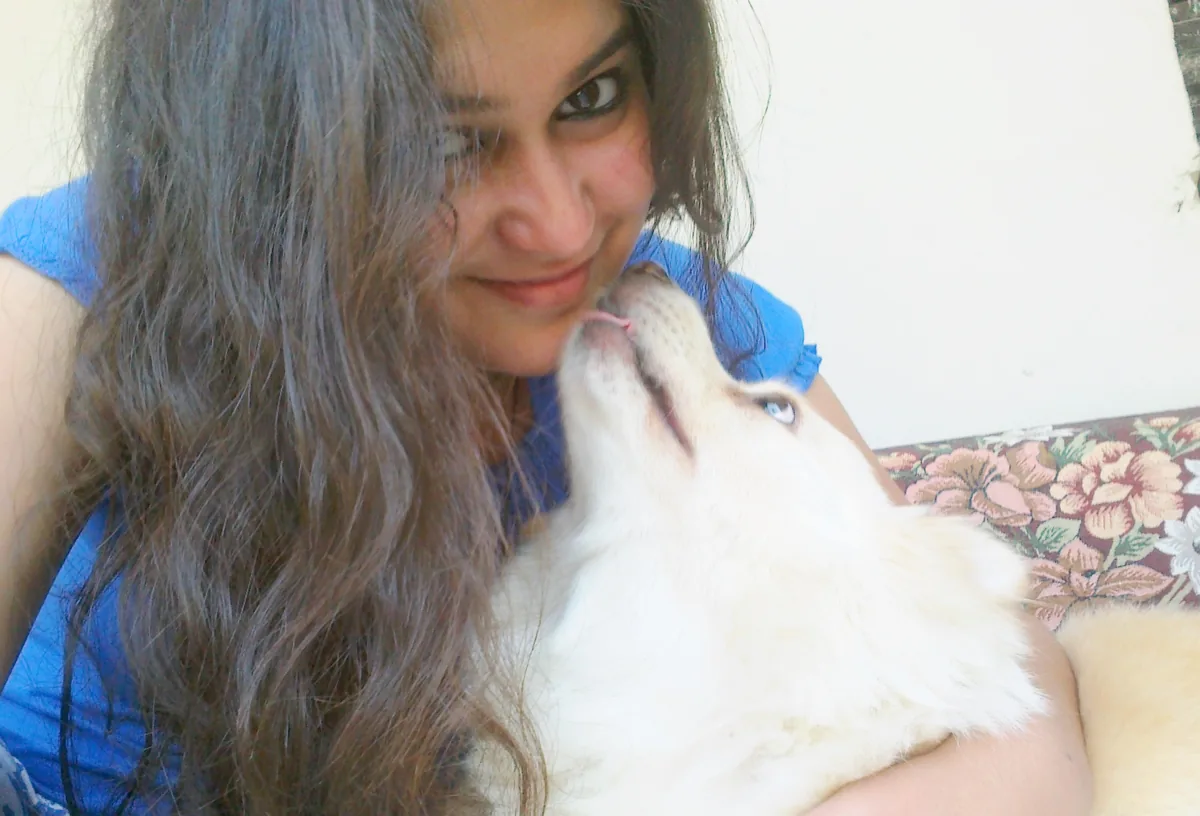
Indian Spitz vs Pomeranian: clearing up the confusion
Walk through any Indian neighbourhood and you will hear small fluffy dogs called “Pomeranian” or just “Pom,” even when they are clearly Indian Spitzes. The two are related but not the same. A Pomeranian is tiny, usually under 3 to 4 kg, with a rounder face, a thicker coat and a more excitable nature. The Indian Spitz is bigger and leaner, with a longer muzzle, a lighter coat and a steadier temperament. If your “Pom” is the size of a small cat and copes happily with summer, it is almost certainly a Spitz.
Living with an Indian Spitz, and the price question
This is one of the few Indian breeds that genuinely fits a flat. It does not need acres to run, it tolerates heat better than any imported long-coat, and it stays clean and odour-free with basic care. The one real chore is the coat: brush it two or three times a week to keep shedding and matting in check, and never shave the double coat, which guards against heat as much as cold, and more during the moult.
On price, Indian Spitz puppies are among the cheaper ones in the market, which is exactly why backyard breeding is rife. Cheap does not mean well-bred, and a sickly, badly-socialised puppy costs far more in vet bills and heartache than you ever save up front. Better still: because the breed was once so common, plenty of Spitzes and Spitz mixes now end up in shelters and rescues. If you want one, look there first. Our dog adoption directory is a good place to start, and our guide to India’s native dog breeds puts the Spitz in context with the rest.
The Indian Spitz never needed a pedigree to be a great dog. A whole generation of Indians learned what a dog could be from a fluffy white one named something like Tuffy. That is a legacy worth adopting into.
Indian Spitz FAQs
Is the Indian Spitz a good pet for apartments? Yes. It is small, heat-tolerant and adaptable, and it does not need a yard. It does need company and a brush a few times a week, but it is one of the most flat-friendly Indian dogs.
What is the difference between an Indian Spitz and a Pomeranian? The Indian Spitz is bigger and leaner, with a longer muzzle and a lighter coat. A Pomeranian is tiny (usually under 3 to 4 kg), with a rounder face, a thicker coat and a more excitable streak. Most “Poms” in India are actually Spitzes.
How long do Indian Spitz dogs live? About 12 to 15 years. Redo, the Spitz who played Tuffy in Hum Aapke Hain Koun, lived to twelve.
How big does an Indian Spitz get? There are two sizes. The Lesser Indian Spitz is 5 to 7 kg and 22 to 25 cm; the Greater Indian Spitz is 12 to 20 kg and 35 to 45 cm.
Is the Indian Spitz suited to Indian weather? More than almost any other fluffy breed. It was bred specifically to handle the heat, though it still needs shade, water and sense during peak summer.
Get more dog stories in your inbox. Join Woofs & Words on LinkedIn.
Subscribe on LinkedIn