
The unrelenting dog days of summer are here and just in time comes our dog grooming tips to help you keep your pet looking (and feeling) her absolute best!
While the more adventurous of you may plan swimming with the pooches, the summer and rainy seasons call for taking extra care of your doggo.

Grooming is an important part of a dog’s health care. It not only helps check any nagging issues your dog may have but also makes for that much-needed bonding time. Bathing and grooming your dog not only keep your pets clean and healthy but you and your home as well.Even dogs with short, low-maintenance coats need regular brushing, bathing and nail trimming.A long-haired dog may also need clipping and hair trimming. While it may seem that your dog is taking care of those needs by himself, please try to have a routine for basic grooming – brushing, bathing, trimming, etc.
Dog grooming tips
These DIY pet grooming tips will help you establish an at-home grooming routine with your dog. They would also come in handy if you can’t afford expensive professional groomers or situations like COVID-19 lockdowns are not allowing you to visit them.
1. Water – Keeping yourself and your dog hydrated goes a long way in preventing heat strokes and promoting overall wellness.
Regular grooming with a brush or comb will help keep your pet’s hair in good condition by removing dirt, spreading natural oils throughout her coat, preventing tangles, and keeping her skin clean and free of irritation.
3. Bathing your doggo depends as much on her coat type as her outgoing nature. While it is ok if you bathe your dog at least once every 2-3 months, you may consider bathing more often if your dog spends a lot of time outdoors or has skin problems.
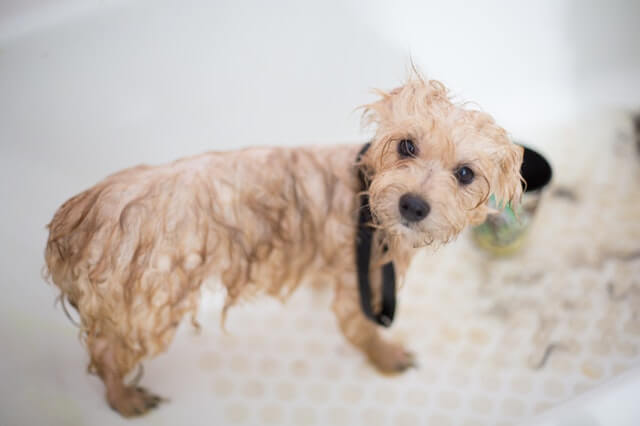
Keep allergies under control with regular shampooing. It removes spores, dust, dirt, and dander. Please ensure that you use a shampoo that is mild enough to not cause irritation to your dog and yet strong enough to eliminate germs and dandruff.
We recommend using shampoo and conditioners which have natural ingredients like Hibiscus that helps keep the coat healthy and shiny, and Neem, which relieves itching, redness, and irritation. These can help combat bacterial and fungal skin infections and help keep your pup’s coat smooth and shiny.
Watch out for tear stains under your dog’s eyes, and rinse your dog’s coat well after bathing so no shampoo is left on the skin.
4. Drying – Use a towel to help your pooch dry himself. You may also try a blow dryer but remember to use it on a low heat setting and not pointing directly at your dog.
5. Massaging – Gently massage your pet as it helps promotes blood circulation, improves body functions and eases your dog’s tension by relaxing him. It also helps heal strains and sprains faster.
6. Dental Care – Bacteria and plaque-forming foods can cause build-up on your dog’s teeth. This can harden into tartar, potentially causing gingivitis, receding gums, and tooth loss. Regularly brushing your dog’s teeth, along with a healthy diet and plenty of chew toys, can go a long way toward keeping her mouth healthy. Dental cavities can lead to tooth loss.
If you’re like most dog parents, keeping your furry friend’s teeth clean can be a real challenge. That’s where dog dental powder comes in handy. It’s a simple powder you sprinkle over your dog’s food that helps fight plaque, tartar, and stinky breath without the fuss of brushing. These powders usually have natural stuff like probiotics to keep the mouth healthy, sea plants like kelp that help clean teeth, and special ingredients that stop tartar from building up. Just a spoonful mixed with their meal is an easy step you can take to keep their smile fresh.
While it’s not a full replacement for regular vet checks or brushing, it’s a great little helper, especially since so many of us struggle to brush every day. And keeping up with dental care really matters. Poor oral health can affect your dog’s whole body and even shorten their life. So this powder is a convenient way to chip away at dental problems and keep tails wagging longer.
7. Eye Care – Try checking your dog’s eyes for any cloudiness or inflammation that may indicate a health problem. Your dog’s eyes should be clear and bright, and the area around the eyeball should be white. If you notice anything out of the ordinary, please consult a vet at the earliest.
8. Ear Care – Clean your dog’s ears gently with a cotton swab, but never insert anything into your dog’s ear canal, it can cause an injury or infection.
You may also want to check your dog’s ears for any foul odour or wax; if it looks something out of the normal – consult your vet!
9. Nail Care – Give the nails a quick check every couple of weeks. If you can hear them clicking on a hard floor, or they touch the ground when your dog is just standing still, they are overdue for a trim. Left too long, nails push the toe joints out of their natural position and can leave your dog with a permanently splayed, sore paw. Most dogs need a trim every 3 to 4 weeks, though active dogs covering rough ground, including many street-raised indies, wear their nails down naturally and may need far less. Go slow: for light nails, stop as soon as a pale pink oval appears in the centre of the cut surface; for dark nails, common on Indian indies, stop at the first sign of a black dot. Both mark the start of the quick, the blood vessel and nerve inside the nail. If you nick it, press the nail into a little cornstarch or flour and hold firm for a minute or two, it should stop bleeding within 10 minutes. Do not forget the dewclaws on the inside of the leg either, since they never touch the ground to wear down and can curl into the skin if left unchecked.
10. Paw Care – Run your hands over the paws after every walk, checking the pads and the skin between the toes for cuts, cracks, ticks, or grass seeds that may have worked their way in. In peak Indian summer, press the back of your hand to the pavement for five seconds before a walk; if it is too hot for you, it is too hot for your dog, and paw burns are more common than most owners realise. Through the monsoon, dry paws thoroughly after wet walks, since damp skin between the toes is exactly what fungal infections need to take hold.
Click, Treat, Groom: Marker Training for a Calmer Grooming Session
Some dogs go stiff the second they see a brush. Others flatten to the floor at the sound of a nail clipper opening. If that is your dog, marker training does more for it than soothing talk ever will.
The method is simple. Pick a marker, a clicker or a single word like “yes”, and use it to mark the exact instant your dog does the right thing, then follow it with a treat within a second or two. The marker tells your dog precisely what earned the reward, which lands faster and clearer than praise alone. Trainers use this to get anxious dogs through nail trims, brushing and ear cleaning without ever forcing the issue.
Done consistently, it lowers a dog’s anxiety around grooming tools, builds real cooperation instead of tolerance, and cuts down on the sessions that end in a fight.
Teach the marker first. Sit somewhere quiet with a stash of high-value treats, small pieces of chicken or cheese work well, say your word or click, then treat immediately. Repeat 10 to 15 times a session, over a few sessions, until your dog’s ears perk up the moment they hear it.
Reward what they already do. Start marking natural behaviours you like, sitting or lying down, without asking for them first. Dog sits, you say “yes”, you treat. This teaches your dog that its own choices earn rewards, which is the foundation everything else is built on.
Pair the marker with actual grooming. Break grooming into pieces small enough that your dog barely notices them:
| Grooming action | Marker | Reward |
|---|---|---|
| Touch brush to back | “Yes” / click | Treat |
| Brush a small area | “Yes” / click | Treat |
| Lift a paw | “Yes” / click | Treat |
| Touch the nail trimmer | “Yes” / click | Treat |
| Wipe ears or eyes | “Yes” / click | Treat |
Mark and treat each one on its own before moving to the next, and if your dog tenses up at any point, go back a step. Let their comfort set the pace, not the clock.
Stretch the time, slowly. Once your dog is relaxed through the short steps, lengthen them: brush for two seconds, mark, reward, then five seconds, then a full side of the body. Keep sessions to 5 or 10 minutes and stop on a win, not when your dog is straining to get away.
Never force a squirming dog through a step, or punish one for pulling away. That teaches grooming is something to fear, and it is far harder to undo than it was to prevent. Use treats small enough to swallow in one bite so you are not standing around mid-session, keep your tone upbeat, and stop before your dog gets restless rather than after. A short session most days beats one long monthly battle.
Do this consistently and grooming stops being something you both brace for. Even a dog that used to bolt at the sight of a brush can get there, it just takes more patience than a single session.
What’s your dog’s grooming routine like? Tell us in the comments
Get more dog stories in your inbox. Join Woofs & Words on LinkedIn.
Subscribe on LinkedIn