
Medically reviewed by Dr. Catherine Nicolaou, DVM.
Updated June 2026. First published March 2020. The original content is preserved below. We have added a 2026 science update and a new section on what COVID did to dog ownership long-term.
With the images of dogs wearing face masks popping in our social streams, and countless WhatsApp threads giving wind to miracle cures of every kind, many pet owners were left wondering: can dogs get coronavirus?
It is extremely rare for dogs, or any pet, to contract COVID-19. It’s even less likely a dog will transmit SARS-CoV-2 to a person or other animal. There is a slight risk of an infected pet parent spreading COVID-19 to a pet, so keep anyone infected away from all dogs, cats and people until the virus has passed.
When COVID-19 broke out in early 2020, the panic over its spread saw people and policymakers resort to all sorts of measures: sealing borders, hoarding supplies, and flocking to the internet for probable solutions.
Many people in worst-hit cities abandoned their pets or were forced to do so as cases grew. Volunteer networks and NGOs worked to rescue animals to safety, a reminder that in every crisis, the most vulnerable pay first.
Can dogs get coronavirus?
Media outlets and people have used “coronavirus” and “COVID-19” interchangeably but it isn’t one and the same. Coronavirus isn’t something new but refers to a group of viruses that are known to cause respiratory issues, like the common cold, to more serious symptoms that can lead to hospitalisation, like lung problems.
COVID-19 is a ‘novel coronavirus’ meaning it’s a new type of coronavirus that was not previously known or understood by health experts.
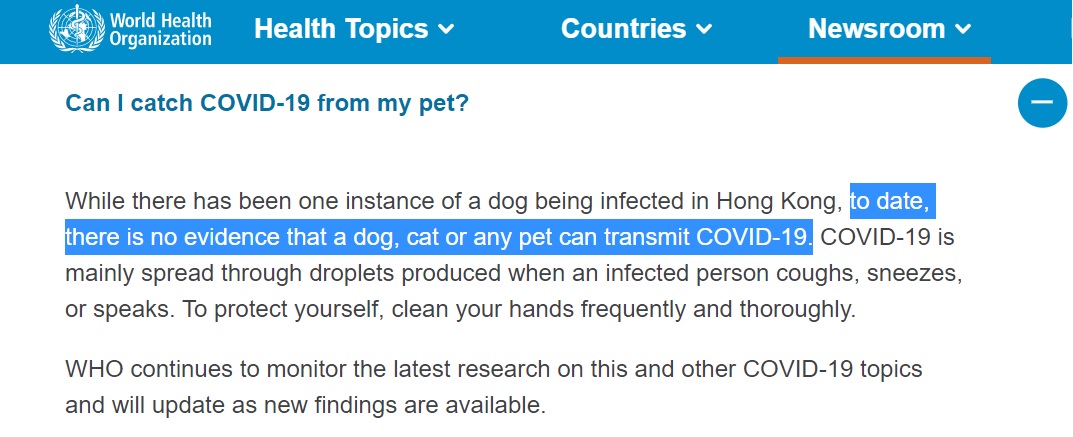
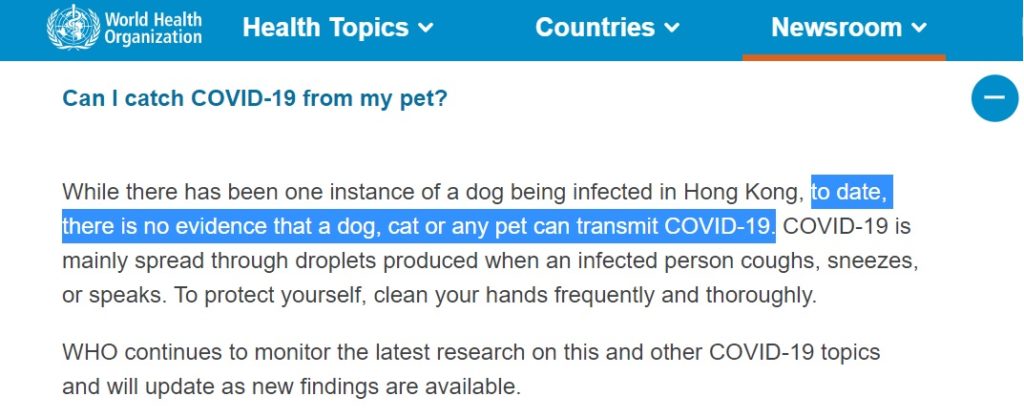
“While there has been one instance of a dog being infected in Hong Kong, to date, there is no evidence that a dog, cat or any pet can transmit COVID-19. COVID-19 is mainly spread through droplets produced when an infected person coughs, sneezes, or speaks. To protect yourself, clean your hands frequently and thoroughly.”
World Health Organization
The 17-year-old Pomeranian in Hong Kong had since tested negative after quarantine. The authorities believed the dog contracted a “low-level infection” from its owner, with no evidence of transmission back to humans.
2026 update: what five years of research confirms
So, can dogs get coronavirus in 2026? Five years of data since that Hong Kong Pomeranian has filled in the picture. Here is where the science stands:
Dogs can get COVID-19. Infections have been confirmed in dogs across multiple countries. Cats appear to be more susceptible than dogs; both are far less susceptible than humans.
Symptoms are almost always mild. Most dogs that test positive show no symptoms at all. Those that do typically show lethargy, coughing, runny nose, or reduced appetite, and recover without treatment.
Dogs do not spread COVID to humans. No real-world case of dog-to-human COVID-19 transmission has been confirmed. The risk runs one way: from an infected person to their dog.
What to do if you have COVID and a dog. Keep some distance for a few days. Ask someone else to handle feeding and walks if possible. No mask is needed for your dog.
How to protect yourself against COVID-19
Follow basic hygienic precautions:
- Wash your hands often with soap and water or a hand sanitizer with at least 60% alcohol.
- Avoid touching your eyes, nose, and mouth with unwashed hands.
- Keep social distancing.
- Stay home when you are sick or have a fever.
- Cover your cough or sneeze with a tissue, then throw the tissue in the trash.
- Clean and disinfect frequently touched objects and surfaces.
During lockdowns, stray and street dogs across Indian cities lost the daily feeders they depended on. Volunteer networks filled the gap. If you live near street dogs or cats, leaving out water and food during any period of restricted movement is a small act with a large impact.
More time at home with your dog is a good time to focus on grooming. Here are some tips to groom your dog at home.
Covid-19 pet care tips
There is no reason to change daily routines with pets while people remain healthy and symptom-free. Dogs are our friends through thick and thin.
- Look out for the exercise regimen of your dogs. If you are in a relatively safer area, take your dog out and practise social distancing during walks. In high-alert situations, try indoor activities to channel your pet’s energy.
- Keep your pets close during walks to make social distancing in public easier.
- Can dogs get coronavirus from you if you are sick? Yes, but only through close contact. Keep some distance from your dog if you have active symptoms, and ask someone else to handle walks and feeding if possible.
- Try avoiding all non-critical vet trips. For non-urgent health issues, check if a phone or online consultation is available first.
- Prepare a backup plan. If you get the virus, who cares for your dog? Sort out a caretaker, extra food supply, and your pet’s routine in advance.
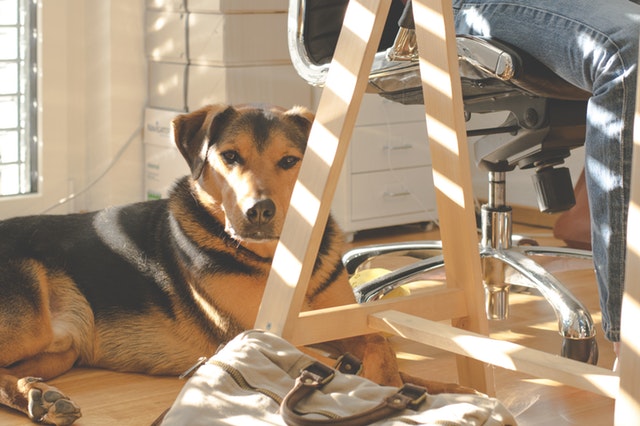
Should my dog wear a mask?
Experts believe that dogs do not need a face mask to protect themselves against COVID-19. If you are still concerned or notice a change in your dog’s health, speak to a veterinarian.
How dogs are helping to detect COVID-19
While owners were asking can dogs get coronavirus, researchers had a parallel question: can dogs detect it in humans? Researchers at the National Veterinary School of Alfort, outside Paris, trained eight Belgian Malinois shepherd dogs to identify people infected with the coronavirus. They used odour samples taken from the armpits of more than 360 people, both positive and negative for the virus.
The dogs had a 95% success rate in early trials.
The researchers described dog detection as a cheap, quick, and reliable tool.
Origins of COVID-19: the raccoon dog evidence
While people everywhere asked can dogs get coronavirus, researchers worked in parallel to find where SARS-CoV-2 originated. While the exact source remains unclear, evidence from the Wuhan animal market has pointed to a likely animal origin.
Scientists analysed genetic material collected from the Wuhan market in the early days of the pandemic. The analysis found raccoon dog DNA combined with the virus at the same stalls where the animals were sold live. Raccoon dogs are not true dogs. They belong to the dog family but are more closely related to foxes, and are known carriers of coronaviruses.
This analysis was not peer-reviewed at publication, and the question of COVID-19’s exact origin remains contested. But it is the strongest wildlife-origin evidence published to date.
What COVID-19 did to dog ownership: the boom and the bust
The early question “can dogs get coronavirus?” was quickly answered. What took longer to understand was what COVID did to dog ownership itself. Both sides of the story are worth understanding.
The pandemic puppy boom (2020-2021)
As lockdowns took hold, millions of people decided they finally had the time to get a dog. New puppy veterinary visits hit levels the industry had never recorded. Shelters in India and globally reported near-zero availability. Waitlists for puppies stretched to months. It looked like a turning point for dog ownership.
The Puppocalypse (2022 onwards)
It wasn’t a turning point. It was a spike followed by a structural fall.
New puppy veterinary visits have now fallen for four straight years since the Covid boom, to 62% of their pre-Covid level. Two independent industry panels, Vetsource and Kynetec, agree on the scale. The boom lasted two years. The below-baseline cohorts it left behind hold canine visits down for the life of each dog. No future rebound reverses what has already entered.
Google search data tells the same story. Puppy-related search interest sits about 20% below its pre-Covid baseline, back to 2015 levels. Meanwhile, kitten search interest just hit a 21-year high.
Why puppies and not kittens? Two structural forces:
Cost of veterinary care. Veterinary service prices are up 51.4% since December 2019, against 28.5% for all consumer prices. Dogs cost more to maintain and more to acquire. Around 30% of dogs come from breeders or pet stores, while 12% of cats do. Most cats arrive free or informally. A puppy comes with a price tag. A kitten walks in.
The housing shift. Single-family home residence falls from 68% of Boomers to 31% of Gen Z. Younger households live in apartments. Move from a house to an apartment and the odds your pet is a dog roughly halve, while cats hold steady. Dogs need space. Cats fit the apartment.
Both forces point the same direction: fewer new puppies, and no rebound coming. The veterinary industry had expected a return to 2-3% annual clinical visit growth. The demographics put the realistic range at -2% to 0% well into the next decade.
Can dogs get coronavirus from other dogs?
No. Can dogs get coronavirus from other dogs at the park or on a walk? The evidence says no. SARS-CoV-2 spreads from infected humans to dogs, not between dogs. Normal socialisation and walks carry no meaningful risk to your dog.
What this means for adoption in India
If the pandemic created two years of adoption boom, the bust years are the time to act. Shelters and rescue networks across India have more animals than they did at peak pandemic demand. India’s Indian Pariah Dogs adapt well to apartment living, are genetically robust, and cost nothing to bring home from a rescue or shelter.
Find a dog or cat to adopt in India | Animal helplines across India
Looking for something to watch or read with your dog? Here are some movies, documentaries, and books worth your time.
Can dogs get coronavirus? Yes. Can they pass it back to you? No confirmed case exists. So stay safe, wash your hands, and pet your dog. Don’t fall prey to rumours. Never abandon your dog, cat or other pets because of coronavirus fear or for any other reason.
Frequently asked questions
Can dogs get coronavirus?
Yes. Dogs can get coronavirus (SARS-CoV-2), almost always from an infected owner. Infections in dogs are rare and almost always mild. No confirmed case of a dog spreading coronavirus back to a human exists.
Can my dog give me COVID-19?
No confirmed case of dog-to-human COVID-19 transmission has been documented. The risk runs the other way: an infected person can pass it to their dog.
Should my dog wear a mask?
No. Dogs do not need masks to protect against COVID-19.
Can dogs be vaccinated against COVID-19?
There is no widely available COVID-19 vaccine for dogs. Focus on core vaccines: rabies, parvovirus, distemper, and leptospirosis.
What should I do if I have COVID-19 and own a dog?
Keep some distance for a few days. Ask someone else to handle feeding and walks if possible. There is no confirmed risk of spreading COVID to your dog through normal care, but it is a sensible precaution.
What is the Puppocalypse?
The term for the structural decline in new puppy acquisitions that followed the 2020-2021 COVID boom. New puppy veterinary visits now sit at 62% of their pre-Covid level, having fallen for four straight years.
Is now a good time to adopt a dog in India?
Yes. Post-boom, shelters and rescue networks across India have more animals available than during peak pandemic demand. Start here.
Get more dog stories in your inbox. Join Woofs & Words on LinkedIn.
Subscribe on LinkedIn