
Medically reviewed by Dr. Catherine Nicolaou, DVM.
Run your hand down your dog’s back after a monsoon walk and you feel it: a small hard bump near the collar that was not there this morning. A brown dog tick, already feeding. In India that is not a rare event, it is most weeks of the year, and the tick itself is rarely the real problem. What it can leave behind, tick fever, is.
A common myth is that India’s native dogs are immune to everything. A hardy Indian pariah does shrug off a lot, but ticks and tick fever are not on that list. The checks below apply to indies and pedigrees alike.
What to do about ticks on dogs, in short: check your dog after every walk, especially the ears, neck, armpits and toes. If you find a tick, pull it straight out with fine tweezers close to the skin, without twisting or crushing it. Keep ticks off in the first place with a vet-recommended preventive, not kitchen remedies. And watch for fever, tiredness or loss of appetite in the days after a bite, the early signs of tick fever.
What a tick actually does to a dog
A tick is not an insect. It is an arachnid, a relative of spiders and mites, with eight legs and one purpose: to attach to a warm body and feed on blood. It climbs on as your dog brushes past grass or shrubs, anchors into the skin, and swells from a flat speck to a fat grey bean over a few days. The bite itself is minor. The danger is what rides in with the tick’s saliva, and a tick usually has to stay attached for a day or two before it passes on disease. That delay is exactly why finding and removing it fast matters so much.
Where dogs pick up ticks, and where ticks hide
Ticks wait on the tips of grasses and shrubs with their front legs out, ready to grab a passing host. Vets call it questing. Parks, gardens, vacant plots and any patch of tall grass are prime pickup spots, and in India the brown dog tick is happy to breed indoors too, in floor cracks, on rugs and in your dog’s bedding, all year round. Once aboard, ticks head for warm hidden folds: inside and around the ears, under the collar, in the armpits, between the toes and at the base of the tail. Those are the spots to check first, every time.
How to spot a tick on your dog
Ticks are big enough to see and feel. An unfed one looks like a small flat spider; a fed one swells and darkens into a smooth grey bean stuck to the skin. The quickest check is with your hands: pat and run your fingers slowly over your dog, and stop at any lump or scab you do not recognise. Part the fur and look. Do this after every walk in grass, and once a week even for a dog that mostly stays home.
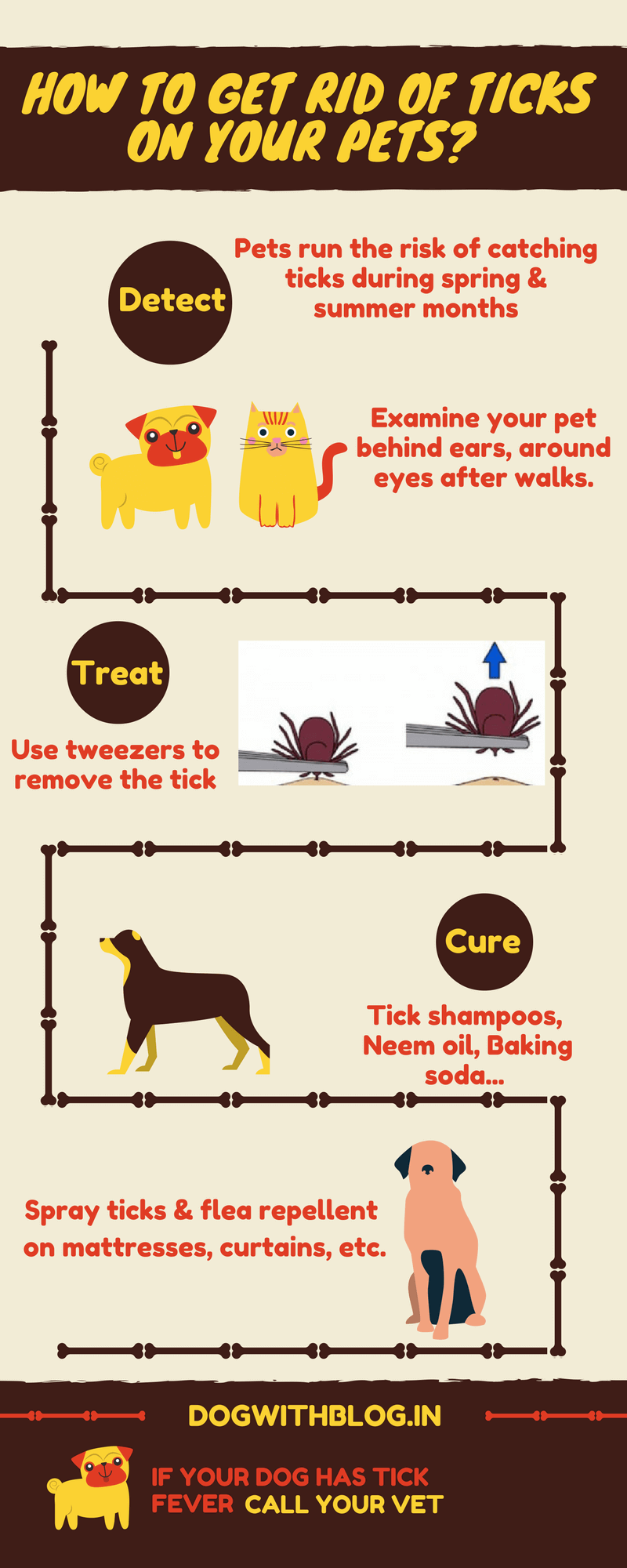
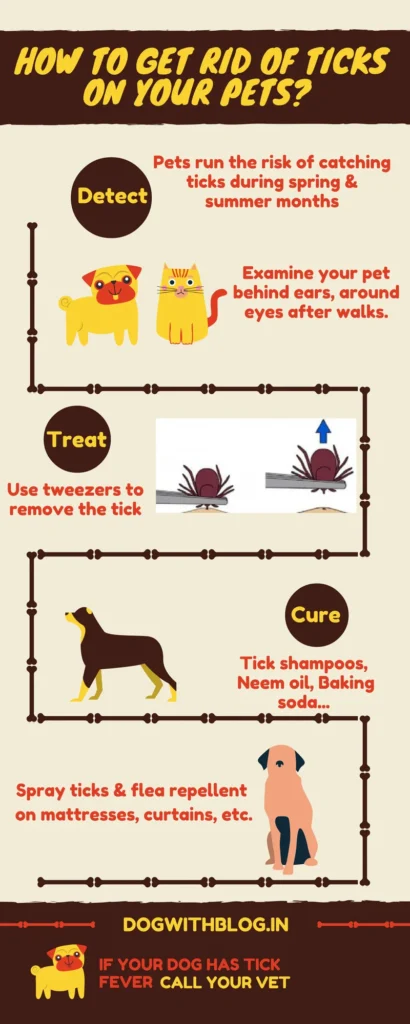
Signs your dog may have ticks or tick fever
Sometimes the ticks are obvious. Sometimes the first thing you notice is the dog going quiet. Watch for constant scratching, red or inflamed skin, small bumps or scabs, and hair loss around bite spots. If the scratching carries on well after the ticks are gone, it is worth ruling out a dog skin allergy instead. The signs that worry a vet more are the ones that point to tick fever: fever, tiredness, loss of appetite, pale gums, or bleeding that will not stop. Tick fever, mainly ehrlichiosis and babesiosis, is common in India and can turn serious, so those signs after a known bite mean a vet visit, not a wait.
How to remove a tick safely, step by step
If you find a tick, do not panic, and do not reach for a matchstick or nail polish. The old tricks make it worse. Do this instead:
- Grip the tick with fine-point tweezers or a tick-removal tool, as close to the skin as you can get.
- Pull straight up with slow, steady pressure until it lets go. Do not jerk, twist or squeeze the body, which can push infected fluid back into your dog.
- Check that the head and mouthparts came out too. If a bit stays behind, clean the spot and let the skin work it out; see a vet if it swells.
- Drop the tick into a sealed container or a little rubbing alcohol. Your vet may want to see it, and it helps to know what bit your dog.
- Clean the bite, disinfect the tweezers, and wash your hands. Never crush a tick between your fingers.
Then note the date. If your dog runs a fever or goes off its food over the next week or two, tell the vet about the bite.
Prevention that works, and what to skip
The honest truth is that regular tick checks plus a proper preventive beat every home remedy on the internet. Ask your vet for a tick preventive suited to your dog: a monthly spot-on, an oral chewable, or a good tick collar. Those are what actually break the tick’s life cycle. Pair them with the dull, effective habits: check your dog after walks, keep grass trimmed, and wash bedding, blankets and cushion covers often, because indoor ticks live in the soft furnishings, not only the garden. Regular brushing does double duty, keeping the coat healthy and letting you catch ticks early.
Ignore anything that promises to kill ticks “instantly.” There is no safe magic spray. The fastest safe fix is to pull an attached tick straight out, and a vet preventive then keeps the next ones off over the following hours and days. Cleaning the house matters for a reason people miss: a fed female tick drops off and lays thousands of eggs in floor cracks and bedding, so the ticks you can see are only part of the problem.
One caution, because it matters: skip the essential-oil recipes that get passed around, the tea tree oil, eucalyptus oil and the like. Those oils are toxic to dogs and can do more harm than the ticks. If you want to use anything beyond a vet-recommended product, clear it with your vet first.
Can you catch ticks, or tick disease, from your dog?
Ticks do not settle on people the way they do on dogs, but a tick that rode home on your dog can still crawl onto you and bite, and the illnesses ticks carry affect humans too. So the sensible habits protect the whole house: wash your hands after handling a tick, check yourself and the kids after the same walk your dog took, and never crush a tick with bare fingers. You cannot, though, catch tick fever straight from your dog. It takes a tick bite to pass it on, dog to dog or dog to person.
When to see a vet
See a vet if your dog has an infestation you cannot clear, if a bite turns swollen or infected, or if any tick-fever sign appears: fever, lethargy, no appetite, pale gums or unexplained bleeding. Ticks and worms tend to travel together in an under-protected dog, so keep the vaccination and deworming schedule current as well. Keep a dog first-aid kit at home with tweezers and antiseptic, and if it is an emergency and you have no vet, your city animal helpline can point you to the nearest clinic.
How to get rid of ticks on dogs: FAQs
What kills ticks on dogs instantly? Nothing safe kills an attached tick “instantly,” and sprays that claim to are best avoided. The fastest safe fix is to pull the tick straight out with fine tweezers, close to the skin, then use a vet-recommended preventive to keep the next ones off.
How do you get rid of ticks on a dog fast? Check your dog after every walk, remove any attached tick straight up with tweezers without twisting, wash the bedding and vacuum the floor cracks where ticks breed, and start a vet-prescribed monthly spot-on, chewable or collar. Checks plus a proper preventive clear them faster than any home remedy.
Get more dog stories in your inbox. Join Woofs & Words on LinkedIn.
Subscribe on LinkedIn
Prevention is always better. But I had a dog with many ticks on her ( off and on) and nothing ever happened to her. Now i have one, who barely got one tick and it was enough to give him a tick fever. Because he didn’t really have a lot of ticks on him we may have ignored it. But really, even a single tick is enough to pass on the pathogen. Found a wonderful doctor who resolved this. We got lucky. I really think that during tick season, the moment the pooch starts looking glum, refuses to eat and slows down, rush him/her to the doc.
Right you are! As the adage runs, prevention is better than cure.