
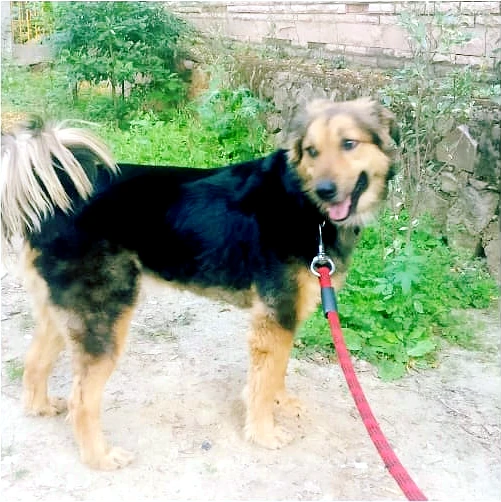
A dog bred to fight leopards does not belong in a city flat. The Gaddi, or Gaddi Kutta, is the black, thick-necked livestock guardian that the Gaddi shepherds of Himachal Pradesh have used for generations to hold off snow leopards, wolves and bears on the high pastures. In English it is often called the Himalayan Sheepdog, and in the hills the Indian Panther Hound. In January 2025 it became the first Himalayan dog, and India’s fourth indigenous breed, to be officially registered by ICAR-NBAGR. Fewer than a thousand purebreds are left. That single fact is the honest answer to every “Gaddi dog price” search: this is a working guardian shaped by the mountains, not a puppy to order.
If you have landed here to buy one, read to the end first. If you saw a big black dog shadowing a flock on a Himachal trek and wondered what it was, you are in the right place.
Gaddi dog at a glance
- Also called: Gaddi Kutta (गद्दी कुत्ता), Gaddi Mastiff, Indian Panther Hound / Leopard Hound; closely related to the Bhotia (Himalayan Sheepdog)
- Origin: Himachal Pradesh, from the Gaddi shepherd community of the Chamba and Bharmour hills; found across the Himalayas from Jammu & Kashmir to Arunachal Pradesh
- Breed type: Livestock-guardian mountain dog (molosser build)
- Official status: Registered by ICAR-NBAGR on 6 January 2025, India’s 4th indigenous dog breed and the first from the Himalayas
- Height: around 65-75 cm (males), 60-70 cm (females) at the shoulder
- Weight: around 39 kg (males), 33 kg (females)
- Coat & colour: thick weatherproof double coat; predominantly black, sometimes with white on the chest, feet or tail-tip
- Temperament: loyal, calm-but-alert, deeply territorial; reserved with strangers; independent-minded, not a first-timer’s or apartment dog
- Lifespan: roughly 10-12 years (typical for the type)
- Population: fewer than 1,000 purebreds
India’s first Himalayan breed on the register
On 6 January 2025, at the 12th meeting of its Breed Registration Committee, ICAR-NBAGR in Karnal recognised the Gaddi as a registered indigenous breed. It was one of ten new livestock and poultry breeds cleared that day, taking India’s registered total to 229. For dogs it was a milestone: the Gaddi is only the fourth Indian dog breed on the register, after the Rajapalayam and Chippiparai of Tamil Nadu and the Mudhol Hound of Karnataka, and the first to come from the Himalayas.
India has honoured this dog before, too. On 9 January 2005, the Himalayan Sheepdog, the Gaddi’s other name, appeared on one of India Post’s four dog-breed postage stamps, alongside the Rampur Hound, the Mudhol Hound and the Rajapalayam. Twenty years later, the breed register made it official.
Recognition is not a trophy. With fewer than a thousand purebreds left, formal registration is the paperwork a conservation effort actually needs: a documented breed standard, a phenotype on record, and a reason for the state to protect a dog that has quietly done a hard job for centuries.
Bred to face the leopard
The Gaddi takes its name from the Gaddi people, the semi-nomadic shepherds who move their flocks between the low winter valleys and the high summer meadows of Himachal. Up there, a lost sheep is not a loss you shrug off, and the predators are serious: snow leopards, Himalayan wolves, black bears. The dog’s job is to stand between them and the flock.
That job is written into the body. The Gaddi’s thick, arched neck, the feature people notice first, is armour: it makes it hard for a big cat to get a killing grip on the throat. Its reputation for holding its ground against a leopard is why the hills call it the Indian Panther Hound. This is not a dog bred to look a certain way in a show ring. It was bred to work, in cold, at altitude, against animals most dogs would flee.
What a Gaddi dog looks like
Picture a solid, athletic mountain dog, usually jet black, sometimes with a splash of white at the chest or feet. Males stand around 65-75 cm at the shoulder and weigh close to 39 kg, females a little less. It carries a heavy double coat built for Himalayan winters, a broad head, and that signature maned, arched neck. It reads as powerful and agile rather than tall and heavy, closer to a working molosser than a lumbering giant. The look is pure function: every part of it is there to survive cold nights and stand up to something with claws.
Living with a Gaddi: what it is really like
Honest answer: for almost everyone reading this, a Gaddi is the wrong dog. It is a livestock guardian with centuries of independent decision-making bred into it. Around its own people it is calm and affectionate; it only switches on when something is off, and then it means it. It bonds hard with family and territory, reads strangers as a question to be answered, and does not turn that instinct off because it now lives behind a gate.
It is intelligent and responsive to a handler it respects, but it is not a Labrador. It was bred to make its own calls on a mountainside, so it thinks for itself, and training a guardian breed takes experience, early socialisation and patience, not repetition drills. It needs space, cool weather, a couple of hours of real daily exercise, and a job to do. In a hill home with land and livestock, a well-raised Gaddi is a magnificent working partner. In a warm city apartment it is a large, frustrated, overheated dog, and that is unfair to the dog before it is a problem for anyone else. If what you actually want is a devoted Indian dog for a normal home, the Indian street dog will love you just as fiercely and thrive where a Gaddi would suffer.
Gaddi vs Tibetan Mastiff: not the same dog
People constantly confuse the two, and breeders lean on the mix-up because a Tibetan Mastiff sells. They are different animals. The Tibetan Mastiff is the heavier, taller, slower one, a mass of coat bred as much for looks now as for work. The Gaddi is leaner, faster and more agile, built for stamina and real predator defence rather than bulk. Put simply: the Tibetan Mastiff is the bodybuilder, the Gaddi is the mountaineer. If a seller shows you a giant fluffy “Gaddi” that looks like a lion, you are probably looking at a Tibetan Mastiff or a cross, not a Gaddi.
Gaddi, Bhotia and Bakharwal: sorting out the names
This is where the internet gets muddled, so here is the clean version. “Gaddi”, “Bhotia” (also spelled Bhutia), “Bhote Kukur” and “Himalayan Sheepdog” are names that overlap heavily, and many sources use them for the same mountain dog. Treat the Gaddi as the Himachali, black, leopard-fighting end of that family, the name ICAR-NBAGR chose when it registered the breed. Its close cousin further north-west is the Bakharwal, the leaner guardian of the Bakarwal and Gujjar nomads of Jammu & Kashmir, a dog whose world we wrote about in life of a dog in Kashmir. For the full picture of the wider Himalayan group, its history, care and where the names came from, read our Bhotia / Himalayan Sheepdog guide.
Caring for a Gaddi dog
Everything a Gaddi needs comes back to the mountains it was built for. That thick double coat sheds heavily, especially as seasons turn, so it wants regular brushing, and it means the dog struggles badly in plains heat: shade, fresh water and cool walking hours are not optional in an Indian city or summer. It needs real exercise, a couple of hours a day of walking, patrolling and space to move, not a balcony and a short lead. Feed it as the large, active working dog it is.
Big mountain guardians are broadly hardy, but, like most large, deep-chested breeds, they are worth watching for hip dysplasia and for bloat (gastric torsion), the fast, dangerous stomach emergency that large dogs are prone to. Keep vaccinations and deworming current, and build a relationship with a vet who knows big breeds.
Gaddi dog price, and why you probably should not buy one
Search “Gaddi dog price” and you will find numbers. Ignore them. The numbers you will see run from a few thousand rupees to the high tens of thousands, and none of them come with proof the dog is a Gaddi. The Gaddi is not a commercial breed sold from puppy farms; there are fewer than a thousand purebreds, and the real ones are working dogs living with shepherds who are not in the business of selling them. Anyone advertising cheap “Gaddi puppies” in a city is either selling you a mixed-breed guess, often a Tibetan Mastiff cross, or fuelling exactly the kind of demand that hurts rare working dogs.
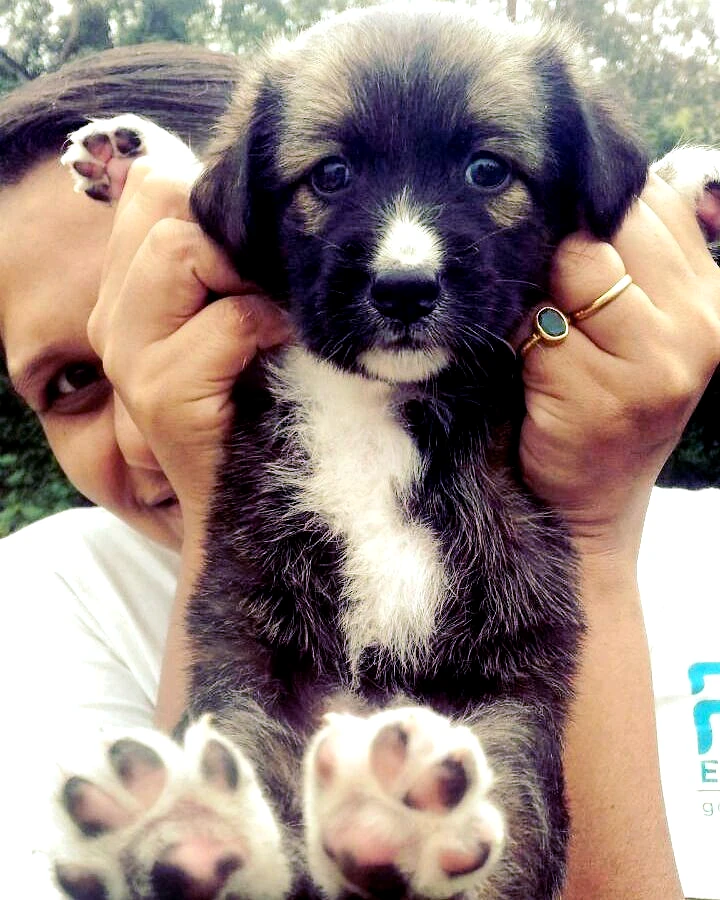
The better path fits the dog and what we stand for: adopt, don’t shop. If you genuinely have the land, the climate and the experience for a guardian breed, ask hill rescues and shepherd networks rather than a breeder. And if you simply want a loyal Indian dog to share your home, browse dogs and cats up for adoption near you and give a waiting indie a home. That is the outcome a rare breed like the Gaddi actually needs: fewer people buying dogs, more people adopting them.
New to India’s native breeds? See the full roundup in our guide to Indian dog breeds.
Get more dog stories in your inbox. Join Woofs & Words on LinkedIn.
Subscribe on LinkedIn