
Medically reviewed by Dr. Catherine Nicolaou, DVM.
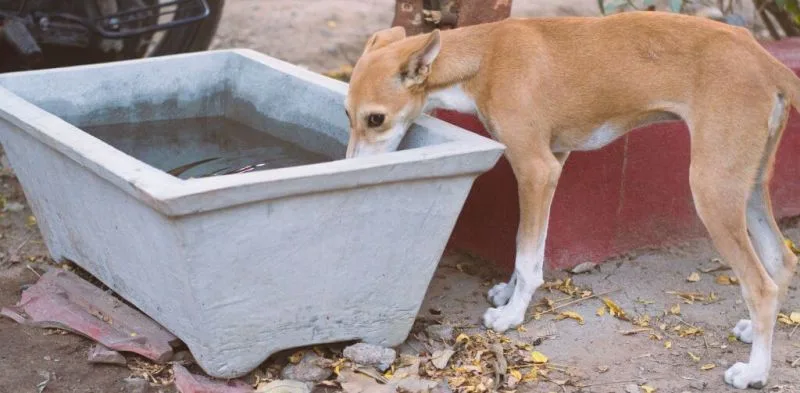
In what promises to be a long, harsh and hot Indian summer, the mercury has begun to surge to new heights. The homeless bear the wrath of the sun at its worst hence we request all our readers to put out water bowls for the birds, cats, and dogs.
Before we head over to the tips to beat the heat, let’s understand how cats and dogs regulate their body temperature:
- Panting (Dogs regulate 80% of their temperature this way) and licking (cats)
- Heat exchange through the skin, ears, and fur
- Sweating via paws
How Dogs Stay Cool: Understanding Thermoregulation and Summer Safety
Dogs don’t sweat like we do—and that makes summer safety all the more important. While we humans rely on perspiration to cool down, our canine companions have a completely different (and more limited) system for managing heat.
Thermoregulation is how your dog maintains a safe internal temperature, typically between 38.3°C and 39.2°C, even as outdoor conditions shift. When temperatures soar, their cooling systems can quickly become overwhelmed—especially if they’re active, overweight, or belong to a heat-sensitive breed.
The heat issues can get fatal very quickly, this handy list of easy tips by our in-house vet Dr Cat tell you how to keep dogs safe in summer.
How to keep dogs safe in summer:
1. Access to freshwater
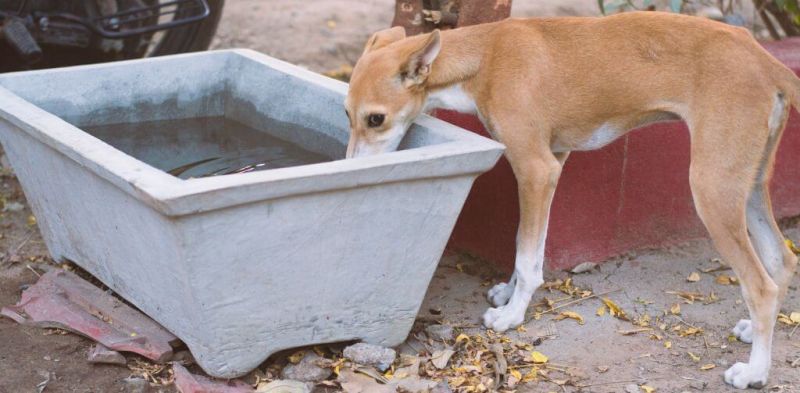
Keep a filled water bowl near your dog at all times. While this may be obvious, it is an especially important step. If your dog finishes the bowl quickly, get a bigger bowl or get a few bowls.

You may also put out hanging pots like the one above to help birds.
2. Brush, don’t shave
The instinct in an Indian summer is to clip the coat down to the skin. For double-coated breeds (German Shepherds, Spitz, Golden Retrievers, Huskies, and the rest people keep here despite the heat), that is backwards. The coat does a job: it traps a layer of cooler air against the skin and blocks direct sun. Shave it off and you raise the risk of sunburn and overheating, and it often grows back patchy; vets at Cornell’s Riney Canine Health Center warn that shaving a double coat can damage the follicles and ruin regrowth. What helps instead is regular brushing to pull out the loose dead undercoat, so air can move close to the skin. Single-coated dogs can take a light trim, but check with your vet before any big cut, and never clip to the skin.

Also read: How to keep your pets safe from mosquito bites?
3. Never leave your dog in the car unattended
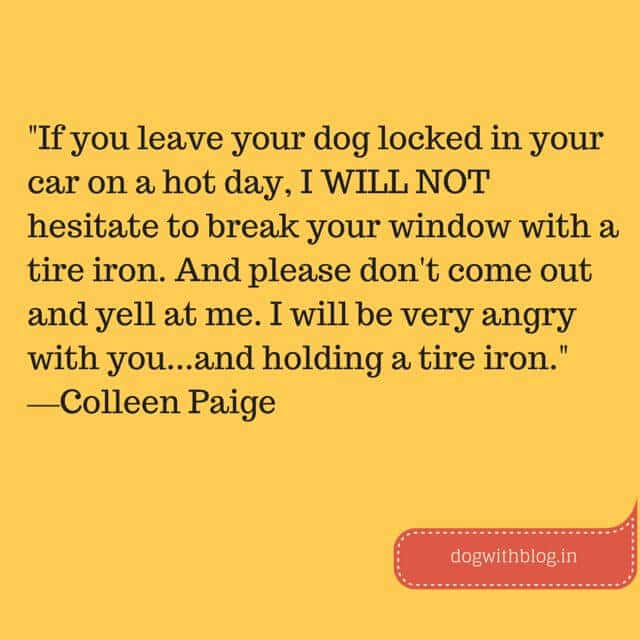
During hot summer months, leaving a dog in a parked car can quickly become dangerous, even deadly. The temperature inside a locked car can rise to dangerous levels within minutes. Even on a mild day, the temperature inside a car can quickly reach dangerous levels, causing heat stroke, dehydration, and even death. Dogs are especially vulnerable to heatstroke as they cannot regulate their body temperature as efficiently as humans.
To protect dogs in hot cars, pet owners should never leave their dog unattended in a parked car, even for a short period. If you need to run errands, it’s best to leave your dog at home in a cool, shaded area. Alternatively, you can bring them with you and have a designated person stay in the car with them, with the engine running and air conditioning on.
Cracking the windows does almost nothing. The American Veterinary Medical Association notes a parked car heats about 11°C (20°F) in ten minutes and nearly 17°C (30°F) in twenty, and a gap in the window barely changes that rate. On a 35°C Indian afternoon that is a 45–50°C oven within minutes. There is no safe version of leaving a dog in a parked car: not in the shade, not with the windows down, not “just for two minutes.” Carry water for your dog, and if you must run an errand, leave them home in a cool room instead.
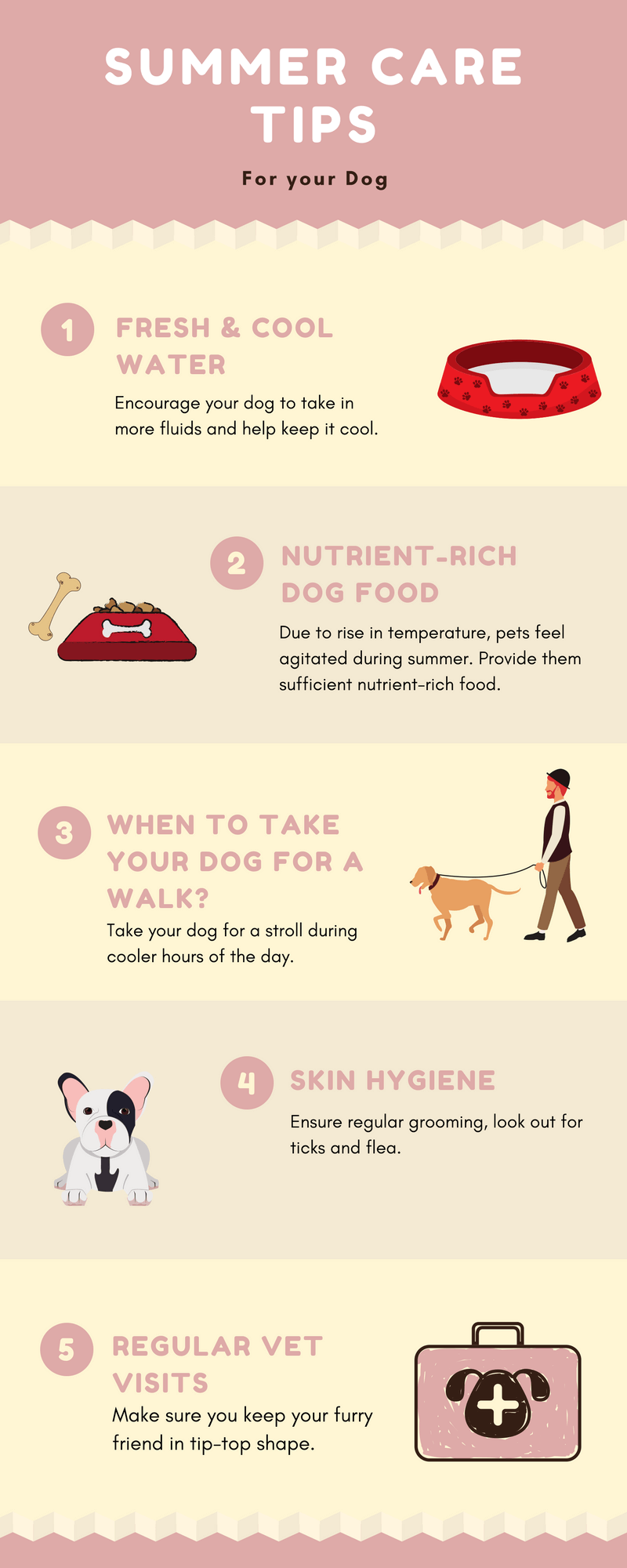
Cooling down the dog’s paws help to reduce their body temperature. Use a wet cloth to cool them down by applying the cloth under their paws.
4. Take advantage of the cooler parts of the day to exercise your dog.
Just as in the case of humans, prolonged exposure to the sun can elevate the risk of heat stroke and sunburn in dogs. Remember that your dog has a fur coat to manage and will heat up much faster than you would.
When it’s too hot to walk at all
The parked car gets the headlines, but a Royal Veterinary College study found most heat-stroke cases come from exercise, not cars: dogs overheating on walks and runs because they push themselves long past the point they should stop. On the worst days, the safest walk is no walk. You can tire a dog out just as well indoors:
- A lick mat, or a Kong smeared with plain curd or peanut butter and frozen.
- A snuffle mat, or treats hidden in a rolled-up towel for a nose-work hunt.
- A puzzle feeder, or the cheapest version: kibble scattered across a steel plate under a folded cloth to forage out.
Ten minutes of sniffing and problem-solving tires a dog more than a hot, listless walk. Save the real walk for after 8pm, once the ground has cooled.
5. Keep your home cool
Employ these ideas to maintain an optimum temperature indoors:
- Install sun-blocking curtains
- Turn off or unplug appliances you are no longer using. All electronic items generate heat.
- Remove the carpets from rooms to allow your pets relatively extended ‘cooler’ area to lie on.
- Leave the fans on for pets
6. How to detect Heat Stroke in Dogs?
Summertime comes with its own set of hazards, so please ensure that you identify the warning signs of trouble. When in doubt, call your vet right away.
If not addressed early, heat exhaustion can lead to heatstroke—a life-threatening emergency where body temperature rises above 41°C. At this stage, internal organs may begin to shut down. Immediate cooling and veterinary care are essential.
If you see any of these signs, get your dog to a veterinarian quickly:
- Labored breathing
- Tongue color will change from dark red to purple
- Pulses will be fast
-
Excessive or heavy panting or Drooling
-
Red or warm ears
-
Vomiting or disorientation (in advanced stages)
High-Risk Dogs That Need Extra Care
Some dogs are more prone to heat stress than others:
-
Flat-faced breeds (like Pugs or Bulldogs) struggle to cool themselves efficiently
-
Thick-coated dogs retain more heat
-
Overweight dogs have a harder time releasing heat
-
Senior dogs or puppies may not regulate body temperature as well
If your dog falls into any of these categories, avoid strenuous exercise and keep them indoors during the hottest parts of the day.
The numbers are stark. In a Royal Veterinary College study of more than 900,000 dogs, flat-faced breeds carried many times the heat-stroke risk of a Labrador: Chow Chows about 17 times, Bulldogs 14, and French Bulldogs 6, and roughly one in seven dogs treated for heat-related illness died from it. That matters in India, because the two breeds people buy most on impulse, Pugs and French Bulldogs, sit near the top of that list, while the indie asleep in the shade outside is built for this climate and barely shows up in those ER numbers.
If your dog overheats: the first five minutes
Heat stroke is one of the few dog emergencies where what you do before you reach the vet decides the outcome. If you see the signs above, act straight away:
- Stop everything and get the dog into shade or an air-conditioned room.
- Start cooling with cool, not ice-cold, water over the belly, groin, and paw pads, where heat leaves the body fastest. Ice-cold water clamps the blood vessels shut and traps heat in.
- If the dog is alert and wants to drink, offer small sips. Do not force it.
- Get to a vet even if the dog seems to bounce back. Heat injury keeps damaging the organs for hours after a dog looks fine.
The biggest mistake is waiting to “see if it passes.” It is far easier to cool a dog down early than to treat organ damage later.
7. A little curd in the bowl
Not a cooling trick, but a small spoon of plain curd (dahi) is an easy summer gut-health aid: the live cultures support digestion and crowd out the bad bacteria that thrive in the heat. Plain and unsweetened only, and skip it if your dog does not handle dairy well.
Hot pavement: the summer danger most people miss
On a 43°C afternoon in Delhi or Ahmedabad, the air is punishing, but the road is worse. When the air hits 40°C, the asphalt underfoot can climb past 51°C, and once the air crosses 30°C the surface is already near 57°C. Tar, concrete, and paving tiles soak up the sun and hold that heat for hours after the peak has passed. Your dog crosses all of it on bare skin.
At around 52°C, a paw pad can burn in 60 seconds. Past 60°C, faster. Vets across Indian cities see the same thing every May and June: dogs limping in with raw, blistered pads because someone took them out at 5pm on a road that felt fine through shoe soles.
There is no single “too hot” number to memorise. Humidity does as much damage as heat, so a sticky 25°C morning in Mumbai or Chennai can be more dangerous than a dry 30°C one in Pune. Flat-faced breeds, seniors, and dogs with heart or breathing trouble feel it first.
The hand test, and it takes seven seconds. Press the back of your hand flat on the pavement and hold it there. If you cannot last seven seconds, it is too hot for paws. Do this before every daytime walk, not only on the days that look hot. Dark tiles and tar roads fail this test long before the air feels dangerous.
Signs the pads are already burned: limping or refusing to walk, licking or chewing at the feet, pads that look darker than usual, red or missing patches, or blisters. If you spot these, get off the hot surface, cool the paws with room-temperature water (never ice), and call your vet. Burned pads infect quickly.
How to avoid it:
- Walk before 7am or after 8pm, once the surface has cooled.
- Choose grass, mud, or shaded paths over open road and tile.
- Booties work on unavoidable hot stretches, if your dog tolerates them.
- Carry your dog across short hot patches, like a car park to a grass verge, instead of making them walk it.
- Indoors, a cooling mat and cold (not iced) water within reach take the edge off the worst hours.
The old rule still holds, just be stricter about it: if the ground is too hot for your bare hand, it is too hot for their feet.
Watch the places that feel safe, too. A shadeless backyard at 3pm, a beach in Goa or Chennai where the sand burns like the road and a dog gulps saltwater, a café patio on hot tile with no water within reach: each of these sends dogs to the vet every summer. “Outdoors and fun” is not the same as “safe.”
Keep your dog free from external parasites and allergens during the summer. Groom regularly, bathe your pet with quality pet care products – and don’t forget shampoo and powder (for action against ticks, fleas, and lice).
Try to opt for products that contain natural ingredients like Neem, Hibiscus, and Eucalyptus to maintain your pet’s skin health and hygiene.
Whether your summer plans include travel, hikes, or just lazy afternoons in the backyard, always stay mindful of how quickly heat can affect your four-legged friend.
Prevention is everything. A shaded spot, fresh water, and a watchful eye go a long way in helping your dog not just survive—but truly enjoy—the summer months.
Get more dog stories in your inbox. Join Woofs & Words on LinkedIn.
Subscribe on LinkedIn
Insightful as always, Abhishek… Only wish that people start treating dogs as family instead of animals… That way they will heed your advice more and make this world a better place for our 4-legged companions…
Thanks Vishal, hope floats for such a day…
hello! M ketho… i live in delhi. I have a labrador… His name is mylo.he is 5 months old. I have been giving him pedigree , sometimes mixed with rice n soya nuggets…. but he does seem to gain weight…. can u help me with his diet?
Work out labs need to get proper exercise otherwise they gain weight and lot of other problems come along take him for long walks and running
in my opinion, dogs should not be in cars unless traveling. it’s way too hazardous in any conditions