
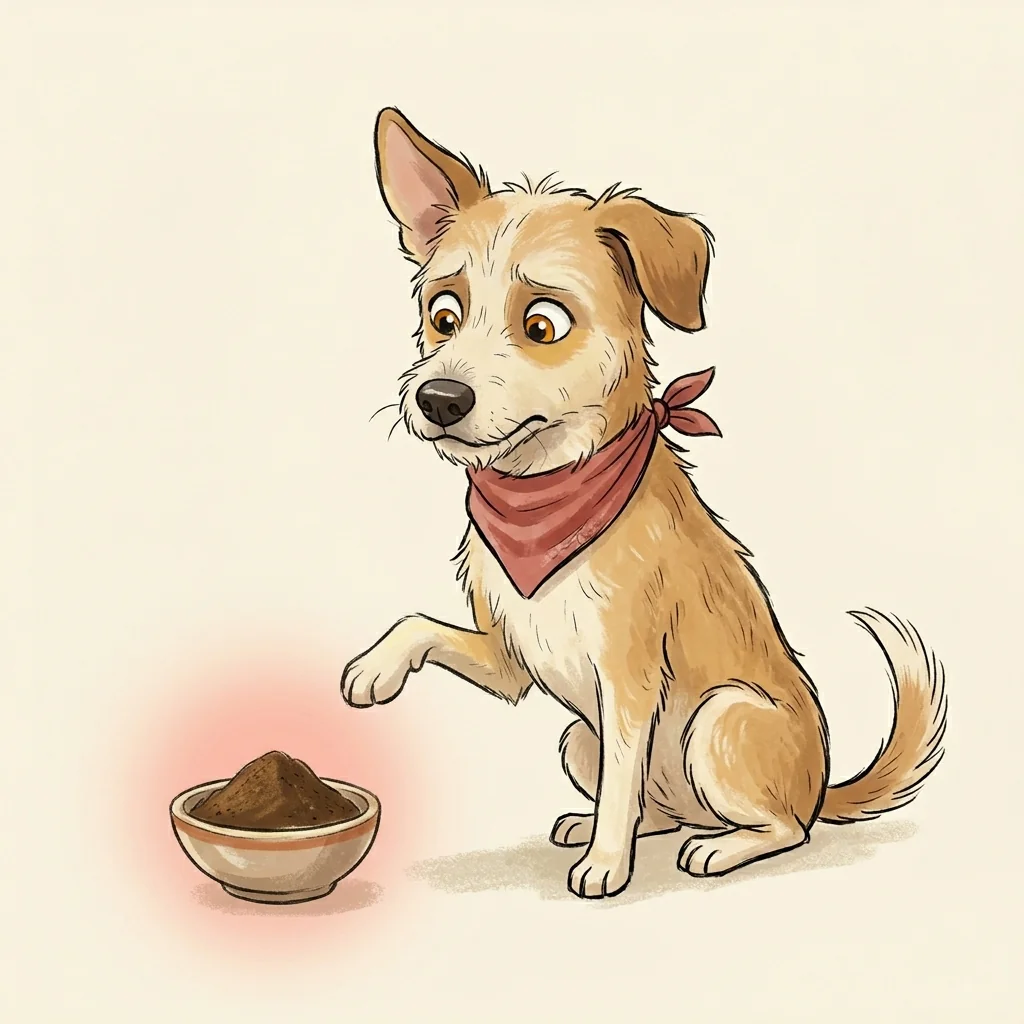

Your dog gets the last roti of the evening. It has a smear of sabzi gravy on it, because it always does. Somebody in the family says garam masala is toxic to dogs and now everyone is looking at their phone at 10 p.m.
That search is going to return a lot of pages telling you about onion and garlic. Most of them have not read the ingredient list on an actual packet of garam masala.
Is garam masala safe for dogs?
It is not safe in the sense of “go ahead,” and it is not dangerous in the sense of chocolate or xylitol. It sits in the awkward middle, which is why the internet handles it so badly.
A classic garam masala is a warming blend, not an allium blend. Coriander seed, cumin, black pepper, cinnamon or cassia, cardamom, cloves, bay leaf, and usually a little nutmeg or mace. Not one of those is on the ASPCA’s toxic-to-dogs list. The spice mix your grandmother grinds has nothing in it that will poison a dog.
The packet in your kitchen may be a different animal. Commercial blends are built for convenience, and plenty of them add garlic powder, onion powder, salt, dried chilli or an anti-caking agent. Those are the ones worth caring about. Turn the packet over and read the list before you decide how worried to be, because “garam masala” on the front tells you almost nothing about what is inside.
The real problem is almost never the powder. By the time garam masala reaches your dog it is suspended in oil, salt, fried onion, ginger-garlic paste and often green chilli. That gravy is a far better reason to keep the plate away than any spice in it.
What is actually in the jar
Shares below are typical for a North Indian household blend and vary a lot by recipe. The last row is the only one that belongs in a different category from the rest.
| Ingredient | Typical share | What it does to a dog | Amount that would matter |
|---|---|---|---|
| Coriander seed (dhania) | 25–40% | Nothing. No known toxicity. | None established |
| Cumin (jeera) | 15–25% | Harmless in pinches; loosens stools in bulk | Far beyond any culinary amount |
| Black pepper | 10–15% | Piperine irritates the stomach lining; violent sneezing if inhaled | A teaspoon or more of pure pepper |
| Cinnamon or cassia | 5–10% | Not toxic; cassia carries coumarin, which is hard on the liver in quantity | More than a teaspoon of powder, repeatedly |
| Cloves (laung) | 3–8% | Eugenol, which is liver-toxic in concentrated form | Whole cloves by the handful, or clove oil |
| Nutmeg or mace (jaiphal, javitri) | 2–5% | Myristicin; tremors and disorientation at high doses | A whole nutmeg off the counter, not a blend’s worth |
| Cardamom, bay leaf | 5–10% | No toxic concern; a whole bay leaf is a physical hazard | One swallowed bay leaf is enough to worry about |
| Added onion or garlic powder (some packets only) | 0–10% | The one genuine toxin. Damages red blood cells. | See the numbers below |
Shares are typical ranges for household blends and differ between recipes and brands. Toxicity thresholds are drawn from published veterinary sources and are not precise cut-offs; individual dogs vary.
Read that table honestly and a pinch of true garam masala on a piece of roti is a gastric irritant, not an emergency. The list of things in your kitchen that are more dangerous to your dog is long, and it starts with the chocolate.
The onion and garlic problem, in actual numbers
This is the part that deserves care, because Allium toxicity in dogs is real and it is the one mechanism here that damages something other than the stomach lining. Onion and garlic contain organosulfur compounds that oxidise canine haemoglobin, forming Heinz bodies and causing the red blood cells to rupture. The result is haemolytic anaemia: pale gums, weakness, a racing heart, dark urine, usually a few days after the meal rather than the same evening.
Now the numbers, because the numbers change how you should feel at 10 p.m.
Veterinary sources place the threshold for onion toxicosis at roughly 15 to 30 grams of fresh onion per kilogram of body weight. For a 10 kg Indie, that is about 150 grams, or one medium-large onion in a sitting. Dehydrated onion powder runs around seven times the concentration of fresh onion by weight, so the equivalent is roughly 21 grams of pure onion powder. If the packet in your hand is 10% onion powder, your dog would need to eat about 210 grams of garam masala. That is two full retail packets.
Garlic is more potent than onion by weight, commonly cited at around five times, which brings the equivalent down but nowhere near a teaspoon of spice blend.
So a lick of gravy is not an anaemia risk. It is worth saying plainly, because the panic sends people to emergency clinics for a plate lick and, more damagingly, it makes them tune out the warnings that actually matter.
Why the daily bite is worse than the one big mouthful
Here is the part almost nobody mentions. Allium damage is cumulative. Oxidative injury to red blood cells adds up faster than a dog can manufacture replacements, so repeated small exposures can produce anaemia that a single larger exposure would not. The dog that gets a spoon of leftover sabzi with its dinner every night is running a risk the dog that raided the pot once is not.
This flips the usual intuition. The accident is survivable. The routine is the thing to stop.
Some dogs start further along the curve. Japanese breeds, notably Akitas and Shiba Inus, carry red blood cells with high reduced glutathione and potassium, which makes them measurably more vulnerable to Allium-induced haemolysis than other dogs. If you have a Shiba in a house where sabzi gets shared, be stricter than this article is.
Cats are more sensitive again, so the same leftovers policy should cover them.
My dog ate garam masala. What now?
A lick off a plate, a bite of masala roti. Watch, do not panic. Expect the possibility of a loose stool or some lip-smacking and drooling over the next day. Offer water. No action needed unless something changes.
A tablespoon or more of dry blend, or a bowl of curry. Call your vet with the packet in your hand so you can read the ingredient list to them. Salt and fat content matter here as much as the spices.
An entire packet, or any amount from a blend heavy in onion or garlic powder. Vet now, not in the morning. Ask specifically about Allium exposure and mention the weight of your dog and the quantity eaten.
Signs that change the answer at any dose: pale or white gums, unusual lethargy, rapid breathing, vomiting that will not stop, tremors or unsteadiness, or urine that has gone dark or reddish. Those warrant a call regardless of how little you think went in.
And the practical fix, which costs nothing: cook your dog’s share out before the masala goes in. Plain boiled rice, plain dal without the tadka, plain chicken. If your dog is used to eating what the family eats, that separation is a five-second habit rather than a new regime.
Questions people still ask
My dog licked a plate with curry on it. Should I panic?
No. A plate lick delivers a fraction of a gram of spice, which is an order of magnitude away from any toxic threshold discussed above. The realistic outcome is an upset stomach, and often not even that. Watch for vomiting, diarrhoea or lethargy over the next 24 hours, keep water available, and call your vet if anything looks off. The exception is a dog that is already unwell, very small, or very old, where any dietary insult is worth a phone call.
Is garam masala the same as curry powder for dogs?
They are different blends and curry powder is usually the riskier one. Garam masala is a finishing blend built around warming spices. Curry powder is a British-invented all-purpose mix, typically heavier on turmeric and fenugreek, and far more likely to include garlic and onion powder plus salt. Neither belongs in a dog bowl, but if you are ranking them, curry powder is the one to keep further out of reach.
Which Indian spices are actually safe for dogs?
Turmeric is the one with real research behind it, though the evidence is thinner than supplement marketing suggests and absorption is poor without fat. Ginger in small amounts is well tolerated and has some support for nausea. Coriander, cumin, cardamom and fennel raise no toxicity concerns in food quantities. The ones to avoid outright are onion and garlic in every form, nutmeg in quantity, and anything with chilli. Our guide to turmeric for dogs goes through the evidence properly.
Related guides
Part of our human food for dogs guide. See also: can dogs eat turmeric, can dogs eat roti, can dogs eat rice and can dogs eat curd. For the bigger picture, see our dog nutrition guide.
When in doubt about your dog and a new food, ask your vet. It is the cheapest insurance there is.
Sources: Merck Veterinary Manual, onion and garlic toxicosis in animals, ASPCA people foods to avoid, Merck Veterinary Manual, nutritional requirements of small animals.
Wondering about a different food?
🦴 Can my dog eat this?
Type a food to see if it is safe, needs caution, or is a hard no.
Get more dog stories in your inbox. Join Woofs & Words on LinkedIn.
Subscribe on LinkedIn