
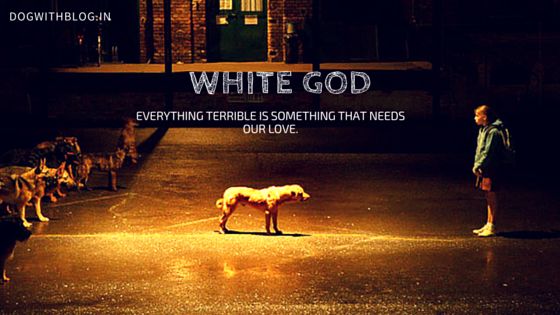
Kornél Mundruczó’s White God was on this dog’s watch list ever since it won the Palm Dog and Un Certain Regard awards at the 2014 Cannes Film Festival. And boy what a masterpiece this Hungarian movie is!
White God is as much about a victim-turned-rebel as it is an allegory on the lines of Sam Fuller’s masterpiece ‘White Dog‘ where the protagonist was trained to attack the people of colour. White God delves deeper into the societal mix and speaks for ethnic groups, the minorities, and the settlers.
Movie review White God
Thirteen-year-old Lilly, a child of divorce has to move in with her father, she brings her beloved mutt Hagen along with her. When faced with a fee instituted by Budapest city for mixed-breed dogs, her father instead cruelly abandons Hagen on the street. This is where you may think of the plot to be familiar to that of Disney movies – a lost dog finding his way home (or in this case, abandoned) but White God is anything but a return journey. It is a Tarantino tale of revenge and righteousness.
The movie, from here on follows heartbroken Lilly who tries to find her dog, while Hagen learns to survive on the streets, trying to escape his greatest nemesis – human cruelty. Brutalised by dog catchers, he is forced to run on a treadmill, fed on behavior altering drugs and made to fight other dogs. As we follow Hagen’s journey from a beloved pet to a feral fighting machine and beyond, it doesn’t take a dog lover to root for his resurgence as a wronged hero with a no-holds-barred vengeance against the humans who made him so.
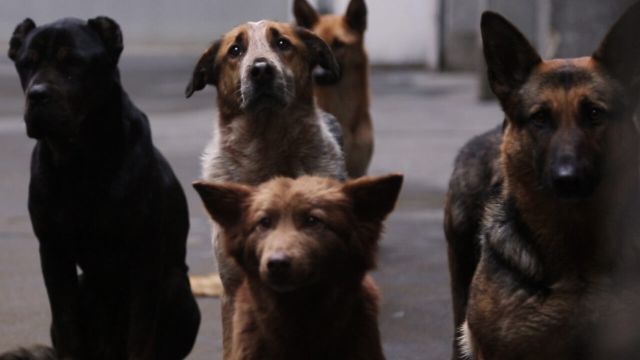
Pushed to the extremes by human cruelty, the only trick the dogs in ‘White God’ play is to rise up. Like Caesar in the Rise of the Planet of Apes, you identify with Hagen. You feel his crestfallen eyes staring into the stark loneliness when he is abandoned on the road. All through his trials and torture at the hands of humans he encounters – you feel his pain, just like you did that of the King Kong, the Frankenstein monster, and the Bear. All this while, reminding of the poet Rainer Maria Rilke opening quote in the movie — “Everything terrible is something that needs our love.”
The impressive POV camerawork captures how Hagen ceases to run away from his human tormentors and raises an army of fellow abused mutts. Together they take on the streets of Budapest in astonishingly choreographed scenes! Asher Goldschmidt’s orchestral score blends and breathes more life in this tale.
What ‘White God’ Teaches Us About the Plight of Street Dogs
Most of cinema reserves the hero’s journey for purebred collies, manicured retrievers, or CGI creations. White God takes a sledgehammer to this trope, placing the rugged, soulful street dog front and center. Hagen embodies the resilient, unbroken spirit of every mixed-breed and Indie dog waiting in a shelter or surviving on the streets. The film’s true brilliance isn’t just in its choreography; it’s in its uncompromising social storytelling. It forces society to look at the animals they often step around and recognize them as beings capable of profound grief, loyalty, and righteous agency.
While set in Budapest, Hagen’s journey mirrors the harsh realities faced by street dogs globally. The film’s mixed-breed tax serves as a stark, cinematic reminder of why the ‘Adopt Don’t Shop’ movement is so critical today. Championing shelter mutts and Indie dogs isn’t just about giving a pet a home; it’s about actively shifting societal prejudice. White God uses its canine cast to speak for marginalized groups, making it a must-watch for anyone involved in animal rescue and welfare.
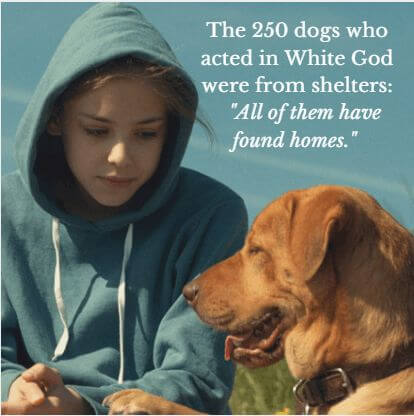
Beyond the monumental logistical feat of managing a 250-dog cast without CGI, director Kornél Mundruczó achieves something far more difficult: he constructs an architecture of radical empathy. The narrative doesn’t just ask the audience to pity the abandoned; it demands we respect them. By framing the dogs’ uprising not as mindless aggression, but as a desperate, collective plea for dignity, White God captures the very core of community-driven animal advocacy. It serves as a visceral reminder that every stray has a story, and the real tragedy occurs when society refuses to listen.
The closing credits to the movie feature a heartwarming “thank you” section listing all the 250 dogs by name!
White God isn’t an easy watch, not by a far chance, and yet it deserves to be watched!
Eleven years on, a Hindi film borrowed this one’s central sequence wholesale. Ohh My Dog (2026) summons roughly 250 street dogs for its climax, and casts two real indies as its leads.
For another art-house take on dogs pushed to the margins, our Isle of Dogs review covers Wes Anderson’s version of exile and rebellion, stop-motion instead of live action.
Want more? Browse our pick of dog movies worth watching.
Get more dog stories in your inbox. Join Woofs & Words on LinkedIn.
Subscribe on LinkedIn