
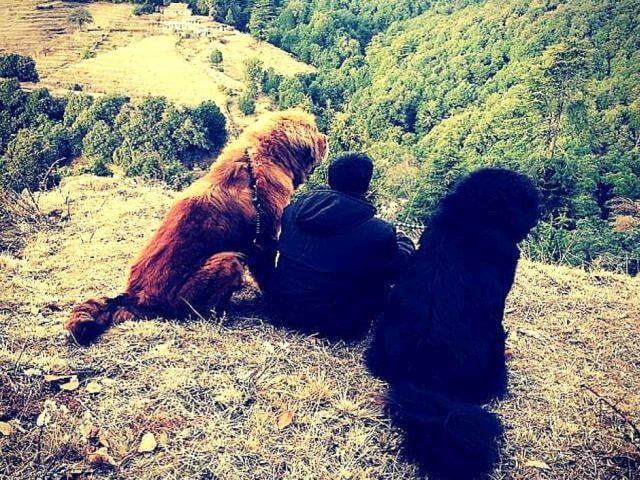
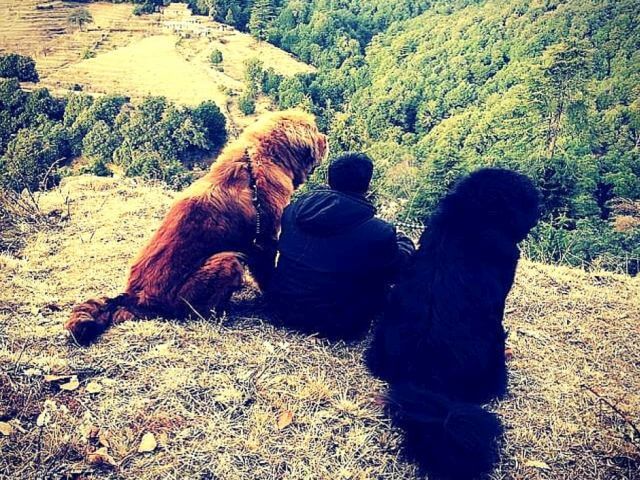
Contributed to Dog with Blog. Shikha is a journalist and qualified mountaineer, born and raised in the Himalayas, who writes on Himalayan ecology and the outdoors for National Geographic Traveller, Condé Nast Traveller and Lonely Planet. The dogs in this piece are hers.
Medically reviewed by Dr. Catherine Nicolaou, DVM.
If you have ever met a big, lion-maned guard dog on a Himalayan trek and wondered what it was, you have almost certainly met a Bhotia. The Bhotia dog, also spelled Bhutia and known formally as the Himalayan Sheepdog or Himalayan Mastiff, is India and Nepal’s great mountain guardian: a thick-coated, fiercely loyal livestock protector built for life at altitude.
It goes by more names than almost any Indian dog, which is exactly why it confuses people. Here is the whole picture, plus how it differs from the Tibetan Mastiff it is so often mistaken for.
Bhotia, Bhutia, Gaddi: one breed, many names
One update since we first wrote this: the Gaddi (Gaddi Kutta) of Himachal Pradesh, long treated as just another name for this dog, was registered under its own name by ICAR-NBAGR in 2025 and now has its own full guide, the Gaddi dog.
The same Himalayan guardian is called different things across the mountains:
- Bhotia / Bhutia / Bhote Kukkur — the everyday names in Uttarakhand, Nepal and the eastern Himalayas.
- Himalayan Sheepdog / Himalayan Mastiff / Bangara Mastiff — the breed’s formal English names.
- Gaddi (Gaddi Leopardhund) — what the same type of dog is called in Himachal Pradesh, where it is recognised as a registered breed by ICAR-NBAGR in January 2025.
Bhutan keeps a slightly larger version, the Bhutia Sheepdog. Locals have long debated whether the Gaddi and Bhotia are two varieties of one breed or two breeds; the honest answer is they are close cousins shaped by the same hard job.
Himalayan Sheepdog facts at a glance
- Other names: Bhotia, Bhutia, Himalayan Mastiff, Gaddi
- Origin: the Himalayas of India and Nepal
- Type: livestock guardian and flock-protection dog
- Build: large, with a heavy double coat for snow and cold
- Height: roughly 51–76 cm at the shoulder, males larger than females
- Weight: roughly 30–45 kg
- Lifespan: about 10–14 years (an estimate; the breed has no kennel-club standard)
- Temperament: devoted to its family, wary of strangers, independent-minded
- Best suited to: space, cool climates and experienced owners, not apartments or the hot plains
Bhotia dog vs Tibetan Mastiff: what is the difference?
They look like cousins because they are, but they are not the same dog:
- The Tibetan Mastiff is slightly larger, with a heavier mane and more hair on the face.
- The Bhotia (Himalayan Sheepdog) is a touch smaller, leaner in the face, and is often described as even more protective of people.
- Both are ancient Himalayan guardians. The Bhotia is the working village-and-flock dog of the Indian and Nepali hills; the Tibetan Mastiff became the better-known show breed worldwide.
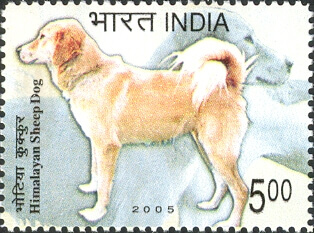
The Indian postal department also commemorated the Himalayan dogs and in particular, Bhutia dogs via a special stamp.
Most people have heard this quote, but the truth of the matter remains mere words unless you experience “Doghood”. While Doghood literally is the time or state of being a dog, for lack of a better word I’m using it for motherhood, except to describe an experience one has on getting a dog in his or her life instead of a child. I speak about my two Tibetan mastiffs, Lucy and Jian, in a similar fashion, often comparing their behaviour patterns to infants of young mothers.
Midway through my conversations, I realize that perhaps it’s not the best comparison to be drawn and I steer towards more polite exchanges. But Doghood is indeed similar. It’s all-consuming; it’s demanding, challenging and taxing. While Lucy came to us as a three-month puppy of European lineage, Jian came as a much bigger 1.5-year-old.
Work started immediately on gaining his trust and hunting for that perfect name. As an ode to his Chinese roots, my partner and I spent hours going through “Chinese names for boys” on the Internet to christen him. We decided on Jian, meaning strong, which proved to be his greatest gift. He could tow a mini truck, and on the flip-side, break a strong iron chain like a cotton thread and charge at someone he dislikes.

What living with a Tibetan Mastiff actually involves
A weekly trip to the market becomes part of your regime, and so does cooking a giant meal every morning and evening, that could very well feed ten humans. A most difficult task is grooming their supremely thick coat and keeping it allergy and tick free. It means hours of dedicated tidying with a hairbrush and watching out for signs of any skin reactions or fleas, much the same as looking for a needle in a haystack.
A big bottle of shampoo cleans this coat thoroughly one time alone. It’s also not the best deal to have to wake up at 6 am on a freezing winter morning and walk the dogs in minus temperatures, braving sleet being hurled in your face along with the forceful wind.
Not only is Doghood a financial commitment, but an emotional one too. You have to maintain your calm when you find your new shoe ripped to pieces, or your laptop covered in a kilo of drool. You have to manage travelling and other schedules such that someone is a stay-at-home guardian to them at all times, even if it means sacrificing the best-laid outing plans. It also means staying put mostly in the mountains, because taking Tibetan Mastiffs to anywhere over 25 degrees is sheer torture for them.
This is one of the reasons why I don’t say much when requests for Lucy and Jian’s puppies come pouring in. Jian was acquired from a place where he had started losing all his hair and weight because of the intense heat, and Lucy was rescued from someone who had the environment but not the time or resources to take care of her long list of needs. Tibetan Mastiffs are only for those who ensure that the dogs have enough space to run around, cool mountain air, plenty of meat-based foods, and owners with time for them.
Get them only if you can personally go that extra mile. Anything less, and you are not ready for the commitment that Doghood demands.
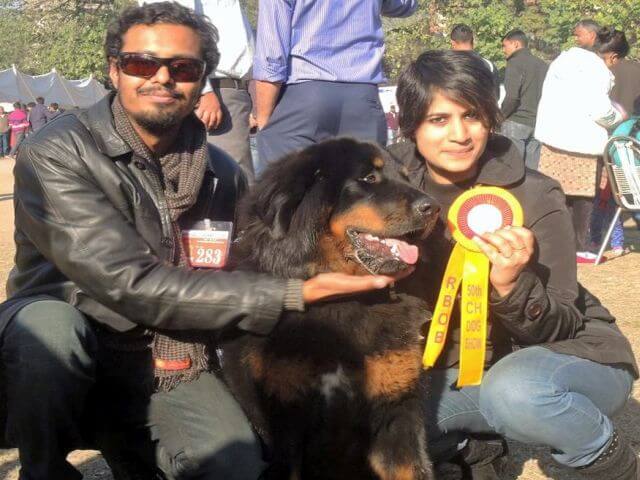
In return you get fierce loyalty that you might never get from a best friend, a dizzying welcome when you get back home that you might not get from family, excellent guarding no watchman can provide, and joy that fills you with pride when your dog gets protective about you. There’s really nothing more than that. Because despite all you do, at the end of the day, one needs to understand and accept that Tibetan mastiffs can be temperamental and unpredictable. They aren’t Labradors that love being petted all the time. They will not fetch, will sit and stand as they please, and only oblige you if they wish to. Obedience is not one of their stronger traits.
They are instead aloof dogs, and don’t care too much about being fussed over, and won’t show affection either if they don’t want to. They are like difficult teenagers, who love you but like to maintain that cool demeanour. But like all things in Doghood, you’ve got to understand and accept them for who they are, because like motherhood, it demands your greatest unconditional love.
Thinking of bringing one home? A Himalayan mastiff is a serious commitment, and India’s shelters are already full of big-hearted dogs who would be just as loyal, at none of the cost or the breeding cruelty. Meet dogs looking for a home near you.
Is the Bhutia dog a good pet? Price and availability
Honest answer: the Bhutia dog is a working livestock guardian, not a city pet. For a first-hand account of what that really means, see how a Himalayan mastiff adopted one family. In the hills it lives outdoors with the flock, and it needs space, cool weather and an experienced hand. You will rarely find one through an ethical breeder, and most “Bhutia dog price” listings online are mixed litters or mislabelled pups. If this mountain dog has your heart, support the hill communities who keep them as guardians, or adopt an Indie dog who needs a home today.
Bhotia dog FAQs
Is the Bhotia dog the same as a Tibetan Mastiff? No. They are closely related Himalayan guardian breeds, but the Bhotia, or Himalayan Sheepdog, is slightly smaller with less facial hair and is considered even more protective of people.
What is the Himalayan Sheepdog called in India? Bhotia or Bhutia across the northern and eastern Himalayas, and Gaddi in Himachal Pradesh.
Is a Bhotia dog good for apartments? Not really. It is a large, cold-climate flock guardian that needs space, cool weather and an experienced owner. It struggles in small flats and on the hot plains.
How much does a Bhutia dog cost in India? There is no reliable market price. True Himalayan guardians are working dogs, rarely sold as pets, so any quoted “Bhutia dog price” is best treated with caution. Adoption is the kinder, safer route.
Get more dog stories in your inbox. Join Woofs & Words on LinkedIn.
Subscribe on LinkedIn
I say very much agree with you. I am in love with this amazing species created by God. I have a four month old rottweiler. And God he is a handful. He is not like other dogs that I have had the pleasure of sharing my life with.
He is super active, crazy, needs constant attention, but on his own terms. Behaves like a teenager in that phase where he loves you, but will display on his own terms and you cannot, even think of showering your love and affection on him as and when you like. If only the love is in the form of giving him treats, you become an instant hero to him.
As he is very temperamental, we need to give him his space. He loves meeting new people, like his life depends upon it.
I am glad that I could be a part of their lives (my pet pals). I wish people understand that keeping a dog is not a status symbol. They are only and only meant to be loved and cuddled, and make best friends with.
It is a well framed article and I liked the article very much as I am also a pet owner. But it is true that doghood is a combination of financial and emotional commitment.
Great article!