
Kaalicharan lived with us for 14 years, and for all of them her bark ran whichever room she walked into. When she was dying I was far away, and I heard that bark through a phone, muffled and faint, the night before she went. She was ours to the very end, and that’s the whole deal when you bring a dog home: the chewed slippers, the vet bills, the moves, the bad years and the old age all come with it, and none of it can be handed back when life gets inconvenient.
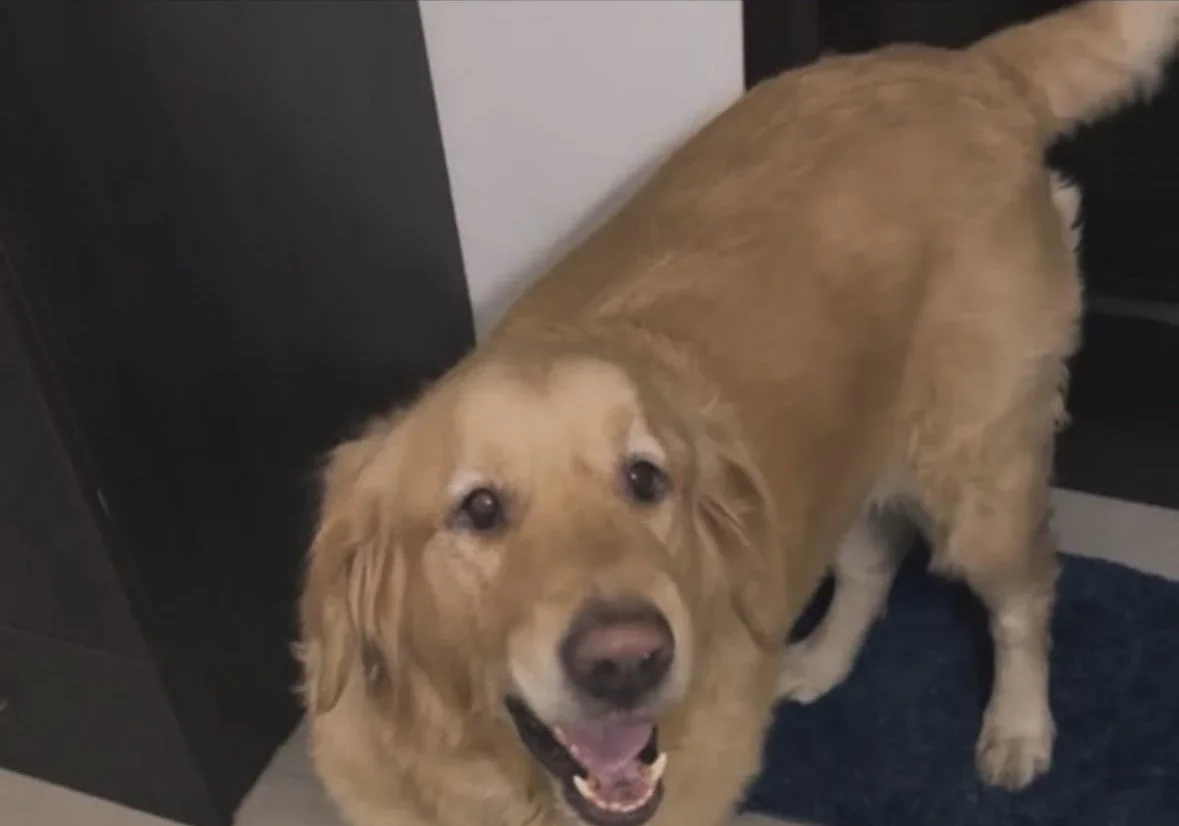
Pablo didn’t get that deal. He’s a five-year-old Golden Retriever in Chhatarpur, south Delhi, sterilised, fully vaccinated and friendly with people and other dogs, and his family moved to Australia without him. His listing went up on Dog with Blog on 28 September. He’s still waiting.
He isn’t unusual. Going back through five years of comments on our adoption pages, we found 62 owners trying to rehome a dog of their own, and 30 of them were moving. A Hyderabad family relocating to the USA wanted to give their German Shepherd “to whoever is interested.” Another, moving no further than Bangalore, offered a year-old Pomeranian “free of cost”, a dog small enough to fly in the cabin with them. Add to those the dogs left behind when a marriage breaks down, and the ones given up for no reason beyond the novelty wearing off.
We’ll say it plainly. Abandoning a dog because you’re moving overseas, because of a divorce, or because you’ve simply stopped caring is callous, and the dog is the one who pays for it. He doesn’t understand the visa or the custody papers, only that his people have gone.
If you’re reading this, you’re probably trying hard not to be that person, and we want to help. A move, a landlord, a baby on the way: each of these has answers, and every one deserves a real attempt before your dog’s home is up for discussion. Every way we know to keep your dog comes first below. If you’ve honestly tried them all, the last section is about how to rehome a dog so that his welfare decides where he goes, not your deadline.
Moving within India is easier than it sounds
A move from Hyderabad to Bangalore isn’t a reason to give up a dog. Dogs up to 10 kg including the carrier can fly in the cabin on Air India and Akasa Air if you tell the airline 48 hours ahead. Bigger dogs can ride with you on Indian Railways if you book a whole First AC coupe or cabin, or travel by road, or go as cargo, and paid pet relocation services will do the whole trip door to door. IndiGo doesn’t carry pets at all, which catches people out at the last minute. Our guide to travelling with your dog in India has the airline rules, the train booking steps and what hotels charge.
When an owner on r/bangalore asked how to move a six-year-old, 30 kg Golden Retriever to Vadodara, the replies were practical: start crate training early, get the vet certificate sorted, compare air cargo with road. One person said road was slower and cost more but was easier on the dog. That’s the conversation to have before anyone mentions a new home.
Moving abroad: start six months out, not six weeks
For an international move the paperwork is harder than the flight. Most countries want a microchip first, a rabies vaccination after it, and often a rabies antibody (titre) test on top. There’s no lab in India approved by the US CDC or the EU for that test, so the blood sample has to be sent abroad, and the waiting periods count from the day the blood is drawn.
- UK and EU: titre test at least 30 days after the rabies shot, then a three-month wait before your dog can travel.
- USA: India is on the CDC’s high-risk list for dog rabies. Your dog must be at least six months old, microchipped before the rabies shot, with a titre from a CDC-approved lab and a booked appointment at a CDC-registered facility at the arrival airport.
- Australia: you can’t fly a dog there from India, because Australia only accepts dogs imported directly from an approved country. The dog has to live in an approved country for at least 180 days first, and then spend at least 30 days in quarantine.
Australia is the hardest case, and it’s where Pablo’s family was going. When his listing was shared on r/AdoptDontShopIndia, the thread turned into an argument about whether they could have taken him at all. One commenter said the quarantine process would frankly terrify them, and another replied that a healthy dog can get through it if the family plans for it.
Both have a point, which is why for Australia the realistic choices are a long-term foster in India while you settle (more on that below), a relative who can keep the dog in an approved country, or careful rehoming, and all three need time.
Six months of forms is a lot, until you set it against the ten or fifteen years a dog gives you. For the US, the UK or Europe, a dog can come with you if you start early enough. The travel guide linked above sets out the order of steps. A pet relocation agent can run the paperwork for you, and it’s worth getting quotes from two of them before you decide anything.
If it’s the housing society or the landlord
A housing society can’t make you give up your dog. The Animal Welfare Board of India’s 2015 guidelines, which Maharashtra’s cooperative department told societies to follow and which the BMC restated in 2025, say a society can’t ban pet dogs even if a majority votes for it, can’t allow small dogs while banning big ones, and can’t stop pets using the lift or charge for it. It can ask for reasonable things, like vaccination records, a leash in common areas and cleaning up after your dog. Our page on animal laws in India covers what an RWA can and can’t do.
A landlord is different. A rental agreement is a private contract and it can say no pets, which makes it a negotiation, and you have more to bring to it than you might think: the vaccination card and sterilisation certificate, a reference from your current landlord, an offer of a larger deposit. If the answer is still no, that flat isn’t the one, and the search goes on with the dog.
A new baby, an allergy, or a dog who’s become difficult
Three owners in our comments gave a new baby as the reason. Plenty of Indian families raise babies with dogs, and the months before the birth are the time to prepare: get the dog used to the baby’s room being off limits, to the smell of baby products and to a new walking routine. If your dog jumps up or guards food or toys, a trainer can work on that before the baby arrives.
Five gave health or allergies. Before you decide anything, get the allergy tested, so you know it’s the dog and not dust or pollen. If it is the dog, ask the doctor what can be managed at home, such as keeping the dog out of the bedroom, more frequent grooming and an air purifier.
Five more gave behaviour. Start with a vet rather than a trainer, because pain is a common reason a calm dog starts snapping or a house-trained dog starts having accidents. Once the vet has ruled that out, look for a trainer who uses reward-based methods.
Ask for a foster before you ask for an adopter
An owner who posted on r/bangalore and r/IndianPets about Lily, a two-year-old Indie they’d rescued at about six weeks old, is a good example. They were moving abroad for a master’s degree and their family couldn’t keep Lily, so instead of looking for a new home they asked for a temporary foster, planned to bring Lily over once they’d settled, and offered to pay for her care. Permanent rehoming was only the fallback.
That works for any problem with an end date: a course abroad, a year of job transfers, the first months with a new baby, a long flat hunt. Ask friends and extended family first, then your vet, then rescue groups and shelters that run foster networks. Offer to cover food and vet bills and put it in writing, with a date. Six months with someone else’s dog is a much smaller ask than a dog forever.
If you truly have to rehome a dog, put him first
Sometimes it genuinely doesn’t work. On r/bangalore, a couple who’d brought home a 45-day-old Golden Retriever admitted, once their family objected, that they hadn’t thought it through, and finding him a good home was the honest thing to do. From that point the only question that matters is what’s best for the dog, and the quickest option almost never is.
The best new home is usually one your dog already knows. A relative or close friend who loves dogs, someone your dog has met and trusts, gives him familiar faces and smells at the most confusing time of his life, and it keeps you in his life too. Ask them first, and ask properly, before you post anything anywhere.
If there’s nobody like that, go slowly and find someone who’ll value him. One owner on r/IndianPets asked how to make sure a purebred female wouldn’t be bred from or sold on after the handover, and most of these steps are about preventing exactly that.
- Sterilise and vaccinate your dog before rehoming. A sterilised dog is worth nothing to a breeder, so this one step removes the biggest risk.
- Post on r/AdoptDontShopIndia with honest photos and details. Listings there feed our adoption directory, where people across India go looking for a dog.
- Don’t advertise your dog as “free to a good home”, and don’t hand him to whoever is interested. Speak to each person on the phone first and ask why they want a dog, who’s home during the day, whether their society and landlord allow pets, and whether they’re planning a move. If they’re new to dogs, send them our dog adoption guide and see if they read it.
- Visit their home before the handover, and take your dog along.
- Put it in writing: no breeding, no selling, no passing the dog on, and the dog comes back to you if it doesn’t work out. We’re not lawyers and can’t tell you how a court would treat it, but someone who refuses to sign has told you what you need to know.
- Hand over the vaccination card, sterilisation certificate and microchip details along with the food, bed and a note on your dog’s habits, and transfer the microchip registration to the new owner.
- Ask for photos or a visit over the first few months. A good adopter won’t mind.