
In May this year a rescuer in Gurgaon posted an appeal for a puppy called Scooby. He already had a foster. The trouble, in the rescuer’s words, was that she had “overestimated her capacity to handle a teething pup” and now wanted him gone “today itself.” The appeal asked for anyone who could take him for at least one month, starting today.
Most of what you need to know before you foster a dog is in that one appeal. A foster home can carry a rescued dog from the street to a family, and it falls apart when the foster says yes to more than they can manage.
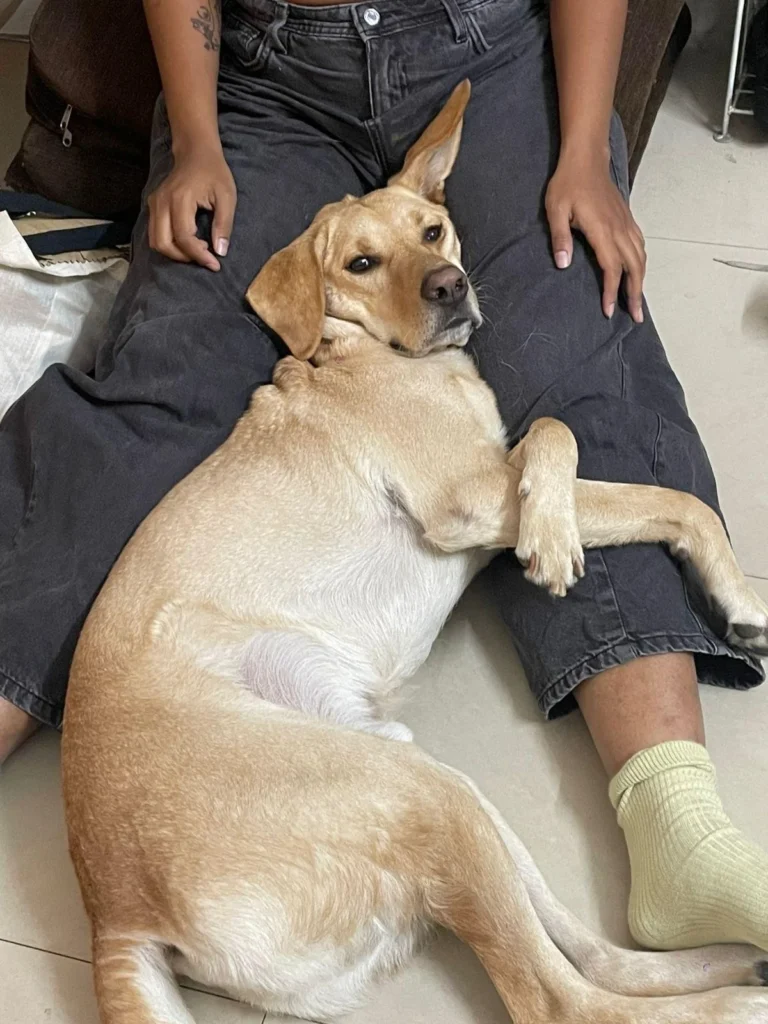
What does fostering a dog mean?
Fostering means a rescued dog lives in your home for a fixed stretch, a fortnight or a few months, while the rescuer looks for a permanent family. The dog is not yours, because the rescuer or the shelter still decides who adopts, and you hand the dog over when that family is found. Adoption is the opposite promise. The dog stays for the rest of its life, with you, through every move and every landlord.
Many of the appeals we list begin with one person holding a dog they can’t keep, in a city where the nearest shelter is already full. A foster home turns “I can’t keep her” into “I can keep her until the end of the month”, and for a puppy pulled off a road that is often enough. Owners use fosters too. One owner moving abroad for a master’s degree asked for a temporary foster for Lily, their two-year-old indie, and offered to pay for her care until they could bring her over.
Why rescuers in India keep asking for fosters
Since February 2026, more than 80 of the appeals on our adoption listings have asked for a foster, either instead of an adopter or as well as one. Read enough of them and the same few reasons come back.
The rescuer already has a dog. A puppy found on the ghat road near Sakleshpur, nearly hit by cars twice, couldn’t go home with the person who saved her because their own dog doesn’t get along with puppies. In Prayagraj, a rescuer could keep a three-and-a-half-month-old puppy called Oreo for five or six days at most, because there were already six dogs at home.
Sometimes the building says no, as with a kitten found in Bengaluru whose rescuers’ apartment is not pet-friendly. Or life moves: a cat called Gauri, midway through treatment, needed someone new because her foster was going to Nepal for about two months. Others are mothers with a litter, or dogs recovering from surgery.
What it looks like when it works
In January a couple in Delhi found eight puppies in their housing society and started fostering all of them. By April four had been adopted, and they appealed for homes for the other four, vaccinated and, in their words, “very friendly and obedient”, open to families anywhere within driving distance of Delhi. That is fostering at its most ordinary: months of feeding eight puppies, and appeal after appeal until every one of them has a home.
Sometimes the stretch is longer and the dog is harder. A three-year-old Labrador in Bengaluru, found on the streets a year earlier, spent six months with his second foster, who described him as “an anxious and trauma struck dog who has had insane progress with us” when she listed him for adoption. Amrita Paul, in a guest post about her dog Bebu, fostered puppies for local volunteer groups. Her last foster was Buddy, an adult rescue Labrador who seemed terminally ill, and who lived two and a half years with her and her husband.
How long do you foster a dog?
Anything from five days to six months. One appeal on our listings was headed “URGENT FOSTER (10-15 days also helps!)”. A kitten in Kerala needed a home in Kochi or Thrissur from 1 to 20 October. Scooby needed at least a month. The Delhi puppies were still finding homes three months in.
Ask for an end date before the dog comes home, and agree on what happens if no adopter turns up by then. Open-ended fostering is how a two-week favour becomes a year, which is how long one pair of pups waited for adopters in IDA India’s programme in Mumbai. The answer matters for the dog too. A Bengaluru appeal for an older dog in foster care warned that if no adopter came forward soon, he “may have to be surrendered to a shelter.”
Who pays for food and the vet when you foster?
There is no standard arrangement in India, and it changes from one rescuer to the next, so settle it in a message before you say yes, and don’t assume a shelter will cover everything. Nishabd, a shelter in Noida, asks its fosters to cover food and daily care and pays for vaccinations and vet treatment itself. IDA India says foster care is “extremely expensive for us” and looks for carers who will do it for free. A street rescuer working alone may be able to pay for nothing at all.
It helps to know what the alternative costs. One Chennai boarding kennel offers rescuers a discounted rate of ₹400 to ₹1,000 a day depending on the dog’s size, for a minimum of 30 days, paid upfront. Even at the lowest rate that is ₹12,000 for a month. When a rescuer asks you to foster, that is roughly what you’re saving them. Scooby’s rescuer, out of options, asked about “home-based paid boarding” in the same appeal.
Put four things in writing, even if it’s a WhatsApp thread: who pays the vet, who pays for food, which vet you’ll use, and who you call at 11 at night if something goes wrong.
Before you say yes
Check four things first.
- Start with your household. Everyone who lives with you is fostering too, whether they agreed or not. A Bengaluru rescuer who took in two three-week-old indie pups was struggling within 20 days, out most of the day and, as the appeal put it, “the elders don’t have the energy” to look after them.
- Then your own animals. Are they vaccinated, and how do they react to a strange dog in the house? A resident dog who hates puppies is exactly why the Sakleshpur pup needed a foster in the first place.
- Then your building. The Animal Welfare Board of India’s revised circular on pet dogs, issued on 20 February 2014, says a housing society can’t ban residents from keeping dogs even by consensus, can’t stop them using the lift and can’t charge extra for it. It is written about pet dogs and doesn’t mention fostering, so if your society is difficult, talk to the committee first, not once the dog is already upstairs. Our page on animal laws in India has the wider picture.
- Last, your exit. If it isn’t working, you tell the rescuer and give them time to find the next home. You don’t put the dog back on the street, and you don’t hand it on to a stranger yourself.
The first two weeks
Keep a new foster apart from your own pets until a vet has seen it. A rescued puppy may not have had a single vaccine, and an unvaccinated pup can bring parvo into a home that has other dogs. Our parvo guide explains what to watch for, and the vaccination schedule and deworming chart tell you what the dog should have had by its age.
Have a bed, two bowls, a collar and a leash ready, and move shoes, chargers and earphones off the floor, because a teething puppy will find them before you do. Start house training on the first day rather than waiting for the dog to settle. A puppy also needs feeding three or four times a day, so plan your mornings around that before the first night.
Helping your foster find a family
You will soon know this dog better than anyone, so start taking notes. Does she sleep through the night, does he pull on the leash, is she fine with children, does he bark at the gas delivery man? Adopters will ask you these things, and the answers turn a listing that says “friendly” into one that finds a home.
Send the rescuer photos and short videos taken in daylight, at the dog’s eye level, and share the appeal with your own friends, building groups and colleagues. The Delhi couple asked for families as far away as Chandigarh, Meerut and Jaipur. If you rescued the dog yourself, you can list it on our adoption page, and meet any interested family before the handover so you can see where the dog is going.
Handing over, or foster fail
The handover is the hard part, and it is the whole point. In September 2011 Simran Oberoi and Satbir took in a 25-day-old puppy found shivering under a car, and decided on what she called “the middle path”: foster her, then give her to a family. They named her Elsa. Adoption calls came in, and the longer they debated which home was best, the more she dreaded the day Elsa would leave. They kept her. Writing on this blog a year later, she said they “were never meant to be foster parents because that takes courage to be able to give up the puppy you rescued”, in her post on Elsa’s first birthday.
Rescuers call that a “foster fail”, and it’s said as a joke, because it is a good ending for the dog, who gets a family that already knows it. If you’re heading that way, tell the rescuer early so they stop showing the dog to other families, and go through the same adoption steps as anyone else. And if you realise halfway through that you can’t continue, say so early too. Early warning gives the rescuer days to line up someone else. Scooby’s rescuer had an afternoon.
Where to find a dog that needs a foster
Our adoption listings carry new foster appeals most weeks, mostly from r/AdoptDontShopIndia, with the rescuer’s contact on each one, and we share foster and adoption requests on our Instagram. Many shelters take fosters too, among them IDA India in Mumbai, Nishabd in Noida, Kannan Animal Welfare in New Delhi and Bark India Charitable Trust near Villupuram in Tamil Nadu, and since each shelter decides which of its animals go to foster homes and when, call before you visit.
For shelters and helplines in your own city, start with our city-by-city list of animal helplines and shelters.
You don’t have to offer six months, and if you can do ten days, say ten days. One appeal this year asked for exactly that.
Get more dog stories in your inbox. Join Woofs & Words on LinkedIn.
Subscribe on LinkedIn