
How your dog greets you at the door, and how much of your attention it gets once you are inside, say a lot about how it is doing. This is the companion piece to our guide to reading dog body language.
What your dog’s greeting says, and how to respond
How your dog greets you at the door says a lot about how it copes while you are out.
1. Over-the-Top Hellos: Jumping, Barking or Spinning
If your dog greets you by bouncing around, barking for joy, or spinning in circle – they’re showing an intense attachment and pent-up excitement. These exuberant welcomes are often stronger if you’ve been gone longer or if you use an overly enthusiastic tone when arriving home.
How to respond: Enter calmly and quietly. Don’t give attention or affection until your pup settles down. This teaches them that calm greetings are encouraged, helping to balance their emotions and reduce future frenzy.
2. Subdued or Shy Greetings: Lowered Eyes, Soft Tail Wag, Bowed Head
Not all dogs greet with fireworks. Some express affection by lowering their gaze, giving gentle wags, or keeping their head down. This reserved body language can reflect both happiness and deference.
How to respond: Get down on their level and speak softly. Avoid looming or making quick movements, which can increase their nervousness. Gentle signals foster trust and help more sensitive dogs feel secure.
3. Presenting Gifts: Toys, Slippers, or Odd Objects
When your dog rushes over with a toy, slipper, or another random object, they’re inviting you to interact. Gift-giving is your dog’s way of saying, “Welcome home—let’s do something fun!” This behavior also hints that they’ve missed your company and may have felt bored on their own.
How to respond: Accept the gift and spend a few moments playing or showing appreciation. Recognizing their effort strengthens your bond and positively reinforces their desire to connect.
4. The Relaxed Greeter: Ignoring Your Arrival
If your dog barely acknowledges your return—no wild tail wagging, no barking, no rush to the door—it’s likely a sign of confidence and security. A relaxed reaction often means your dog feels safe and at ease being alone, with no fear of abandonment.
How to respond: Give them space and let them decide when to approach. Trusting their independence is important—some dogs prefer to reconnect in their own time, just like people do.
5. Vocal Welcomes: Whines, Barks, or Howling
Dogs use their voice to communicate a wide range of feelings. Excited barks and happy whines usually reveal joy, while drawn-out howls or persistent whining may point to stress or unmet needs. Body language—like a wagging tail or pinned-back ears—can help clarify their message.
How to respond: Observe both the sound and body cues. Celebrate joyful noises, but if your dog seems anxious, offer reassurance and check for possible stressors.
Dog Greeting Behaviors: What They Signal & The Best Owner Response
| Behavior | What It Means | Best Response |
|---|---|---|
| Jumping, barking, spinning | High excitement, strong attachment | Calm entrance, reward calm behavior |
| Lowered head, soft tail wag | Submissive affection, reassurance | Gentle voice, crouch to their level |
| Bringing a toy or object | Play invitation, engagement | Accept or play, show appreciation |
| Indifference/ignoring | Secure, well-adjusted, no anxiety | Let them decide when to interact |
| Whining, barking, howling | Expressing emotion, possible stress | Observe cues, comfort if necessary |
How Dogs Sense Our Emotions – And Why They Deserve Our Full Attention
Dogs often notice when you are stressed or sad before anyone else in the house does, and respond with a nuzzle, a paw on your knee, or by staying close.
Dogs Understand Us More Than We Realize
They pick up on our moods, and they notice when they are being ignored.
If you are buried in your phone while your dog is trying to get your attention, it notices. The time is good for you too: studies link time with dogs to lower cortisol (the stress hormone), lower blood pressure, and less anxiety and depression.
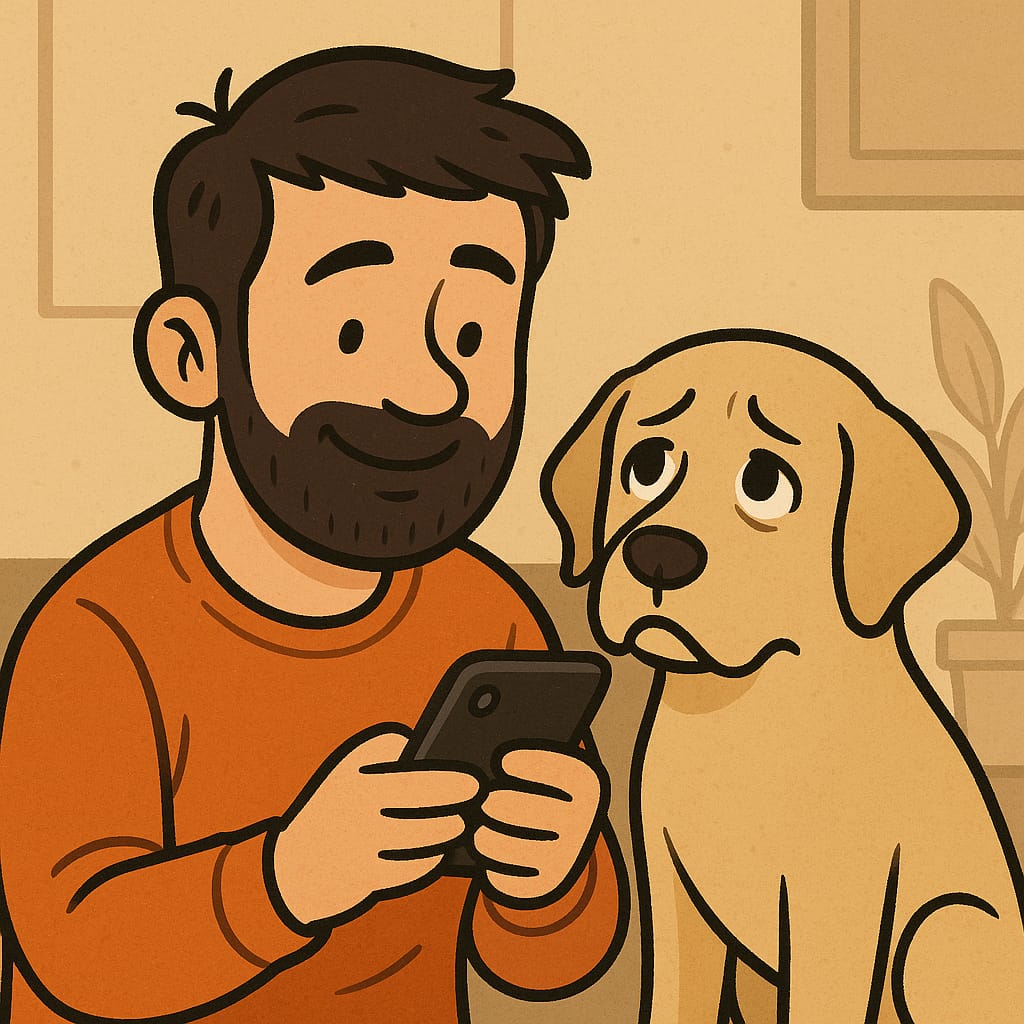
13 Ways to Bond with Your Dog (Instead of Scrolling Your Phone)
Thirteen easy ways to spend that time:
Outdoor Adventures
- Rake up a leaf pile and let them jump in joy
- Go for a walk and let your dog choose the route
- Plan a doggy playdate with their best four-legged pal
- Take a hike through a scenic trail or forest
- Bring a bag of tennis balls and head to an off-leash park
- Visit a dog-friendly beach for some sand-digging fun
Interactive Fun at Home
- Build a DIY ball pit with their favorite toys
- Try blowing bacon-scented bubbles and watch the excitement
- Give your pup a relaxing massage
- Teach them a new trick—clicker training works wonders
- Bake homemade dog treats together
- Read a book aloud while they curl up next to you
- Snuggle under the blankets for a cozy movie night
For the full alphabet of tails, ears, eyes and posture, read how to read dog body language.
Get more dog stories in your inbox. Join Woofs & Words on LinkedIn.
Subscribe on LinkedIn