
Medically reviewed by Dr. Catherine Nicolaou, DVM.
The old royal houses of southern Tamil Nadu hunted with a dog you have probably never seen: a lean, silver-grey hound that could outrun a deer and refused to eat from anyone’s hand but its master’s. The Chippiparai is that dog, a southern Indian sighthound so devoted that old hunters used its single-mindedness as proof of its breeding.
Fast, hardy and reckoned the smartest of all India’s native breeds, the Chippiparai should be a star. Instead it is rare and forever confused with its black-and-tan sister, the Kanni. Here is the breed on its own terms.
Where the Chippiparai comes from
The Chippiparai is a sighthound from the south of Tamil Nadu, named after the village of Sippipparai in the Virudhunagar district, and found across Tirunelveli, Thoothukudi, Thenkasi and Madurai. It is thought to descend from the Saluki, the ancient Middle Eastern coursing hound, and was kept by South Indian royalty and aristocracy to hunt deer, hare and wild boar across open country.
Chippiparai or Kanni?
The two are intertwined. The Kennel Club of India registers the solid-coloured dogs as Chippiparai and the black-and-tan ones as Kanni, treating them as colour varieties of one southern hound, though some breeders hold that they are separate breeds with separate lines. For practical purposes: if it is a single, solid colour, fawn, silver-grey, reddish-brown or near-white, it is generally called a Chippiparai.
What a Chippiparai looks like
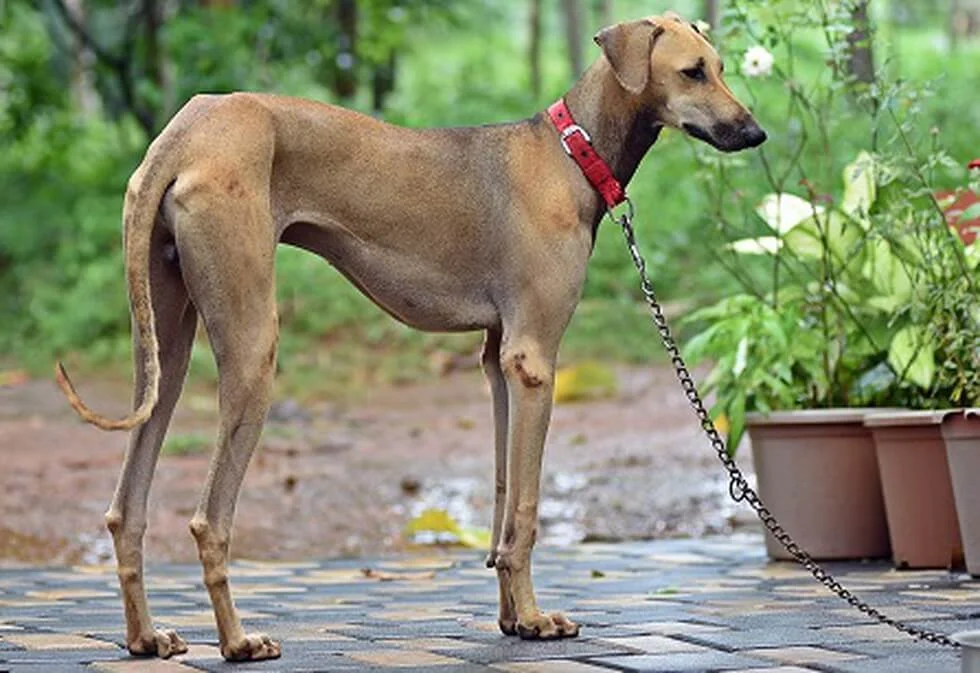
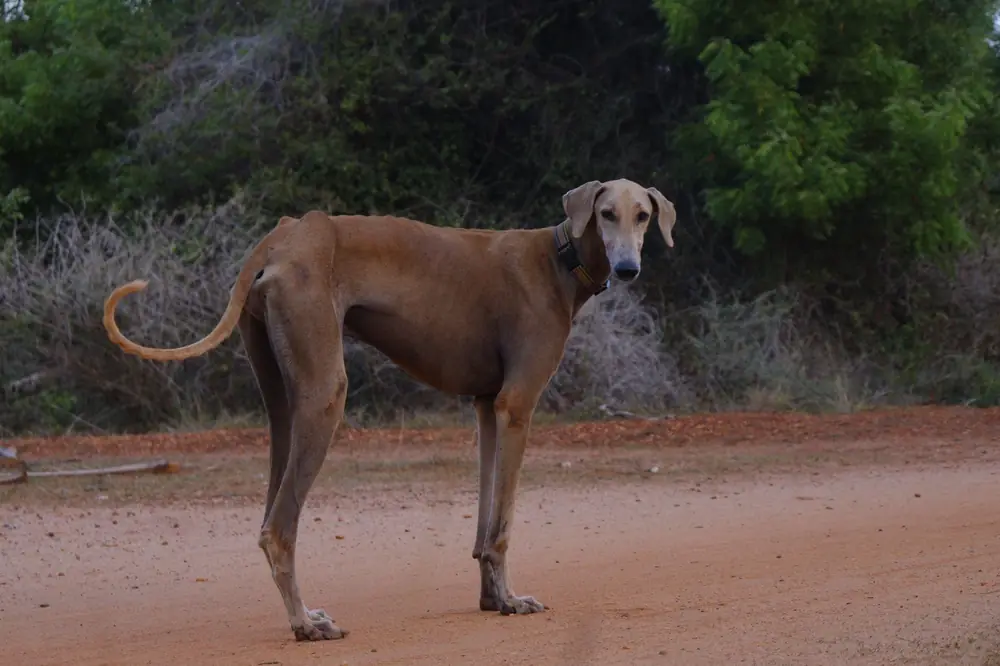
This is a textbook sighthound, streamlined and built only for speed: long legs, a lithe frame, a deep chest and a narrow, elegant head. It stands around 61 cm at the shoulder, dogs a little taller than bitches, and wears a short, glossy single coat. Colours are solid, most often a pale silver-grey or fawn, sometimes reddish-brown, occasionally near-white.
Chippiparai facts at a glance
- Origin: Sippipparai village, Virudhunagar district, Tamil Nadu
- Descended from: the Saluki
- Type: sighthound; hunts deer, hare and boar by sight and speed
- Height: males around 61–63 cm (24–25 in), females about 56 cm (22 in)
- Weight: roughly 18–25 kg, lean and deep-chested
- Lifespan: about 12–14 years
- Coat: short and glossy; commonly white or fawn, also silver-grey or reddish-brown
- Temperament: one-master, intensely loyal, highly intelligent and trainable
- Nickname: “the Greyhound of South India”
- Sister breed: the black-and-tan Kanni
- Status: rare
What the Chippiparai is like to live with
The Chippiparai is known for two things: brains and devotion. It is widely regarded as the most intelligent and trainable of India’s native breeds, and it attaches itself to a single person so completely that traditional hunters claimed a true Chippiparai would refuse food or affection from anyone else. That intelligence is not just talk: the breed has been trained successfully as a police dog. With its own family it is loyal and gently affectionate; with strangers it is reserved, which makes early socialisation important.
It is also a sprinter. The same speed that ran down deer needs an outlet, so a Chippiparai wants daily hard exercise and a secure space to stretch out. Bored and under-run, even the cleverest sighthound turns restless.
The Chippiparai is a lifesaving blood donor
Here is a fact almost no one knows. After eighteen months of research, Tamil Nadu Veterinary and Animal Sciences University (TANUVAS) found the Chippiparai to be one of the safest blood donors in the dog world. Around 73% of the breed tests negative for the DEA 1.1 antigen, which makes them universal donors whose blood is safe to give to almost any dog in an emergency.
It is not only the blood type. The Chippiparai’s calm temperament, lean build with little body fat, easy-to-reach veins and unusually high packed cell volume (52 to 55, against 38 to 42 in most breeds) make it close to a perfect donor, so that 200 ml of Chippiparai blood does the work of roughly 300 ml from an average dog. If you want to know how canine blood donation actually works, see our guide to dog blood donation in India.
Living with a Chippiparai, and the price question
For care, it is about as low-maintenance as dogs come: a short, glossy coat that barely sheds, a hardy build, and a strong tolerance for the southern heat it was made for. What it needs from you is exercise, space and the chance to be close to its person.
As with all these southern hounds, the Chippiparai is rare, and a genuine, well-bred one is not something you stumble on cheaply online. If the intelligence and loyalty are what draw you, an indie dog breed from our adoption directory offers the same devotion and is waiting for a home today.
Watch a Chippiparai who needs a home right now
This is Jumbo, a three-year-old Chippiparai who grew up on the streets around Auroville. DWB filmed him for our YouTube channel, and he is currently up for adoption.
See Jumbo’s full listing and how to adopt him →
Where the Chippiparai fits among India’s breeds
The Chippiparai sits at the heart of Tamil Nadu’s hound tradition, beside the Kanni, the Rajapalayam and the Kombai. Our guide to India’s native dog breeds covers the whole family.
India keeps importing clever, loyal dogs while one of the cleverest and most loyal of all runs quietly through the villages of the south, asking only for one person to belong to. The Chippiparai has always known its master. It is still waiting for the country to notice.
Chippiparai dog FAQs
Is the Chippiparai a good family dog? For an active home, yes. It is extremely loyal and intelligent and bonds closely to one person, but it is reserved with strangers and needs exercise, space and early socialisation.
What is the difference between a Chippiparai and a Kanni? Colour. The Chippiparai is solid-coloured; the Kanni is black-and-tan. The Kennel Club of India treats them as colour varieties of one breed, though some consider them distinct.
Are Chippiparai dogs intelligent? Yes. The Chippiparai is widely regarded as the most intelligent and trainable of India’s native dog breeds.
How big and fast is a Chippiparai? It is a slim sighthound of about 61 cm at the shoulder, built for speed, and was used to run down deer and hare.
Where can I get a Chippiparai? It is rare and found mostly in southern Tamil Nadu. Avoid cheap online sellers, and consider adoption first.
Is the Chippiparai a universal blood donor? Largely, yes. Research by TANUVAS found that about 73% of Chippiparais are DEA 1.1-negative, the canine universal-donor type, and their blood is unusually rich, which makes the breed one of the safest blood donors among dogs.
Get more dog stories in your inbox. Join Woofs & Words on LinkedIn.
Subscribe on LinkedIn
Hum aapki baat nahi samajh paye. Mujhe bhi sippiparai dog palne ka sakh hai.