

“Pain is strange. A cat killing a bird, a car accident, a fire… Pain arrives, BANG, and there it is, it sits on you.”, wrote the inimitable Bukowski, “It’s real. And to anybody watching, you look foolish. Like you’ve suddenly become an idiot. There’s no cure for it unless you know somebody who understands how you feel, and knows how to help.”
In Wes Anderson’s Isle of dogs (2018), set in the fictional Japanese city of Megasaki, you witness pain through a boy’s eyes. As all of Japan’s good boys are declared sick and banished from the hearts and homes to Trash Island — under the false pretences of “dog flu,” or “snout fever”, one kid sets forth to find his dog. Plot Summary of Isle of Dogs
A fictional Japanese city faces a canine flu outbreak. The government orders all dogs to be sent to Trash Island. Atari, a young boy and ward of the mayor, refuses to accept this decision. He flies to the island to search for his lost dog Spots. Along the way he meets a pack of stray dogs who guide him across the harsh terrain. Their journey exposes political corruption and tests loyalty.
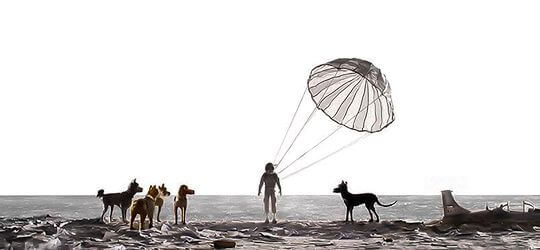
What follows is a delightful stop-motion animation; that flows like a fable, punctuated with intricate tunes from Alexandre Desplat and a stellar vocal cast ensemble boasting the likes of Bryan Cranston, Edward Norton, Bill Murray, Jeff Goldblum and Scarlett Johansson.
What makes Isle of Dogs work for a dog lover
The awkwardly beautiful tapestry of Trash Island where the poor abandoned dogs with their goofy faces and matted fur wander for scrap makes for a surreal setting. You can’t help but look at the similar themes in cinematic gems like White God (with not so subtle hints at immigration) or White Dog which questioned alienation and nationalism. Isle of Dogs delivers visual artistry and emotional depth. It rewards attention and leaves a lasting impression. The film respects dogs as characters with agency and heart.
Themes and Meaning in Isle of Dogs
The film explores abandonment, loyalty, and control by authority. Dogs face exile based on fear and misinformation. Their bond with humans remains strong despite betrayal. The story reflects how societies treat the vulnerable when panic spreads. The message speaks to empathy for animals and the duty of care humans carry. The film uses detailed stop motion animation. Each frame shows handcrafted sets and precise camera work. The muted color palette reflects the bleak world of Trash Island. Framing and symmetry create a signature Wes Anderson style.
Isle of dogs has the dogs who speak English while humans, resort to Japanese. This translation technique works brilliantly ― almost like you are a dog watching the movie.

The dialogue is sharp and witty while the cultural ode to Japan is unmissable; the tin toy influence, Fukushima nuclear reference…
There’s also a subplot of the young boy, Atari, connecting with Chief, the stray dog while they search for Spots. The slow organic way in which they bond is heartwarming!
Also see: 3 Animated Movies on Love and loss that will Melt Your Heart
Part of our guide to the best dog movies.
Meet the dogs!
- Oracle (voiced by Tilda Swinton) is renowned to see the future. (What the other dogs don’t know is that she knows how to watch television.)
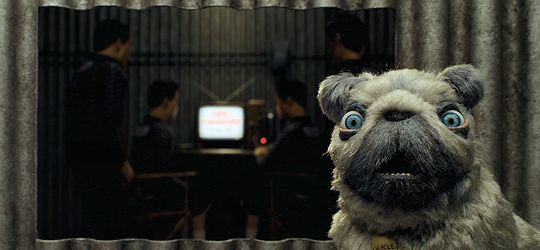
2. Duke (Jeff Goldblum) is always aware of various “rumors” that he’s heard from other dogs.
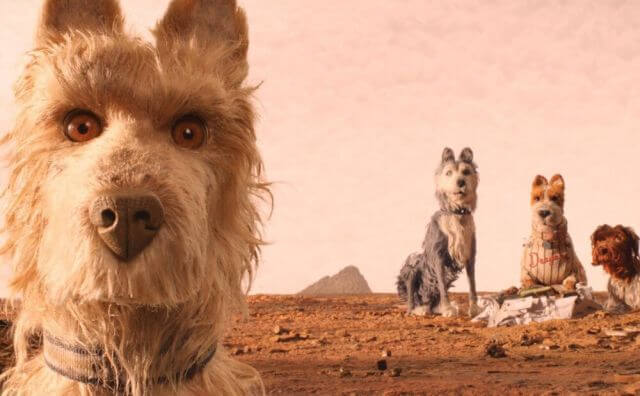
3. Boss (Bill Murray) plays a down on luck doggo who was once the mascot for a local baseball team and still wears his uniform proudly!
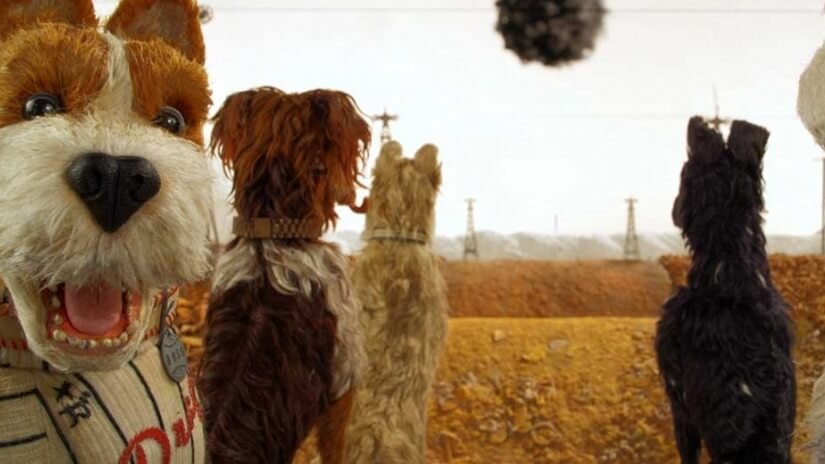
4. Chief (Bryan Cranston) plays a stray who has spent his entire life distrustful of the humans. He, however, befriends the young boy because that’s what dogs do!
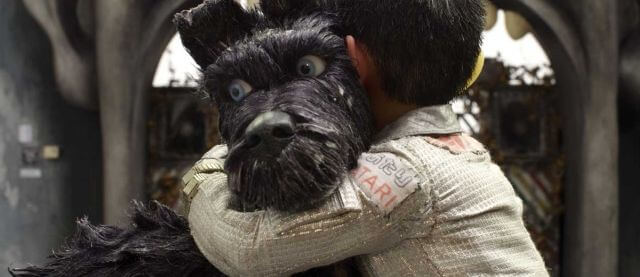
5. Rex (Edward Norton) is perhaps the most rational doggo in the group. A firm believer in democracy, he suggests voting as against chasing impulses.
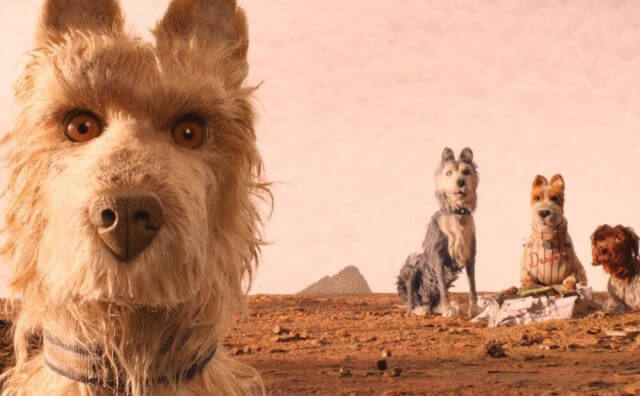
6. Nutmeg (Scarlett Johansson) plays a show dog while maintaining that “show dog is not my identity”. She’s perhaps the only one in the Trash island with a clean fur coat.

Is Isle of Dogs based on a true story?
No. It’s an original story, co-written by Wes Anderson with Roman Coppola, Jason Schwartzman and Kunichi Nomura. Not an adaptation of anything. That said, one plot thread has a real historical root. Japan really did have a “Dog Shogun.” Tokugawa Tsunayoshi, who ruled in the late 1600s, was so devoted to dogs that he passed animal-protection laws under his rule, the same instinct the film’s fictional dog-hating dynasty inverts. Anderson has also said the idea partly came from Japan’s real-life islands that have ended up overrun by a single animal species. Reality is stranger than a Wes Anderson set.
Does the dog die in Isle of Dogs?
Short answer: no, and you can watch this one without bracing for it. None of the dogs you spend the film with (Chief, Rex, Boss, Duke, Nutmeg, Spots) dies on screen. There’s a brief, off-screen reference to dogs who didn’t make it before the story begins, but the film’s own arc bends toward reunion. Every dog you meet ends up back with someone who wants them. For a site built on adoption stories, that’s the whole point.
Why this dog cares about Trash Island
Strip away the stop motion and the Wes Anderson symmetry, and Isle of Dogs is a film about what happens when a government decides certain dogs are disposable. That’s not science fiction here. It’s Tuesday on any Indian street where a municipality runs a catch-and-dump drive instead of a sterilisation program. Atari flying a plane into exile to find one specific dog, when an entire government has written off millions of them, is the same instinct behind every person who’s ever gone looking for a street dog they can’t stop thinking about. The movie calls it fiction. We call it Monday.
Want more dogs who don’t get left behind? See dog adoption near you or read how you can help stray dogs in India.
Isle of dogs if spoken aloud sounds like “I love dogs” and this is what the movie brings home in a resounding fashion: all dogs are good dogs!
And they all deserve to be petted!
Get more dog stories in your inbox. Join Woofs & Words on LinkedIn.
Subscribe on LinkedIn
This sounds splendid! I am going to watch it –thanks for the brilliant review.