
On a farm outside Bengaluru there is a room with a bank of eight ports along one wall. A beagle works down the line, nose to each port in turn, and stops at one of them. That stop is the entire signal. She marks it, or she moves on.
Behind the port is a cotton surgical mask. Someone breathed into it for ten minutes in a hospital in Hubballi or Bengaluru, weeks earlier, and it has been frozen ever since. The beagle has never met them and has no idea whether they are ill. Neither does the handler writing down what she does, who can see nothing but a QR code.
Seven dogs read the breath of 1,502 people this way, and the roster was four beagles, a Labrador, a Dutch Shepherd-Belgian Malinois cross and a Labrador-indie mix. That last one is the reason this ended up on a dog blog, because it means an Indian street dog’s descendant worked on a study published in the Journal of Clinical Oncology.
Paired with a statistical model, the seven of them caught 90.8% of the cancers and correctly cleared 91.3% of the people who did not have one, and the accuracy held all the way down to stage I, which is the hard part. None of which means you can go and take this test, and the researchers say as much themselves, in a field where one of the best-funded efforts of the last decade went the other way entirely.
On this page
Can dogs smell cancer in their own owners?
Most people who ask whether dogs can smell cancer arrive at it the same way: their own dog has spent a week nosing at something, and they want to know whether that means anything.
Sometimes it has. In April 1989, dermatologist Hywel Williams and his colleague Andres Pembroke wrote to The Lancet about a woman whose border collie-Doberman cross had fixated on a mole on her leg for months, and one day tried to bite it off. She got it checked. It was a malignant melanoma. That letter is why anyone started studying this seriously.
Twenty years later a fox red Labrador called Daisy kept nudging at her owner’s chest until the owner went to her GP, who found a deep breast cancer that had been hard to spot. The owner was Claire Guest, who went on to co-found the charity Medical Detection Dogs; Daisy took the Blue Cross medal for a working dog in 2014, and Guest was appointed OBE in 2023.
Guest is also a co-author on the Karnataka paper, which means the line from one dog’s nudge in a living room to a peer-reviewed multi-cancer trial runs through a single person.
All of which is worth taking seriously enough to get the thing looked at, without treating it as evidence on its own, because a trained detection dog does not behave anything like a worried pet. It is taught one specific, boring, repeatable action, and the whole signal is that pause at the port. Dogs are extraordinary at this when they are trained for a specific job, the way Patron finds landmines in Chernihiv and doesn’t find them anywhere else.
What the seven dogs actually did
From the patient’s side it is almost boringly simple. You put on the mask and breathe normally for ten minutes. No blood draw, no scan, no fasting. A coordinator wearing gloves seals it into an aluminium barrier bag, tags it, and it goes into a freezer for up to six months before any dog gets near it.
The dogs are Chloe, Cheetah, Iggy, Billy, Whiskey, Jessie and Bane, and every sample gets at least three of them. What turns three separate opinions into one answer is a Bayesian model that weighs each dog’s own track record, meaning how often that particular dog has been right before, alongside the patient’s age, sex and tobacco history.
What they are picking up are volatile organic compounds, the metabolic traces a diseased body sheds into breath. Human breath carries over 1,400 of them, and the shift cancer causes is a change in the pattern rather than the arrival of one new smell. A dog works at parts per trillion. The lab instruments built to do this job work at parts per million, which is the whole reason anyone is still using animals for it. That mechanism is the same one behind every other thing a dog’s nose can pick up, from malaria to Parkinson’s.
Bengaluru startup Dognosis ran the study across six Karnataka hospitals: RadOn Cancer Centre, Karnataka Cancer Therapy and Research Institute and Karnataka Medical College and Research Institute in Hubballi, plus St John’s Medical College, Aster CMI and Narayana Health City in Bengaluru. India’s Clinical Trials Registry has had the protocol on file since October 2024, and participants consented in Kannada, Hindi or English.
How do you know the dog isn’t just reading the handler?
This is the oldest objection to any detection-dog claim, and it has a name. Clever Hans was a horse who appeared to do arithmetic and was in fact reading his trainer’s posture.
It is not a theoretical worry. A 2011 study in Animal Cognition ran eighteen drug and explosive detection teams through searches with no target present, having told the handlers that markers showed where scent was hidden. The teams produced false alerts more than two hundred times, concentrated exactly where handlers believed something was there.
Which is why the dull-sounding design details are the ones that matter here. Samples carried QR codes and nothing else, the handler logging the alerts was masked to which sample was which, and clinical data and biopsy results were withheld from everyone in the room. Cases and controls were even recruited in the same rooms of the same hospitals, so the dogs could not simply be smelling the oncology ward. None of that guarantees a clean result, but a study without those controls would not deserve the benefit of the doubt, and this one has them.
What the numbers actually say
About 90% accuracy is the figure that travelled, and it is roughly right, but it flattens a set of results that are more interesting than one number. Of 3,275 people enrolled, 1,502 formed the final test group, 283 of them with biopsy-confirmed, untreated cancer. At the pre-specified operating point the system reached 90.8% sensitivity and 91.3% specificity, with an area under the ROC curve of 0.962.
The stage data is where it gets interesting. Screening tests usually get worse as cancer gets earlier, for the obvious reason that there is less of it to smell, and this one did not: sensitivity for stage I and II disease came in at 90.6%, near enough identical to late-stage performance. A stage I cancer is both the one worth finding and the one a dog has least to work with.
Break it down by cancer type and the floor stays high across all seven groups: head and neck, breast, upper and lower gastrointestinal, gynaecologic, lung and genitourinary. The team also stress-tested it. They pulled a dog out of the ensemble entirely to simulate an off day, and the result held. Performance didn’t shift meaningfully with sex, tobacco history, diabetes, hypertension, whether someone had eaten, or whether they came in before or after lunch.
One note on sourcing, because two versions are circulating. The September 2025 preprint reported 91.5% sensitivity and 90.8% specificity, with a stage-by-stage breakdown of 87.1%, 90.8%, 93.7% and 91.5% for stages I to IV. The peer-reviewed version published in April 2026 is the one quoted above. Where they disagree, the published paper wins.
How much of this is the dog, and how much is the software?
Asking this is how you separate a real result from a good story, and to their credit Dognosis answers it directly rather than leaving you to work it out.
A model built on patient risk factors alone, no dogs involved, reaches an AUC of 0.832. The dogs alone reach 0.932. Fused together, 0.962. So on this system the dogs are carrying most of the signal, and the maths is sharpening an answer the animals had largely already found.
Now compare that with the other company in this field. SpotitEarly, an Israeli startup, published a double-blind trial in Scientific Reports using six Labradors and more than 1,400 people. Its headline figure is 93.9% sensitivity, and that is the number it leads with. Table 6 of that same paper reports what the dogs achieved without the AI layer.
64.4%.
| System | Dogs alone | Software alone | Both together |
|---|---|---|---|
| Dognosis (JCO, 2026) | 0.932 AUC | 0.832 AUC | 0.962 AUC |
| SpotitEarly (Scientific Reports) | 64.4% sensitivity | not reported | 93.9% sensitivity |
To SpotitEarly’s credit that number is in their own paper, in a table anyone can read. But it is the reason to distrust a bare headline figure. When a page tells you dogs detect cancer with 94% accuracy, the question to ask is which half of the system earned it.
Why this study happened in India
India recorded an estimated 1.56 million new cancer cases and 874,404 deaths in 2024, per the ICMR analysis published in JAMA. Roughly one in nine Indians will develop cancer in their lifetime.
The number that explains everything else is the coverage one. India’s national NCD programme screens for three cancers, oral, cervical and breast, through Health and Wellness Centres. Under NFHS-5, the share of Indian women who had ever been screened was 1.9% for cervical cancer, 0.9% for breast, 0.9% for oral. Among men, 1.2% for oral. And those three cancers together make up only about a third of India’s cancer cases in the first place.
The bottleneck here was never the accuracy of the tests. It is that almost nobody gets one. A test that costs little, needs no needle, no radiographer and no appointment at a tertiary centre, and that a health worker can run out of a van, is aimed straight at that gap.
Dr Basavaraj R. Patil, chairman of KCTRI Hubballi and a co-author on the study, framed it against the screening van his own institute already runs. Outreach has gone up, he said, and it still isn’t matching the scale of the problem. A low-cost, repeatable, non-invasive tool “could be transformative, not only for early detection but also for monitoring whether treatment is working or detecting early signs of recurrence.”
What the study does not prove
The mainstream position on whether dogs can smell cancer well enough to screen with has been settled for years, and it is cautious. Roswell Park, an American cancer centre, put it plainly in 2020: attractive idea, not accurate enough or practical enough to use, and that verdict has not been revisited since. So the fair test of the 2026 work is not whether it is exciting. It is whether it moves that verdict.
Start with what the authors themselves say. This was a case-control study, not a screening study. Researchers assembled a group of people already known to have cancer and a group known not to, then asked the dogs to tell them apart. That design reliably flatters a test compared with how it performs in the field.
The specific problem is arithmetic. About one in four people in the test cohort had cancer. In a real screening population it is a small fraction of that. Take a test with 91% specificity into a population where cancer is rare and most of your positive results will be false ones, because there are so many more healthy people to be wrong about. High sensitivity doesn’t rescue you from that. Only prevalence does.
Two further limits are worth carrying with you. All six sites sit inside a single state, and breath chemistry is shaped by diet, environment and gut microbiome, so Karnataka results may not transfer cleanly to Kerala, let alone Kansas. The paper also notes that batch effects couldn’t be fully ruled out.
The trial that went the other way
Then there is the trial that sets the odds for all of this. In 2017, the KDOG team at Institut Curie in Paris ran a proof of concept on breast cancer. Two trained dogs, 130 sweat samples, 90.3% of the positives correctly identified. Very promising, widely reported, the same shape of number as everything else in this field.
Then they ran the proper trial. KDOG1 enrolled 181 women and published in Nature Communications in November 2025. At least one of the two dogs caught 80% of the positive samples. Both dogs agreed on only 49%. The team’s own verdict was that this is insufficient for clinical use, and they have moved on to identifying the compounds the dogs were responding to so an electronic nose can be built against them.
That is a decade of work at one of Europe’s leading cancer institutes, a strong pilot followed by a bigger study that would not hold it up, and it is the pattern this field keeps producing. Which is why the Karnataka result needs replicating before it needs celebrating.
So does it move the verdict?
Partly, and the clearest reading of how far comes from the journal itself. The paper was selected for a commissioned editorial, which is where a journal asks experts with no stake in the work to give the field their own reading. Dr Shiran Shapira and Prof Nadir Arber wrote it, calling the study “an important effort to move canine olfactory detection beyond anecdotal observations toward a more structured analytical framework”, and concluding that “the reproducibility of the phenomenon across multiple laboratories suggests that a real biological signal exists.” JCO’s editor-in-chief, Dr Jonathan Friedberg, wrote that the results “pave the way for larger validation studies”.
Both are saying the signal is real and the next study is worth doing, and neither is saying the test works. Can dogs smell cancer? Plainly yes. Can a clinic act on that yet? Not from this evidence. Six years on from Roswell Park’s verdict, the honest update is that the idea has stopped being anecdotal and started being measurable, which is a smaller move than the headlines suggest and a considerably bigger one than nothing.
The dogs’ side of it
The seven were young, one to three years old, and six of them were female. Ten weeks of positive-reinforcement training preceded each trial block. Daily exercise, veterinary oversight, environmental enrichment, all assessed against the Five Freedoms. An Institutional Animal Ethics Committee cleared the work under CCSEA registration, run under the Prevention of Cruelty to Animals Act, 1960. Bloomberg, visiting the farm outside Bengaluru, reported the dogs work 30 to 60 minutes a day and spend the rest of it on walks, treats and play.
Then there is one line in the methods that is easy to skim past. When a dog wasn’t motivated to work, the handler stopped the run, and that run was either repeated later or dropped from the analysis. A dog who doesn’t feel like working is allowed to not work. In a study with a journal publication riding on it, that is a real choice, and it is the right one.
What happens next
The next version reads the dogs rather than just their verdicts. Computer vision already tracks how long each dog lingers at a port, the path of its approach, the rhythm of each sniff, even ear position and eyelid movement. On a pilot subset of 425 participants that vision-augmented model reached an AUC of 0.938. A brain-computer interface called DogSense, an eight-channel EEG headset fitted individually to each dog, is the layer after that. To be precise, because several reports blurred it: the 90.8% came from the dogs and the Bayesian model. The brain-signal work is the next system, not the one that produced these numbers.
Dognosis has been picked for Accel’s first Atoms X cohort in India and is targeting an early-2027 India launch for its consumer test, BreathEasy. Before that comes FirstAlert, a prospective study in higher-risk but otherwise healthy people, and in people who have finished cancer treatment, to see whether the dogs can catch a recurrence before the clinic does. That study, not this one, is the thing to watch.
The harder question is arithmetic again. Medical Detection Dogs, the charity that advised on this trial, needs 57 employees and 655 volunteers to keep 18 dogs working, and spent more than it earned in its most recent filed year. Dognosis has 16 dogs and plans 30. It is hiring engineers to take its platform from hundreds of breath samples a day to thousands. The stated ambition is a million tests a year, which is roughly 2,700 a day, every day.
Which is the useful way to hold all of it. Whether dogs can smell cancer stopped being the interesting question somewhere around 2004. The nose is not the constraint. Everything built around the nose is.
The half-indie dog in the roster
Which brings it back to that roster of seven. One of the dogs who worked those 1,502 breath samples was half indie, and she did it inside a system a journal was willing to publish and an independent reviewer was willing to take seriously.
We have spent fifteen years making a fairly simple case here, and it isn’t sentimental. Uttarakhand Police put a rescued stray through their squad and he came out the top-performing dog in it. West Bengal Police took in Asha, a street dog who arrived bleeding from a stoning and eighteen months later was out-sniffing their German Shepherds for explosives and drugs. A cancer lab in Bengaluru has now run a version of the same experiment, with better instruments and peer review attached.
India argues constantly about what to do with its street dogs. It argues much less about what they can do.
There are indies waiting for homes on our adoption listings right now.
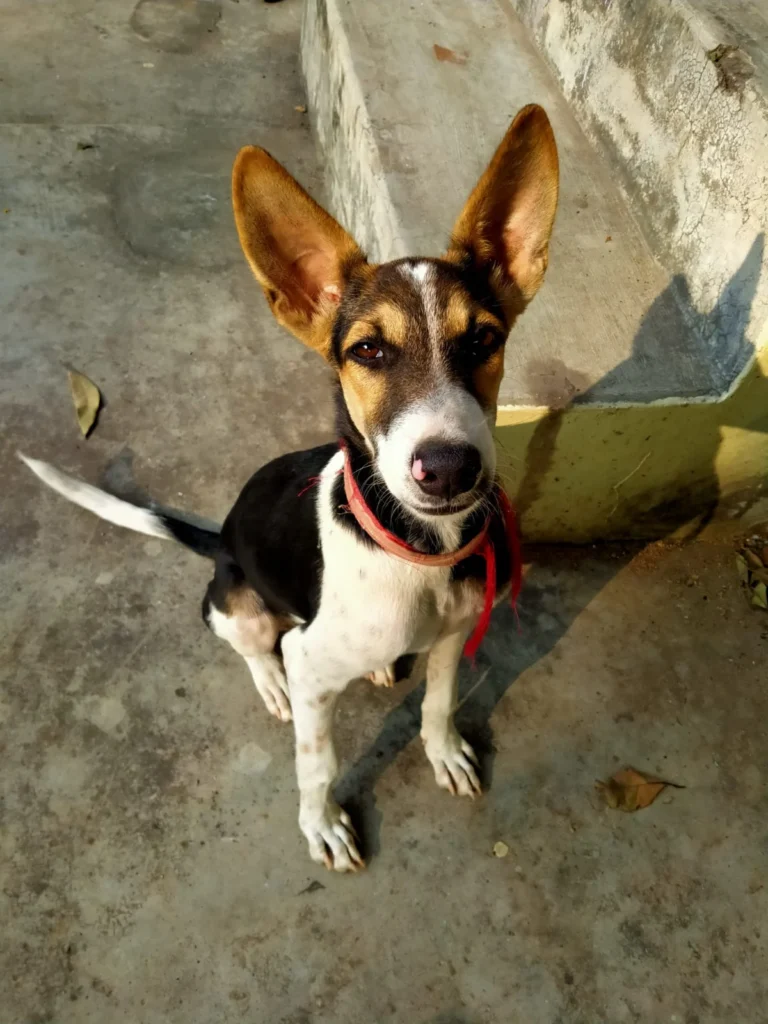
The dog at the top of this page is not one of the seven. He is a young indie in Hyderabad, from our own adoption listings, and at the time of writing he is still looking for a home.
Get more dog stories in your inbox. Join Woofs & Words on LinkedIn.
Subscribe on LinkedIn