
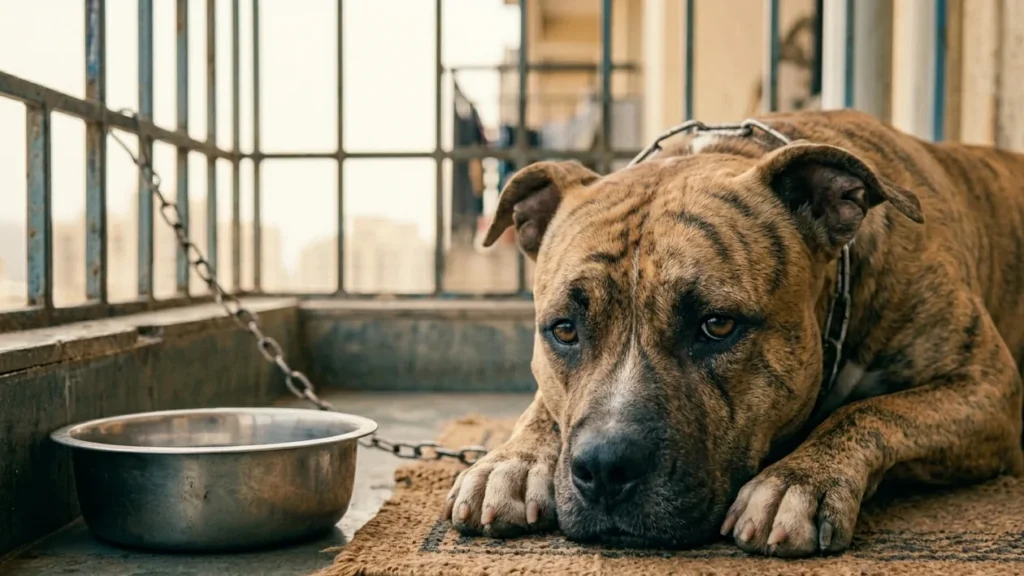
A family in a Gurugram high-rise brings home a Caucasian Shepherd puppy. Eighty kilos at adulthood, bred over centuries to fight wolves on a Georgian mountainside, now living in a 1,400-square-foot flat where the summer hits 44°C. Nobody asked the breeder a single question. Nobody will, until the dog does something that ends up on the news.
That dog is the real story. Not the breed list.
The list of banned dog breeds in India began with a single circular. In March 2024, the Department of Animal Husbandry and Dairying told every state to stop licensing, breeding, and selling 23 dog breeds it called “ferocious and dangerous to human life.” Pitbull Terrier. Rottweiler. Dogo Argentino. Boerboel. Kangal. Tosa Inu. The Caucasian and Central Asian Shepherds. Existing pets were to be sterilised so the line ended with them. One memo, and a whole category of dog was declared a public threat.
Within months, it fell apart.
Banned dog breeds in India: where things stand in 2026
Short version: there is no enforceable nationwide ban. The 2024 order naming 23 breeds was struck down in court, the Centre has told judges it will not enforce it, and the question is still unresolved. The longer version is where it gets interesting.
What the courts actually did
The Karnataka High Court quashed the circular. The Delhi High Court set it aside too, in June 2024, on a simple ground: the government had promised, on record in December 2023, to consult stakeholders before issuing any such order, and then didn’t. No public notice, no objections invited, no Animal Welfare Board consultation. The court told the Centre to do it properly: publish the proposal, take written objections, examine them, then decide.
The Centre then told the Bombay High Court it would not enforce the March 2024 circular at all.
So here is where it stands in 2026: there is no enforceable nationwide ban on these breeds. The list of banned dog breeds in India exists on paper and nowhere else. The advisory that everyone shared in panic was struck down for skipping the most basic step in lawmaking, asking the people it affects.
The matter is still moving through the courts. After a Pitbull attacked a six-year-old, the child’s father petitioned the Delhi High Court for a ban and for compensation, and the court issued notice to the Centre, the Delhi government, the police, and the municipal corporation. That petition was last listed for a hearing in early March 2026.
More than two years after the original memo, no final ruling has been reported, which tells you something in itself: the question of what India should actually do about these dogs is still open. Cities have written their own rules in the gap. Gurugram, Ghaziabad and Lucknow restrict aggressive breeds in housing societies, but enforcement is thin and inconsistent. The national picture is a list nobody can enforce and an argument nobody has finished.
The irony nobody says out loud
While the government spent two years on a breed list that collapsed in court, it was sitting on a law that goes straight at the real problem, and barely lifting a finger to enforce it.
The Prevention of Cruelty to Animals (Dog Breeding and Marketing) Rules, 2017 already exist. On paper they have teeth. Every breeder and every breeding establishment has to register with the State Animal Welfare Board. Registration comes only after an inspection, and it expires every two years. Breeding without it is an offence. The rules allow fines and the confiscation of breeding stock and puppies. Kennels are meant to be open to inspection at any time.
That is the lever you want. It regulates the one stage where a dangerous dog is actually made: the breeder. Nine years on, almost nobody enforces it. Backyard breeders run unregistered Pitbull and mastiff mills, sell puppies over Instagram with no health screening and no questions for the buyer, and never meet an inspector. The state has the tool. It just doesn’t pick it up.
So the ban wasn’t only bad law. It was a louder substitute for the quiet job the government already signed up to in 2017. Banning a breed makes a headline. Enforcing a breeding licence makes a difference. We picked the headline.
The ban treated a symptom and named the wrong disease
Strip away the legal mess and look at what the ban was trying to do. It wanted fewer people hurt by dogs. Fair goal.
But look at where India’s actual dog-danger lives. The public-health crisis on our streets is rabies, and it comes overwhelmingly from unvaccinated free-roaming dogs, not from imported guard breeds in apartments. We lose thousands of people a year to rabies. A breed ban on Tosa Inus does nothing for the child bitten by an unvaccinated street dog in a town with no functioning sterilisation program. That is the same system failure behind the stray-dog crisis the Supreme Court has been wrestling with: money budgeted, the humane fix never built.
And the attacks that did involve these breeds? Trace them back. Almost every one starts the same way: a powerful dog bought on impulse, from a breeder no one regulates, raised by an owner who wanted a status symbol and never did the work. The breed didn’t fail. Every adult in that chain did.
There is a better predictor of danger than breed, and it sits on the human end of the leash. India’s first national animal cruelty count, and the evidence linking harm to animals with harm to people, is the thing a breed list can never contain.
What a breed list can’t see
A list of 23 names cannot tell you the one thing that predicts whether a dog is dangerous: how it was bred, raised, and contained.
It can’t see the backyard breeder running an unregistered Pitbull mill, selling puppies on Instagram with no health screening and no questions for the buyer.
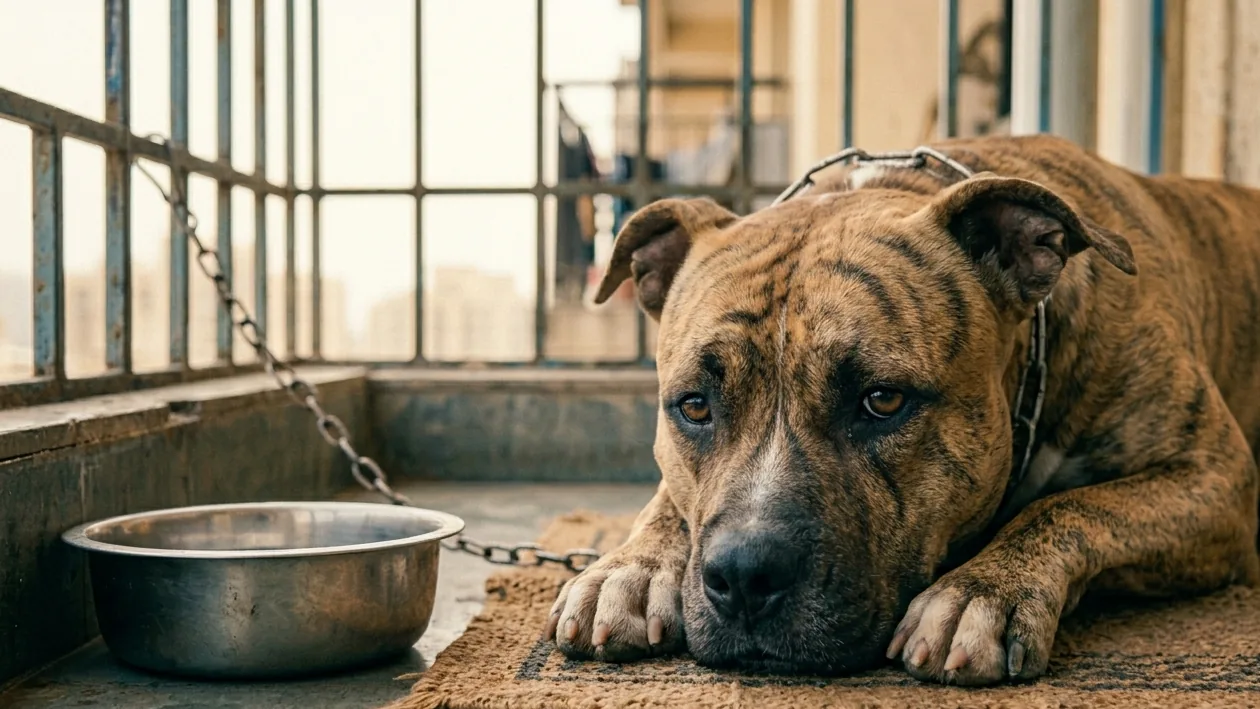
It can’t see a 70-kilo mountain dog kept on a third-floor balcony in Hyderabad, under-exercised, overheated, and frustrated into aggression by an environment it was never built for.
It can’t see the owner who never invested a rupee in training, then acts shocked when an unsocialised guard dog behaves like an unsocialised guard dog.
Ban the breed and all three of those people simply buy the next breed on no list. The Cane Corso instead of the Boerboel. The problem walks in through a door the list left open.
The fix nobody wants to fund
The honest fix is slower and less shareable than a ban, which is exactly why it keeps losing to one.
Regulate breeders, for real. India already has the rules on paper; enforce them. A licensed, inspected breeding industry removes more dangerous dogs from the pipeline than any import list.
Control the import and sale of dogs whose size and coat make them a welfare problem in Indian heat, the Huskies, Saint Bernards, and mountain breeds that suffer quietly long before they ever snap. That is a climate argument and an animal-welfare argument, not a “ferocious breed” one.
Hold owners accountable. Mandatory registration, vaccination, sterilisation of unplanned litters, and real consequences when a dog under your control hurts someone. The dog is rarely the one that chose this life.
And fund the rabies and sterilisation programs that address the bites India actually suffers, instead of writing memos about breeds most Indians will never meet.
None of that fits in a headline. All of it would do more than the ban ever could.
The dog at the centre of it
Here is the part the breed debate keeps skipping. The Pitbull seized from a cruel owner didn’t ask to be bred for the pit. The Caucasian Shepherd melting on a Gurugram balcony didn’t choose the flat. We import them, breed them, mishandle them, and when it goes wrong, we put their breed on a list and call it action.
Even the courts have hinted at the better answer. In December 2023, hearing one of these pleas, the Delhi High Court stopped to make a point about Indian dogs: “Indian breeds need to be taken care of. They are far more sturdy. They don’t fall sick that often because they have acclimatised. Today we are vocal for local.”
The dog outside your gate and the “dangerous” dog behind the apartment door are failed by the same thing: a country that will ban a name but won’t regulate the humans who profit from the animal.
If you want a dog that’s built for an Indian street, summer, and home, there’s one waiting at a shelter right now, no import, no ban, no breeder to interrogate. To find one, browse shelters and rescues near you. You could start with the Indian pariah dog.
Get more dog stories in your inbox. Join Woofs & Words on LinkedIn.
Subscribe on LinkedIn