
Every missing pet story begins with panic. One open gate or a loud sound, and a family is suddenly searching the streets, printing flyers, and calling local shelters.
But today, there is a completely new way to bring them home. If you are wondering how to find a lost dog with AI, the results are already changing animal rescue. We see “AI” slapped onto every software update and app. But the results in the animal welfare space are undeniable.
According to a recent feature in The Washington Post, the Petco Love platform has successfully facilitated over 200,000 reunions since launching in 2021. The technology does not just work in perfect conditions. It works in the messy reality of animal rescue. For anyone who works in dog rescue, that number is staggering. It shows exactly what happens when advanced technology is used to solve a deeply emotional, human problem.
Lost your dog right now? Start with the on-the-ground steps: what to do in the first 24 hours when your dog goes missing in India: who to call, where to search, and how to file a report. Then come back here for the tech that widens the net.
How to Find Lost Dog with AI?
When a dog goes missing, the panic is visceral. For years, our best hope was a microchip and a stack of flyers. But the tech landscape has shifted. We are moving away from “searching” and toward “identifying.”
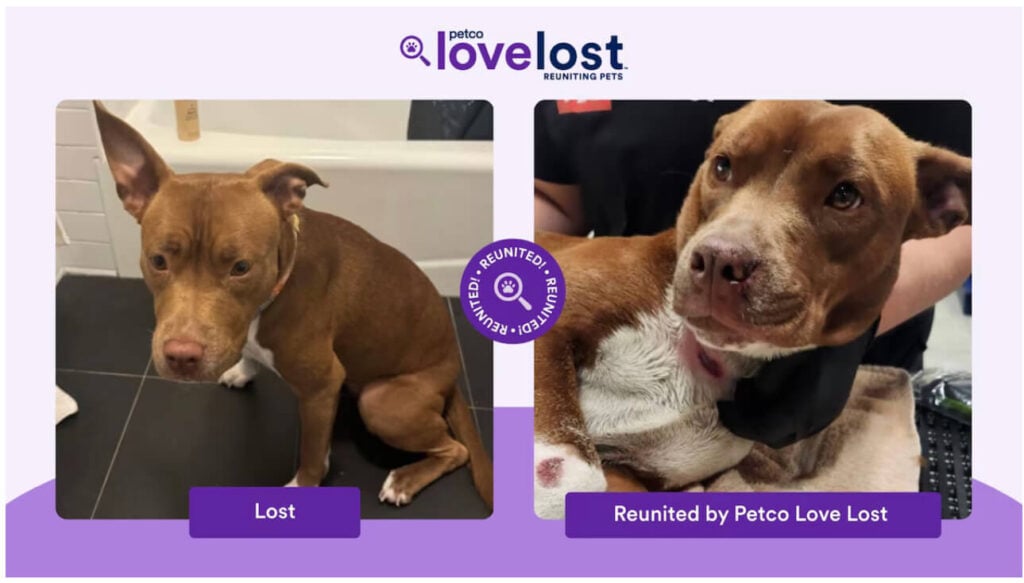
However, “safety” is no longer just about a GPS coordinate. Modern AI isn’t just helping us find our dogs when they are lost; it’s helping us find health issues before they become emergencies. By merging the search for lost pets with proactive health monitoring, we’re finally giving our dogs a voice they didn’t have before.The idea behind the technology is incredibly simple for pet parents to use. An owner uploads a photo of their missing dog, and the AI system checks that image against photos gathered from more than 3,000 shelters and rescues. If the software detects a likely match based on facial structure and coat patterns, the owner gets notified immediately.
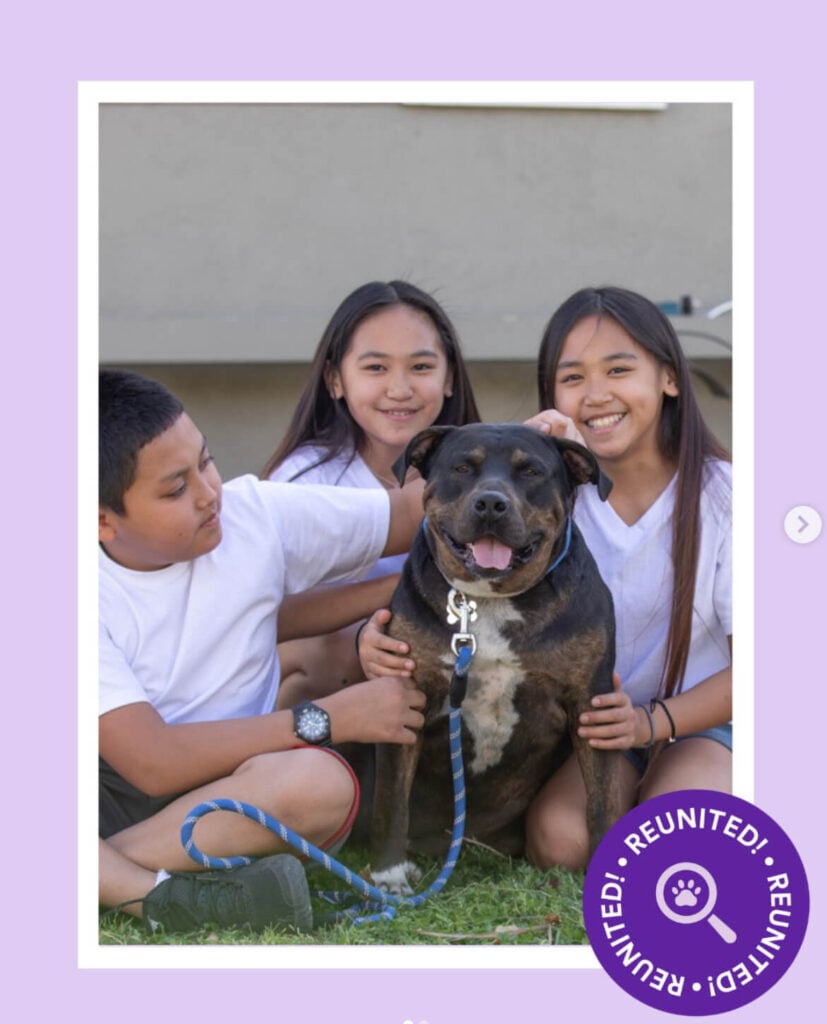
Anyone involved in animal welfare knows that a lost dog does not affect just one family. It also adds pressure on shelters, rescuers, foster networks, and community volunteers who are already stretched thin.
AI often gets discussed in terms of productivity, marketing, or risk, but this is a rare example of it doing something instantly understandable and deeply useful. It is helping dogs get back home, while also easing pressure on the rescue ecosystem.
Petco Love Lost shows how AI can reunite families, and it is not alone. Reports suggest Amazon Ring is also exploring AI powered ways to help people trace missing dogs, which shows that pet recovery is becoming a real use case for mainstream technology.
Connecting the Dots Across Cities
Take the story of Millie, an American Staffordshire Terrier mix who slipped her collar in Manhattan. After a frantic search through police stations and social media, her owner uploaded her photo to the AI database. The software matched Millie’s unique white spots with a photo taken at a veterinary clinic in New Jersey, nearly 17 miles away. Millie had been hit by a car and brought to the clinic by a stranger. Thanks to the AI match, her owner was hugging her just 15 hours after she went missing.
Julie Castle, the CEO of Best Friends Animal Society, summarized the impact perfectly in her interview with The Washington Post. “As controversial as AI is right now, this is one of those areas where it’s a real win,” she noted, pointing out that the technology is a game-changer for overcrowded shelters
How Amazon AWS is speeding up lost dog reunions
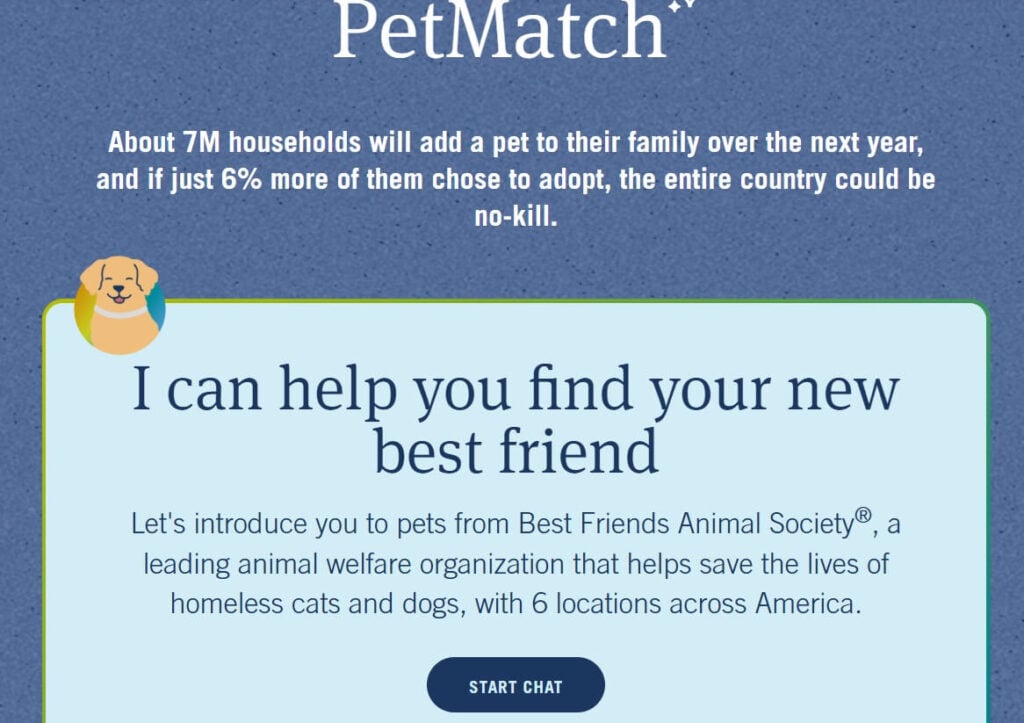
The Protect Playtime initiative is a collaboration between PetArmor and the Amazon Ads Brand Innovation Lab designed to tackle a heartbreaking statistic. Data from the Best Friends Animal Society reveals that a shelter pet is euthanized every 90 seconds in the U.S. due to a lack of space. The reality is that we have enough room to save them all. With seven million families expected to bring home a pet this year, a small shift in behavior is all it takes. If only 6% more of those households chose adoption over other sources, the entire country could achieve a no-kill status.
To turn this goal into a reality, the campaign focuses on five practical pillars. It uses AI and generative video to help people discover pets waiting in shelters, while also investing in physical shelter infrastructure. Additionally, it integrates charitable giving into streaming content and offers shoppable products to fund these life-saving efforts. By using technology to bridge the gap between homeless animals and available homes, the project aims to ensure every treatable dog and cat gets a fair shot at life.
Amazon Web Services (AWS) is now providing the technical framework for more accurate pet identification. Through a tool called Amazon Rekognition, AI can analyze photos of dogs to find specific physical markers. Rather than just identifying a breed, the system looks at unique features like ear shape, eye spacing, and coat patterns. This data creates a digital signature for your dog that is much more reliable than a standard description.
Using SageMaker to reduce shelter stay times
One of the biggest obstacles in finding a lost dog is the delay between a dog entering a shelter and their photo being posted online. Amazon SageMaker helps solve this by automating the tagging process. When a stray arrives at a facility, the system can instantly categorize their physical traits and cross-reference them with lost dog reports. This automation removes the manual data entry backlog, meaning your dog’s photo could be matched the moment they are found.
Microchips are essential, but they can migrate or become unreadable without the right scanner. Visual AI provides a secondary layer of protection that anyone with a smartphone can use. As these Amazon-powered tools become more common in the rescue community, the search for a missing pet moves from local neighborhoods to a global, searchable database. This technology ensures that every found dog has a searchable profile from the moment they are picked up.
Satellite dog collars are here. They just don’t work in India yet.
On 8 July 2026, a New York pet-tech company called Fi shipped the first dog collar that talks to satellites. The Fi Ultra connects through T-Mobile’s T-Satellite service, which rides on SpaceX’s Starlink constellation of close to 11,000 satellites in low-Earth orbit. Your dog can bolt into a canyon with no cell tower for 40 kilometres and the collar still reports a position.
It costs $199 for the device plus an annual membership starting at $189, or a flat $299 for existing Fi customers. Besides live location, it does geofence alerts and a recall function that plays sound and vibration to call the dog back.
“Our mission has always been to strengthen the human-animal connection via data, to give dogs more freedom while keeping them safe,” Fi co-founder and CEO Jonathan Bensamoun said at launch. “That mission now extends to every corner of the country and soon, every corner of the world.”
Soon is carrying a lot of weight in that sentence. Here is the part most of the coverage skipped: T-Satellite is a United States arrangement. The Fi Ultra has no announced launch date for India, the UK or the EU. Starlink does hold an Indian licence from IN-SPACe, valid till 7 July 2030, and has plans for nine to ten gateway earth stations here. But commercial service has not begun, and nobody has committed to a date.
So if you are reading this from Pune or Guwahati: you cannot buy this collar, and it would not connect if you could.
India’s lost dog problem was never a signal problem
That gap is worth sitting with, because it explains why American pet tech so often lands here with a thud.
The Fi Ultra solves a specifically American failure: a dog running loose in country with no cellular coverage at all. India does not have that failure at anything like the same scale. TRAI data puts 3G or 4G coverage at roughly 95% of Indian villages, and 5G at close to 80%. The tower is almost always there.
What is missing is everything around the tower. Most dogs here, indies especially, wear nothing at all. Microchip scanners are inconsistent outside large city clinics. And there is no national lost-pet database, so when a dog turns up 12 kilometres away, the auto driver who found her has nowhere central to report it. A satellite fixes the signal. India’s gap is a record-keeping gap, and satellites do not keep records.
What actually works in India right now
- A cellular GPS collar. Any tracker running on an Indian SIM does what the Fi Ultra does across the 95% of the country that has a tower. Check that the app works without a subscription lock-in before you buy.
- A microchip with current contact details. The chip is only as useful as the phone number registered against it. Update it every time you move or change your number.
- Free photo matching. Petco Love Lost’s facial-recognition upload costs nothing and takes a minute. Its shelter network is US-heavy, so treat it as a bonus layer, not your plan.
- Recent photos, already on your phone. Front, side, and any distinguishing mark. Nobody takes a good photo mid-panic.
- The human network. In India this is still the recovery engine: neighbourhood WhatsApp groups, local rescue volunteers, the Lost and Found section on r/AdoptDontShopIndia, and Instagram accounts that amplify missing pet posts.
- The phone numbers, before you need them. Bookmark our animal helplines and shelters near you directory now, not at 11pm with a dog missing. Our step-by-step guide to the first 24 hours after a dog goes missing in India walks through the exact order of calls.
The satellite collar is a genuinely good piece of engineering, and it will reach India eventually. Until it does, the thing most likely to bring your dog home is not in orbit. It is a current phone number on a microchip, and fifty people in a WhatsApp group.
How to Prevent Your Dog From Getting Lost
While AI and facial recognition are incredible safety nets, the best reunion is the one you never have to make. Preventing an escape requires a mix of environmental management and consistent behavioral training. If your dog ever goes missing, the first few hours matter most, so it helps to have recent photos ready and contact nearby shelters and rescue networks as quickly as possible. To make that easier, you can keep our guide to animal helplines and shelters near you bookmarked, so you already know which local organizations to call if your pet slips away.
Pet parents can also share missing or found pet posts on Instagram handles dedicated to adoption or reuniting lost pets or Reddit communities like r/AdoptDontShopIndia, which has a Lost and Found Pets section and can help surface local leads quickly. It works best alongside direct outreach to nearby shelters and rescue networks, since early local action remains one of the most important steps in any lost pet search.
1. Create a “Double Barrier” System at Home
Most dogs don’t actively plan an escape; they simply see an open door and bolt after a distraction. A highly recommended strategy from pet training experts is the “double barrier” method. Use a baby gate or an exercise pen to block off the hallway or entryway leading to your front door. This ensures that even if a delivery driver leaves the door wide open, your dog cannot rush out into the street.
2. Audit Your Yard Like an Escape Artist
Fenced yards provide a false sense of security. Dogs can dig under loose boards, squeeze through broken slats, or jump over areas where snow or debris has piled up. Walk the perimeter of your yard at least once a month. If you have a smaller breed, look closely at the gaps under gates, and if you have a jumper, ensure your fences are tall and sturdy enough to remove the temptation of chasing a squirrel into the next neighborhood.
3. Master the “Recall” Command
If your dog does slip out, a strong recall command can save their life. The key is to make coming back to you the most exciting part of their day. Never call your dog to punish them or do something they dislike (like giving them a bath). When practicing outdoors, use a long leash attached to a harness until they come back to you 100% of the time. Reward them with high-value treats, an excited voice, and their favorite toy so they learn that returning to you is always a positive experience.
4. Manage Unsupervised Time
Leaving a dog alone in the yard while you are at work or running errands is one of the highest risk factors for a lost pet. Boredom, separation anxiety, or a loud noise like thunder or construction can easily spook a dog into finding an escape route. When you are not home to supervise, it is always safest to keep your dog indoors.
5. Check Your Gear Daily
Before stepping out for a walk, do a quick equipment check. Ensure your dog’s collar or harness fits snugly. You should only be able to fit two fingers underneath it. Frayed leashes or loose harnesses are responsible for countless runaway incidents when a dog suddenly lunges at a distraction.
AI as a Health Guardian
While facial recognition tools like Petco Love Lost are revolutionary for recovery, the real breakthrough is happening in preventative care. Recent academic insights from the Katz School of Science and Health emphasize that AI’s greatest strength is moving pet care from reactive to proactive.
- Smart Wearables that “Listen”: We’ve moved beyond simple step trackers. New AI-integrated collars monitor “micro-behaviors”; patterns of scratching, sleep quality, and heart rate variability. If a dog starts scratching 20% more than their personal baseline, the AI flags it as a potential skin infection or allergy long before the human eye sees a red patch.
- A Second Set of Eyes for Vets: AI is now assisting veterinarians in analyzing X-rays and bloodwork. It doesn’t replace the vet; it acts as a high-speed assistant that can spot anomalies in imaging like early-stage hip dysplasia or subtle lung changes, with a level of precision that ensures faster, more accurate diagnostics.
- The Power of Predictive Nutrition: We often guess what our dogs need to eat. AI platforms can now synthesize a dog’s breed, age, and activity data to recommend specific nutrient profiles, effectively tackling the obesity epidemic that shortens so many canine lives.
The newest version of this needs no wearable at all, just the phone in your pocket. At VivaTech 2026, Samsung showed a feature built with a startup called Lifet: photograph your dog in the SmartThings app on a Galaxy phone, and it screens the image for early signs of dental disease, cataracts, and patellar luxation. Lifet claims 97% accuracy, though that is the company’s own number, not independent testing, and Samsung is careful to call it an early-warning tool, not a diagnosis. It has not shipped yet. But the direction is clear: the first thing to notice your dog’s cloudy eye may be the camera you already own.
At Dog With Blog, we spend a lot of time talking about the bond between humans and their pets. It is deeply encouraging to see modern technology step up to protect that connection. While microchips, secure fences, and leash training remain your first line of defense, knowing you can use platforms to find lost dog with AI gives every rescue and pet parent an incredible safety net. We hope you never have to use these tools. But if the unthinkable happens, it is comforting to know that a simple photograph could be the exact thing that brings your best friend back to your doorstep.
Frequently asked questions
How can I find my lost dog?
Act fast: search the immediate area, alert nearby shelters and vets, post a clear recent photo in local lost-and-found groups, and use pet-recovery apps and microchip registries.
Can AI help find a lost dog?
Yes. AI-powered apps match photos of found dogs to lost-pet reports using facial and coat-pattern recognition, and some shelters use image search to reunite pets faster.
Does microchipping help recover a lost dog?
Strongly. A registered microchip lets any vet or shelter scan and trace you, which is why keeping the chip contact details current matters.
What should I do in the first 24 hours after my dog goes missing?
Search nearby on foot, leave familiar-smelling items out, notify shelters, vets and police, share a recent photo widely online, and file reports on pet-recovery platforms.
Get more dog stories in your inbox. Join Woofs & Words on LinkedIn.
Subscribe on LinkedIn