
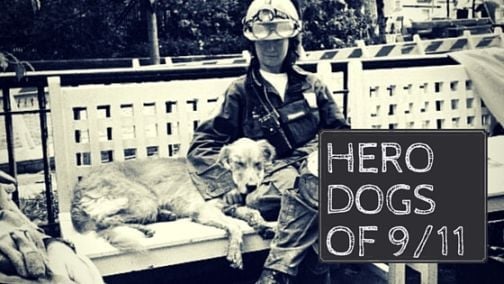
On September 12, 2001, twenty-six hours after the North Tower came down, a German Shepherd named Trakr worked his way through thirty feet of unstable debris and found the last person anyone would pull out of the rubble alive. Her name was Genelle Guzman-McMillan. She’d been trapped since the collapse the day before.
Trakr belonged to Halifax Regional Police handler James Symington, who was in New York on his own time when the towers fell. He was one of roughly 300 FEMA-certified search-and-rescue dogs who worked Ground Zero over the weeks that followed, trained to find people, and mostly finding neither the living nor, in most searches, anyone at all.
Only 20 survivors were ever pulled from the rubble, most within the first day; Trakr found the last one. None of the search dogs are alive today — the last known 9/11 search dog, Bretagne, died in 2016 at 16. A long-term University of Pennsylvania study that tracked their health for years afterward found no lasting harm from the work. Twenty-five years on, that’s the actual record, not the folklore version of it.
Trakr, the last survivor, and the clones that came after
Trakr found Guzman-McMillan around midday on September 12, the last of the 20 people pulled alive from the wreckage before the effort shifted from rescue to recovery. He kept working the site for days afterward. In 2005, Dr. Jane Goodall presented Symington and Trakr with an Extraordinary Service to Humanity award, and TIME later named him one of history’s most heroic animals.
In 2009, a California biotech company, BioArts International, cloned him. Symington had entered and won a company essay contest for the spot; five puppies, Trustt, Solace, Valor, Prodigy and Deja Vu, were born that June, at roughly $144,000 a puppy. Trakr didn’t live to meet them. He died that April of degenerative myelopathy, a neurological disease his veterinarians linked to smoke inhalation at the site.
Bretagne worked twelve-hour shifts at Ground Zero, then kept working for fifteen more years
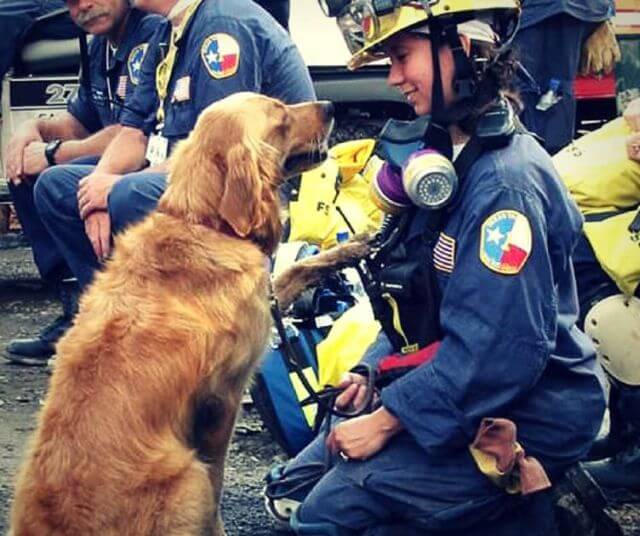
Bretagne, a golden retriever certified through FEMA’s Texas Task Force 1, was two years old on 9/11 and one of the youngest dogs deployed. She worked twelve-plus-hour shifts for two straight weeks at Ground Zero.
She didn’t stop after that. Bretagne went on to search after Hurricane Katrina and other disasters, then spent her retirement years as a reading-assistance dog at a Texas elementary school, listening while kids practiced reading aloud to her, because a dog doesn’t correct anyone’s mistakes.

She went back to Ground Zero once more, for her sixteenth birthday, in 2015. Not every dog on site was there to search, either — Thunder, a golden retriever from Washington state handled by Kent Olson, worked purely for morale, sitting with exhausted rescue crews between shifts.
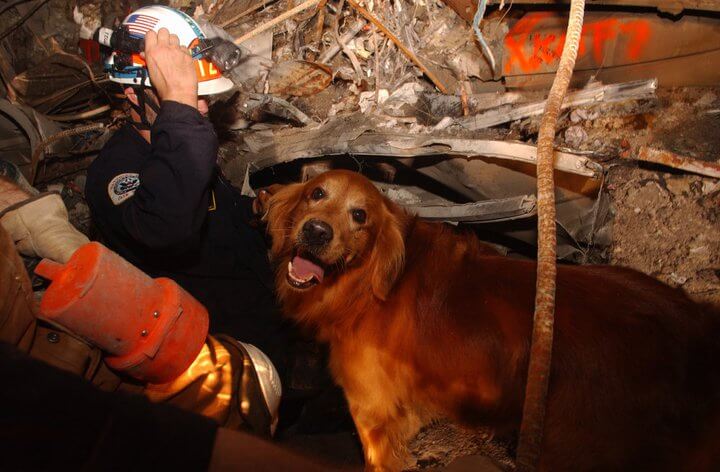
Photo by Andrea Booher/FEMA News Photo
Bretagne died on June 7, 2016, at 16, and every credible source at the time called her the last known surviving search-and-rescue dog from 9/11. The honest answer to whether any 9/11 rescue dog is still alive, then: no. None have been for a decade.
Sirius was the only police dog killed on 9/11 — and one fact about him needed correcting
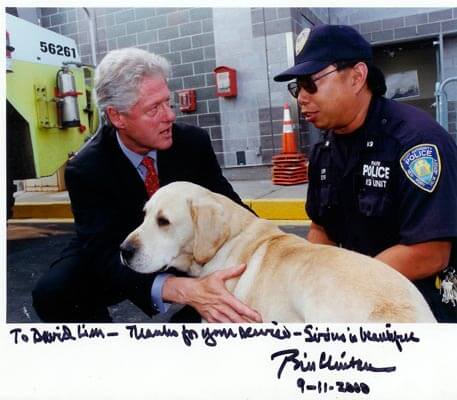
Sirius, a Port Authority Police Department explosives-detection dog, was secured in his kennel in the basement of the South Tower when it collapsed. His handler, Lt. David Lim, had gone up to check on the North Tower’s collapse and left Sirius below. He’s still the only police K9 confirmed killed in the attacks. His remains were recovered from the wreckage that winter and removed from the site with a full honor guard.
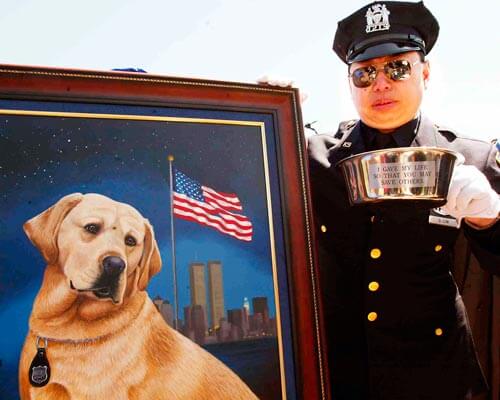
This piece said for years that Sirius wasn’t part of the 9/11 Memorial. That’s out of date. Lim later donated Sirius’s training leash and one of his badges to the 9/11 Memorial Museum’s permanent collection, and there’s since been a public plaque dedication in his name. Fixing that, even a decade late, matters more than leaving the old line standing.
Roselle and Salty led their blind owners down 78 floors between them
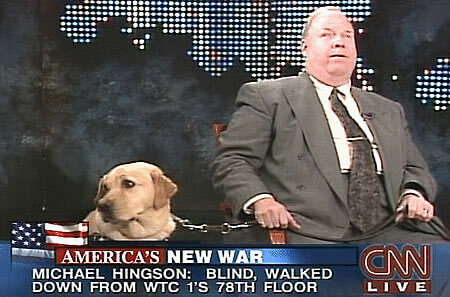
Roselle, a yellow Labrador guide dog, led her owner Michael Hingson down from the 78th floor of the North Tower, through smoke and falling debris, as the building came down behind them on the way out. One floor below in the same tower, Salty did the same for Omar Rivera from the 71st floor. The stairwell was so hot and crowded that Rivera thought it was too much to ask of Salty, and let go of his harness so the dog could go down unfettered.
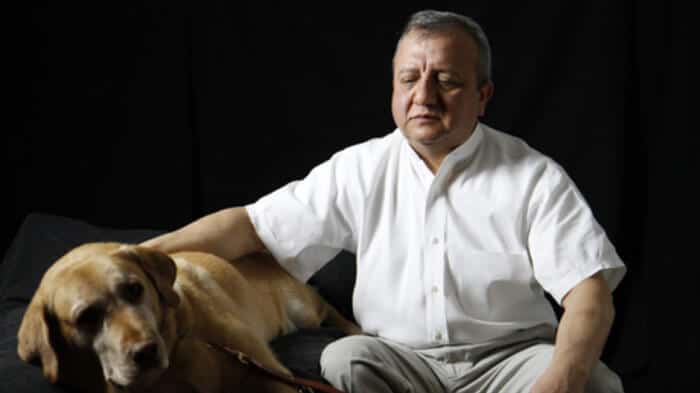
Salty came back. “He refused to leave me,” Rivera said afterward. “He came back to me. He said, ‘We are together. As long as we are in here, we are together.’” They made it down to the street together, safe.
Did the dogs get depression? What the follow-up study actually found
It became part of the story early: handlers noticed their dogs growing stressed by how few people they were finding alive, and some began hiding in the rubble themselves so a dog could have a “find” and stay motivated. That detail is real and well documented, and it’s the reason “9/11 rescue dogs depression” is still a question people search today.
The actual follow-up came later. The University of Pennsylvania’s Dr. Cynthia Otto ran a long-term health study comparing the deployed 9/11 dogs against a control group that never went. Both groups lived about the same length of time, 12 to 13 years on average, with no statistically significant difference in mortality, and both died of mostly the same things: degenerative disease like heart disease and osteoarthritis, then cancer. Some deployed dogs showed temporary changes in blood values and toxin markers the year after 9/11, but those resolved within two years and stayed normal afterward.
The stress at the site in September 2001 was real. A measurable, lasting health cost from it wasn’t.
25 years later
This September 11, families gather at the Memorial plaza in Lower Manhattan for the reading of the names of the 2,983 people killed on 9/11 and in the 1993 World Trade Center bombing, and the Tribute in Light goes up over the site again, the same two beams that have marked every anniversary since 2002. The Memorial Museum opens a new exhibition the next day, “In Their Honor: 25 Years of 9/11-Inspired Service,” on the work the attacks pushed people toward in the years since.
None of the dogs are around to see it. What’s left is the record: roughly 300 dogs that showed up to look for people, one of them cloned, one of them never came home, two of them walked strangers down from floors most people wouldn’t have made it off, and a study, years later, that found the work didn’t cost them what everyone assumed it did.
Dog with Blog exists because of a smaller, quieter version of the same instinct: a dog that shows up for someone without being asked to. If this story moved you and there’s room in your life for a dog like that, our adoption list is where that instinct gets to keep going.
Get more dog stories in your inbox. Join Woofs & Words on LinkedIn.
Subscribe on LinkedIn
Congratulations! Your blog post was selected for Tangy Tuesday Picks edition on September 15, 2015 at BlogAdda.
Please find it here : https://blog.blogadda.com/2015/09/15/tangy-tuesday-picks-september-15-2015