
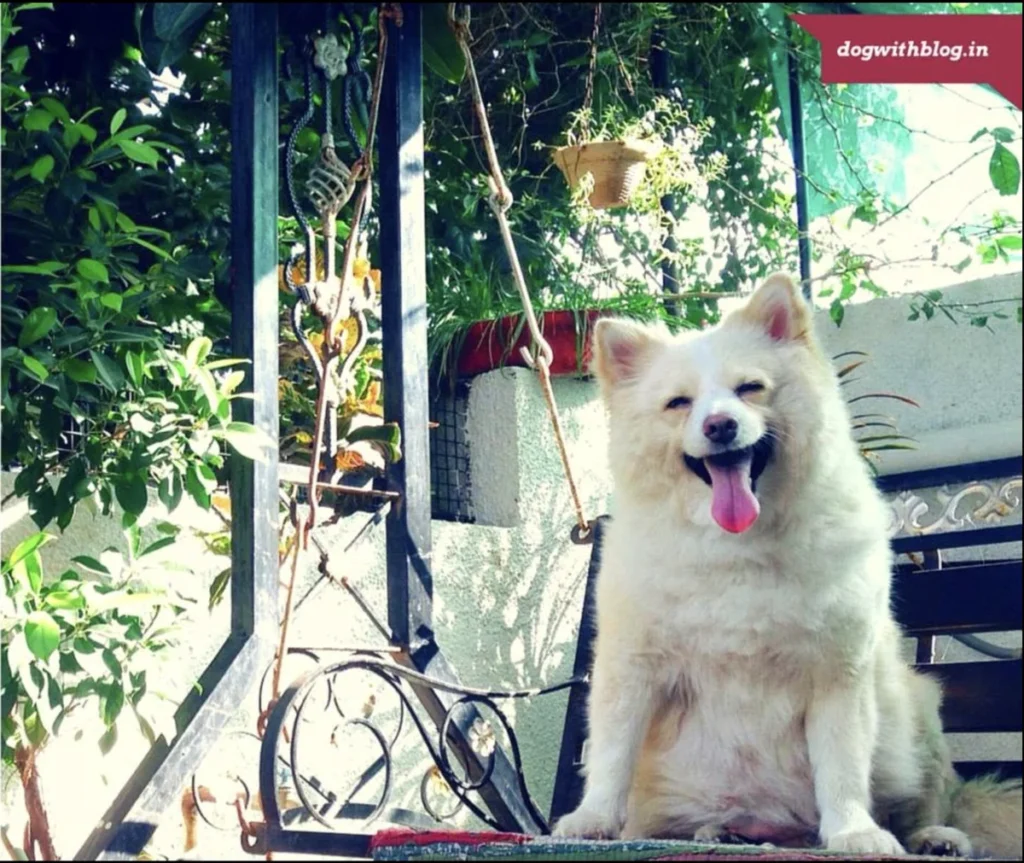
My father buried Kaalicharan on a slope facing the Gola river.
He dug the grave into the hillside himself, then pressed a marigold plant into the fresh mud above her. He didn’t explain what he was doing. He didn’t have to.
He believed she would get salvation there. The same salvation men receive when they are cremated at Himalayan riverbeds, ashes carried off by the current, returned to something larger than any of us. He gave his dog the same passage.
Kaali was 14. A mountain dog with coal-black fur, rescued from a garage as a pup, gone in May. She outlived most of what I thought was permanent. I was in Delhi when she died. By the time I understood the weight of it, my father had already given her the only farewell that made sense to him.
Most of us cannot bury our dogs on a hillside facing a river. Most of us are in apartments, in cities, and our dogs die at 4am with the vet’s office closed and no one to call and no hillside within reach.
This is a guide to pet cremation in India and every other option available in that moment. The practical stuff first. The rest, when you’re ready.
The first few hours: what actually matters
Before anything else, be sure.
A dog in deep distress can look, from a distance, like a dog who has left. If you are not yet certain, our guide to the signs a dog is dying covers what the final hours actually look like. Before you do anything else, go to them. Check for the rise and fall of the chest. Place your hand behind the left foreleg. A heartbeat, however faint, will find your palm. Call their name. If there is any doubt at all, call an emergency vet first. Not after. Before.
You have time. Not much, but some.
In India’s heat, the body needs to be kept cool as soon as you can manage it. Move them to the coolest room in the house, gently, the way you always did. Wrap them in an old bedsheet or a soft towel. Something that smells of home. You have around 6-12 hours before you need to make further arrangements. If cremation or burial will take longer, placing ice packs around (not on) the wrapped body buys you another 12-24 hours.
A few things not to do while you figure this out: don’t use the household fridge. Don’t bury in the apartment complex garden; almost every municipal bylaw prohibits it, and it will create problems later. And unless you have genuinely no other choice, don’t call the municipal corporation, because their process for “disposal of deceased animals” is exactly as impersonal as it sounds.
Then find them the right farewell.
That’s what the rest of this guide is for.
Pet cremation in India: burial or cremation?
Most Indian pet parents end up choosing cremation. Here’s why, and what your actual choices look like.
Cremation
Pet cremation services have grown significantly in Indian metros over the last five years. You will find dedicated pet crematoriums in Bangalore, Mumbai, Delhi, Pune, Hyderabad, Chennai, and Kolkata. Smaller cities often have NGOs or animal welfare organizations that provide communal cremation at low or no cost.
There are three types of cremation to understand before you call anyone:
1. Communal cremation
Multiple animals are cremated together. You do not receive ashes. This is the lowest-cost option, usually offered by municipal bodies, NGOs, and some pet hospitals. If you need a quick, dignified farewell without spending much, this is the one. Stray animals who die in shelters typically receive communal cremation.
2. Partitioned communal cremation
Your dog is cremated alongside others but with a physical partition. Ashes may be returned but can be partially mixed with others. Not all services offer this. If a company claims they do, ask how they physically ensure separation.
3. Individual (private) cremation
Your dog is cremated alone. You receive the ashes in an urn. Many services allow you to be present. This is the only option where you can be certain the ashes are your dog’s. Costs are higher, but for most pet owners who want to keep or scatter the ashes, this is the only option that makes sense.
Burial
Home burial is possible if you live in a house with a garden. Dig at least 3-4 feet deep; any shallower and the grave won’t hold. Wrap them in biodegradable cloth. Stay away from any water source, and mark the spot so you can find it again when you need to.
In apartments or gated communities, home burial is almost never possible. Most of us have no hillside, no garden, no ground that is ours to give.
Dedicated pet cemeteries exist in some cities, mainly Bangalore and Pune. They charge for plots and maintenance. Still rare outside Bangalore and Pune, but that is slowly changing.
One honest note on municipal options across all cities: India’s civic pet cremation infrastructure is thin and underfunded. The incinerators break down. Hours are restricted. The Parel facility in Mumbai charges more than people expect and often can’t take your dog after 4pm. The Sangamvadi PMC incinerator in Pune has the same problem. Bangalore’s only BBMP crematorium closed for nine months in 2025 after its chimney collapsed. Reddit threads on r/pune, r/mumbai, and r/Bengaluru are full of pet owners who drove to a municipal facility at 10pm and had to turn around.
The private services cost more. They also pick up the phone.
There are genuine signs of change. Ahmedabad’s AMC opened Gujarat’s first CNG pet crematorium in February 2026. Faridabad launched India’s first green pet crematorium in April 2026. Bangalore’s Sumanahalli facility reopened in January 2026. National organisations are now running petitions to the Ministry of Housing and Urban Affairs demanding standardised infrastructure in every city. The infrastructure is improving, but slowly. As of mid-2026, if you are in a metro, always call ahead before relying on any civic facility.
Who to call in each city, and what it costs
No service will give you a single price because it depends on your dog’s weight and which type of cremation you choose. Typical costs are noted under each city below.
Delhi/NCR
Delhi has around six pet crematoriums, all privately run by charitable trusts, and the gap in that number shows. Several operate only seven or eight months a year, so availability matters more than anything else when you’re making this call. The most reliably available 24/7 private service in Delhi NCR offers body transport, individual and communal cremation, electric and traditional pyre options, and returns ashes in an urn. It covers multiple cities across the region. If the first number doesn’t connect, keep trying — that’s the nature of the sector here.
Something newer opened in Faridabad in April 2026 that’s worth knowing about: India’s first eco-friendly pet crematorium, in Budhena village, supported by CSR funding and Rs 50,000 a month from the Faridabad Municipal Corporation. The furnace runs on eco wood and uses 60-80kg per cremation, versus 400kg in a traditional pyre. The Municipal Corporation handles body collection and brings animals to the facility, so you don’t need to arrange separate transport if you’re in Faridabad. Forty-two cremations in its first days of operation. The proposal is to extend this to ten more sites across the district.
Typical cost: – Individual cremation, dog under 15 kg: around Rs 5,000
– Individual cremation, dog 25 kg: Rs 6,000-7,000 (traditional pyre) or Rs 9,000-10,000 (electric)
– Faridabad (Budhena): India’s first green pet crematorium opened April 2026; eco wood furnace
Bangalore
For private cremation in Bangalore, there are dedicated services offering 24/7 pickup, individual cremation, and ashes returned to you. Search for current reviews before calling — operators in this sector change contact numbers and service areas more often than any other city.
The civic option is the BBMP Sumanahalli Animal Crematorium, next to the KSRTC Depot on Magadi Road (080-23289422). Rs 800 for dogs, Rs 300 for cats and smaller animals. Two electric incinerators; if you wait, the ashes come back with you. Call ahead every single time. The crematorium shut in April 2025 after a chimney collapse and only reopened in January 2026. It has a long history of closures, and nothing about that has changed.
If you’d rather bury your dog, People for Animals maintains a six-acre cemetery at Kengeri, adjacent to BGS Hospital (+91 9900025370 / +91 8197155004). A standard burial costs Rs 4,500; the plot is reused after a year. A dedicated plot kept for three years runs Rs 18,000-25,000. They handle around seventy burials a month, which tells you something about how many families in Bangalore need exactly this.
Typical cost: – Private services: Rs 5,000-15,000 depending on weight and type
– BBMP Sumanahalli (when functional): Rs 300-800 per pet (confirm current rate when calling)
– PFA Kengeri burial: Rs 4,500 (regular) to Rs 18,000-25,000 (permanent plot)
Mumbai
Mumbai has more options than most cities, and more caveats to go with them.
The SPCA at Parel is one of the oldest civic animal facilities in the city. It works, but users consistently report it’s expensive and runs only between 9am and 4pm. The incinerator has broken down without notice before. Go with a backup plan.
The BMC crematorium at Malad has a natural gas chamber and is free for registered pets — but registered means specifically under the Brihanmumbai Municipal Corporation. If you’re in Navi Mumbai, Panvel, Thane, or any other municipal jurisdiction, you’re not eligible. The Parel SPCA becomes your nearest civic option. Additional BMC facilities were planned at Mahalaxmi and Deonar; verify current status with the BMC animal helpline before going.
In the Borivali, Dahisar, and Kandivali belt, there’s a mobile cremation van — electric furnace, Rs 3,000, a twenty-minute process, and it comes to your housing society if you have an NOC. Stray animals are cremated free. Based at IC Colony, Borivali (W).
For Mira Road, there’s a dedicated pet cremation service at +91 82860 00433. Doorstep pickup with burial or cremation options: +91 89767 41188.
If you’re in Navi Mumbai and want burial over cremation, the IDA shelter at Turbhe (093200 56585) has the space and handles this regularly.
Typical cost: – Rs 3,000-12,000 for individual cremation depending on size and provider
Pune
Pune has the most usable combination of civic and private options of any city on this list.
The PMC runs an incinerator near the railway station in Sangamvadi — free to Rs 1,000-2,000, depending on circumstances. Municipal; reliability varies. Worth trying if cost is a concern.
In Pimpri, the PCMC operates a pet cemetery at Nehru Nagar, near the Polygrass Hockey Stadium. Rs 1,000. Open 9am to 6pm daily, but bring the body before 4pm. Carry your Aadhaar card. It is required, not optional.
For 24/7 private cremation, there’s a service operating since 2015 out of Lohegaon/Wagholi — Gat No 1475, opposite Mt St Patricks Academy, off the Lohegaon-Wagholi Road (+91 84840 43012 / +91 72639 00195). Individual cremation, pickup, memorial tree option, and online memorials if that matters to you.
In Bhosari, there’s a cemetery and crematorium offering both burial and cremation at Rs 1,000; ashes are ready the next morning, returned in a mud pot wrapped in cloth.
Typical cost: – PMC/PCMC municipal options: free to Rs 1,000-2,000 (communal, civic infrastructure)
– Private individual cremation: Rs 1,000-5,000+
Prices have been rising. Bangalore pet owners have noted significant increases in burial and cremation costs, with some large-dog families spending upward of Rs 15,000-20,000 for full-service private cremation including body transportation.
Ask specifically about: body pickup/transport charges (often separate), urn cost, and whether a death certificate or cremation certificate is provided.
Kolkata
A dedicated hearse van service covers Kolkata, Howrah, and surrounding areas, 24/7, with both burial and cremation options (+91 8582889996).
Ahmedabad
Ahmedabad has the best municipal setup in India right now, and by a significant distance.
The AMC opened Gujarat’s first CNG pet crematorium in February 2026, at the CNCD ABC Centre in Behrampura. It’s the first facility of its kind operated by a municipal body anywhere in the country. CNG-powered, smoke-free, odourless, capacity for three dogs at a time. Around Rs 700 per pet.
The pickup vehicle, called the “Antim Dham” rath, arrives at your home with floral garlands and puja materials. An automated trolley loads the animal; no one has to carry the body manually. Ashes are returned home in an urn wrapped in red cloth. CCTV is available so families who want to watch the cremation remotely can do so. The AMC plans to issue death certificates and send families a remembrance message on the anniversary each year.
To book, call the AMC helpline at 155303 (official updates: AMC official site). Have your pet registration receipt ready. If your pet isn’t registered, you can register on the spot or use the dog service donation option.
Typical cost: – AMC CNG crematorium (Behrampura): Rs 700 per dog (municipal rate); free home pickup via “Antim Dham” rath
Surat
Surat has budgeted Rs 30 lakh for a similar facility in the Bhatar area — modelled on Ahmedabad, capacity for four dogs at a time, home pickup via toll-free number. As of mid-2026, tendering is in progress. Not yet operational. Check SMC’s official channels for a launch date before making plans around it.
Typical cost: – SMC crematorium (Bhatar area): in planning (2026-27 budget); not yet operational as of mid-2026
Chennai, Hyderabad, and other cities
Blue Cross India in Chennai can help directly or point you to local options. WVS India operates in several cities. Your vet will usually have the most current list of contacts for your area.
If you are in a smaller city and cannot find a dedicated pet cremation in India service, contact your nearest animal shelter or the local SPCA. They handle this more often than people realise.
You can also find animal rescue contacts and emergency helplines city-by-city on our animal helpline directory.
Typical cost: – Rs 3,000-12,000 for individual cremation depending on size and provider
What to do with the ashes
After individual cremation, you will receive your dog’s ashes in a basic container or the urn of your choice. From here, the decision is entirely yours.
Keep them at home. Many people place the urn in a corner they already think of as theirs: a shelf with photographs, a diya that stays lit. You don’t need a ritual unless you want one. The ashes will wait with the same patience your dog always had.
Scatter in a place they loved. The park where they ran themselves breathless, a beach, a favourite terrace. In India, many families bring their pet’s ashes to the river: the Ganga, the Yamuna, a hill stream. My father would understand this instinctively. The river doesn’t ask whether it was a person or a dog. It just carries them.
Asthi visarjan. Some Hindu families perform a simplified version of the immersion ritual for their pets’ ashes. It is personal, not codified. But it is increasingly common, and it is valid.
Memorial jewelry. A small portion of ashes can be set into a pendant or ring. Available in Mumbai and Bangalore, and worth searching for in other cities if this is something you want.
What Hinduism says about your dog’s death
You don’t have to be religious to wonder about this. When someone who knew you completely and loved you completely just died, you want to know it mattered.
In Hindu philosophy, every living being has an atman, a soul, and your dog is no exception. The concept of samsara, the cycle of birth and death and rebirth, applies to all sentient beings. Animals are not excluded. They accumulate karma through their actions and experiences. They move forward.
The Mahabharata has the oldest and most direct statement on this. Yudhishthira, the righteous king, was offered entry into heaven but refused to go without the stray dog who had walked beside him for his entire final journey. The gods revealed the dog was Dharma himself, testing whether Yudhishthira could recognize loyalty and devotion in humble form. He could.
Dogs, in Hindu tradition, are associated with Bhairava, the fierce form of Shiva, and are treated as sacred companions. Their faithfulness is not incidental.
Practically, some families recite the Om Shanti mantra after a pet dies, or the Gayatri mantra. Some light a diya. Some place a few drops of Gangajal in the dog’s mouth in their final moments. None of this is required. All of it is a way of marking that something sacred has ended.
We have written about this more fully in the story of Yudhishthira and his dog. If any of this resonates, that is where it lives.
There is also Bhairava, the fierce form of Shiva who guards the threshold between worlds, and the companion who walks at his heel is a dog. In some iconography he is called Shvashva, a name that translates plainly as the one whose mount is a dog. The animal keeps appearing at exactly this moment in the tradition: at the gate, at the cremation ground, at the edge of what we can see. Not as an omen, but as a guide. The dog you are grieving has, in this telling, been walking people home for a very long time.
On grief
A pet never quite fades in our memories. He might be gone from the scene but he is still there. In the occasional discovery of his fur tucked into the sofa. The chewed soft toy or slippers waiting to be found. And most of all in our hearts. Omnipresent like the air on earth, a pet and his love is forever.
“The one best place to bury a good dog is in the heart of his master.” — Ben Hur Lampman, The Oregonian, 1925
People will say things like “it was just a dog” or “you can get another one.” These people mean well and are wrong.
However long your dog was with you, fourteen winters or eight or five, they were present for all of it. Dogs don’t reserve themselves. They give everything, every day, without keeping score. The grief that comes after is the receipt for all of that love.
It shows up in the body: fatigue, disrupted sleep, the inability to hold a thought for very long. It shows up in the house: the empty bed, the collar still on the hook, the food bowl you don’t know what to do with and can’t bring yourself to move.
You do not have to justify how much this hurts.
There is no correct timeline for grief. Most people move through the sharpest part of it in a few weeks. Some people take months, especially if the dog was with them through a major period of their life. If grief is significantly interfering with your ability to function after several months, it may be worth speaking to someone.
In India, pet loss grief counseling is still sparse. Online communities are more accessible than in-person groups. r/IndianPets on Reddit has a compassionate community, and the city-specific subreddits (r/pune, r/mumbai, r/Bengaluru) are where people share real-time updates on which municipal crematoriums are actually functional; that information is rarely current anywhere else. There are also WhatsApp groups that form organically through vet clinics in major cities.
Give yourself the room.
If you want company in it, there are words here that others have found worth keeping. There are films for the nights you can’t sleep and don’t want to read. And people who’ve written through their own loss, Brownie’s story and Rusty’s page, when the silence needs company.
FAQ
Can I bury my dog at home in India?
Yes, if you have a garden or outdoor space. Dig at least 3-4 feet deep, away from any water source. Check local municipal bylaws if you’re in a gated community. In apartments, burial is almost always prohibited. Cremation is the more practical option for urban pet owners.
Does pet cremation in India include a certificate?
Many private services provide a cremation certificate. Ask for it upfront if it matters to you. Not legally required for pets.
Can I attend the cremation?
With individual cremation at most private services, yes. Some services actively invite families to be present. Some families find this helpful; others don’t. There is no right answer.
What is the difference between electric cremation and a traditional pyre?
Electric cremation is faster, cleaner, and typically more expensive. A traditional wood pyre takes longer but is preferred by some families for ritual or cultural reasons. Some services offer both.
How do I find pet cremation services in cities not listed here?
Call your vet first. Most clinics have a list of local contacts for this. Otherwise, search for your city + “pet cremation” or contact the nearest animal shelter or SPCA. Animal welfare NGOs like Friendicoes (Delhi), Blue Cross (Chennai), and CUPA (Bangalore) often have referrals.
Is it legal to scatter pet ashes in a river in India?
There is no law against it. Many families do. The river holds them the same way it holds everything else we return to it.
Do I need any documents to use a municipal pet crematorium?
Some do. The PCMC facility in Pimpri (Pune) requires an Aadhaar card. Others require nothing. Call before you go and confirm their incinerator is operational that day.
When you’re ready, and only then, our adoption directory lists dogs in India who are waiting for someone. Some people find that opening their home again is the only thing that quietly fills the space. No pressure, no timeline. Just the option, when it feels right.
Get more dog stories in your inbox. Join Woofs & Words on LinkedIn.
Subscribe on LinkedIn